Tyvek blister sealing, how materials and machines affect seal quality

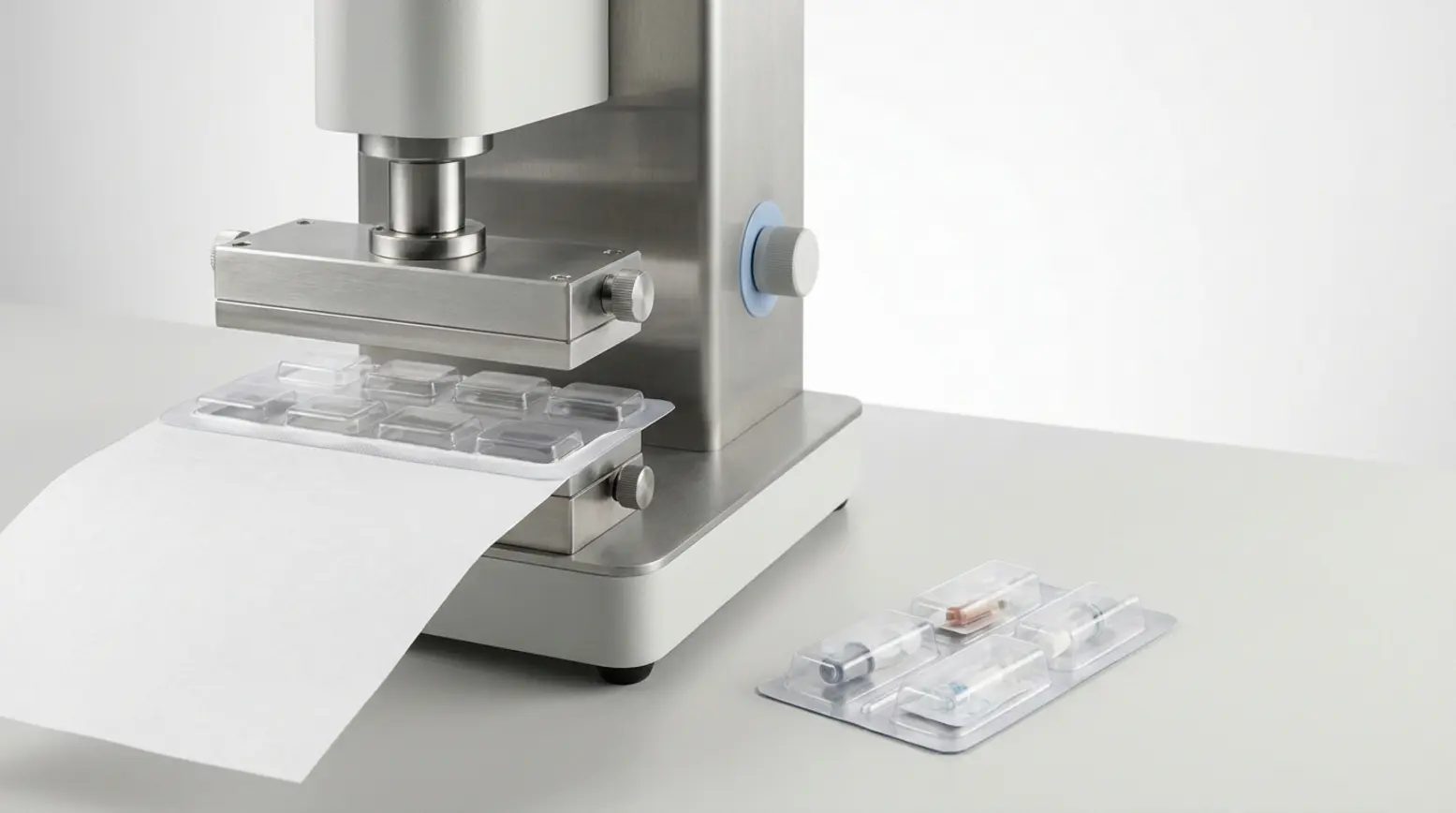
Tyvek lidding influences the final seal because the outcome relies on the entire packaging system and the machine process, rather than just the lid material. In blister sealing with Tyvek lidding, the specific Tyvek grade, seal coating, tray or blister material, flange shape, tooling support, and machine settings all work together. Consequently, every pack requires its own review, test plan, and machine setup before production begins.
• Confirm the actual sealing area before selecting a machine category or tooling concept.
• Treat Tyvek lidding as an integral part of a complete packaging system, since tray material, coating, and flange geometry heavily impact seal quality.
• Carefully monitor process control, as uneven support, contamination, wrinkles, and poor alignment can alter the seal.
• Rely on approved inspection and testing methods; visual checks are helpful but cannot prove sterile barrier performance on their own.
• Submit drawings, material specifications, and representative samples before a machine review to ensure the equipment choice suits the actual pack.
What Tyvek lidding for blister sealing means in medical packaging
Tyvek is a breathable, nonwoven material utilized in a wide variety of medical and pharmaceutical packaging. It is frequently applied as lidding for trays and blisters whenever a sterile barrier is required. This article focuses on the machine side of the process. We explain what changes during Tyvek lidding blister sealing compared to using foil or clear film, and why the final seal must be developed around the actual pack construction.
Tyvek behaves uniquely because it allows air to pass through it, which is the definition of porous in packaging. A porous lidding seal reacts differently during Tyvek heat sealing than a nonporous lid, meaning machine settings cannot simply be copied from another project. This holds true for Tyvek tray sealing, Tyvek blister sealing, and even Tyvek pouch sealing when a peelable medical seal is necessary.
What Tyvek does in a pack
Tyvek is favored because it withstands sterilization processes and helps protect the package from microbial ingress, provided the overall system is designed correctly. It is widely used for medical device lidding and other sterile packaging formats. However, the material alone does not create the seal. The seal coating, tray resin, flange design, and sealing process collectively determine how the pack closes and ultimately opens.
Why porous lidding changes the seal
A breathable lid responds distinctly during the sealing cycle, meaning the machine and tooling must be tailored to the specific tray and lid combination. While a porous lidding seal might look acceptable at first glance, its opening behavior and measured seal strength can still fluctuate if contact is uneven or an incorrect material combination is used. For this reason, we always evaluate the actual materials and the true sealing area first.
Why Tyvek lidding blister sealing depends on the full pack combination
The seal does not rely on the lid alone. In blister sealing with Tyvek lidding, the outcome depends on the exact Tyvek grade, the seal coating, the tray or blister material, the flange geometry, and the machine process itself. Therefore, the first consideration is not which Tyvek sealing machine looks best on paper. Instead, the priority is understanding how the complete pack is constructed and exactly where the seal must be applied.
If a single component of the pack changes, the final seal can change as well. A different tray resin, a new coating, or a narrower flange might impact seal appearance, strength, and peelability. Peelability ensures the package opens in a controlled and clean manner. Because of this delicate balance, one project should never borrow sealing settings from another, even if both utilize Tyvek lidding.
The sealing area is the starting point
Do not select a machine before confirming the usable sealing area. The flange width, the shape of the seal path, and the support beneath the tray all dictate the necessary tooling and process parameters. In many projects, these details determine the machine format before production speed is even discussed. A simple sketch can be highly beneficial: illustrating the tray body, flange, lidding layer, and exact sealing zone ensures everyone reviews the exact same pack details.
Why one pack cannot borrow settings from another
Heat, pressure, and dwell time must align perfectly with the actual material structure. Dwell time refers to the duration the seal tool remains in contact with the package. Furthermore, the precise Tyvek grade and coating must be known. If the pack changes, the process window can shift as well. The process window is the specific range of settings that produces a stable, acceptable seal. Consequently, it is poor practice to publish or reuse parameter values from a different application.
Process control during Tyvek lidding blister sealing
Process control is where many sealing issues originate, but it is also where they can be prevented. A medical blister sealer or any similar medical packaging machine must generate even contact across the entire sealing area during every cycle. If you want a broader overview of the sealing process, our guide to blister sealing machines explains the basics. Meanwhile, this article remains focused on what changes specifically when Tyvek serves as the lidding material.
Tooling support is critical because the tray must remain entirely stable during sealing. Similarly, lid placement is vital because the lidding must sit in the correct position across the entire flange. Proper execution of the machine process supports a highly consistent, peelable medical seal for medical device lidding and related tray applications.
What stable contact looks like
Stable contact means the tray edge receives even support throughout the entire sealing cycle and the lid remains perfectly aligned with the target seal zone. The seal tool should press against the package uniformly across the intended area. If support is uneven, one side of the pack may seal entirely differently from the other. For this reason, tooling is a highly functional part of the process, rather than just a minor accessory.
Common causes of visible seal problems
Visible seal defects often stem from a handful of recurring causes. Uneven support can reduce contact pressure. Dirt or loose particles on the flange can interrupt the seal entirely. Wrinkles in the lidding may create folded or weakened areas, while poor registration can shift the seal away from its designated target zone. These issues affect Tyvek blister sealing, Tyvek tray sealing, and other sterile packaging formats in similar ways, primarily because the seal area consistently requires stable, uniform contact.
• Issue: Uneven seal appearance. Likely cause: Poor tray support. What to check: Tooling contact and flange flatness.
• Issue: Open or weak areas. Likely cause: Contamination. What to check: Cleanliness of both the tray flange and lid surface.
• Issue: Folded seal area. Likely cause: Wrinkles. What to check: Lid presentation and the material handling path.
• Issue: Seal falls outside the target zone. Likely cause: Incorrect alignment. What to check: Registration and overall tray positioning.
How to correctly inspect and test blister sealing with Tyvek lidding
Inspection protocols should be firmly established before production ever begins. In Tyvek lidding blister sealing, peelability is a carefully controlled package feature; therefore, it must be defined and tested according to the customer’s approved methodology. A pack that simply feels easy to open is insufficient from a technical standpoint. Both the subjective opening behavior and the objectively measured seal results truly matter.
The ASTM F88 standard is typically used for quantitative seal strength measurement. This test yields a specific value for seal strength, whereas visual inspection evaluates the overall seal condition and appearance. Visual checks are highly useful for identifying wrinkles, contamination, or uneven patches. Nevertheless, visual inspection alone cannot definitively prove sterile barrier performance.
Peelability and seal strength
Peelability refers to how smoothly and controllably a package opens. In contrast, seal strength denotes the exact force required to separate the seal during a designated test method. Although these two factors are closely related, they are not identical. A package might yield an acceptable measured strength result yet still exhibit poor opening behavior, or vice versa. Therefore, both characteristics require careful consideration during medical seal development.
Use the customer’s approved test method
Every production run must adhere strictly to the customer’s approved inspection and testing methods. This is crucial because quality assurance teams typically establish specific acceptance criteria for seal appearance, sampling rates, opening behavior, and test setup. Following these protocols ensures that production stays completely aligned with the customer’s broader quality management system and documented requirements.
Validation context for sterilized packs
When dealing with terminally sterilized medical device packaging, the forming, sealing, and assembly stages all require rigorous development and validation under the applicable quality system. While the machine heavily supports this effort, the equipment itself does not validate the sterilization process. Our role is to assist in defining the ideal machine, tooling, and operational setup for the actual pack, ensuring that the project launches with fundamentally sound technical inputs.
Choosing equipment for Tyvek lidding blister sealing by production volume
Machine selection should always follow the specific package requirements and overall production needs. We help customers compare machines for medical lidding only after the sealing area, materials, and desired handling methods are clearly defined. This structured approach is vital because no single medical packaging machine can accommodate every possible tray size, flange design, or line layout.
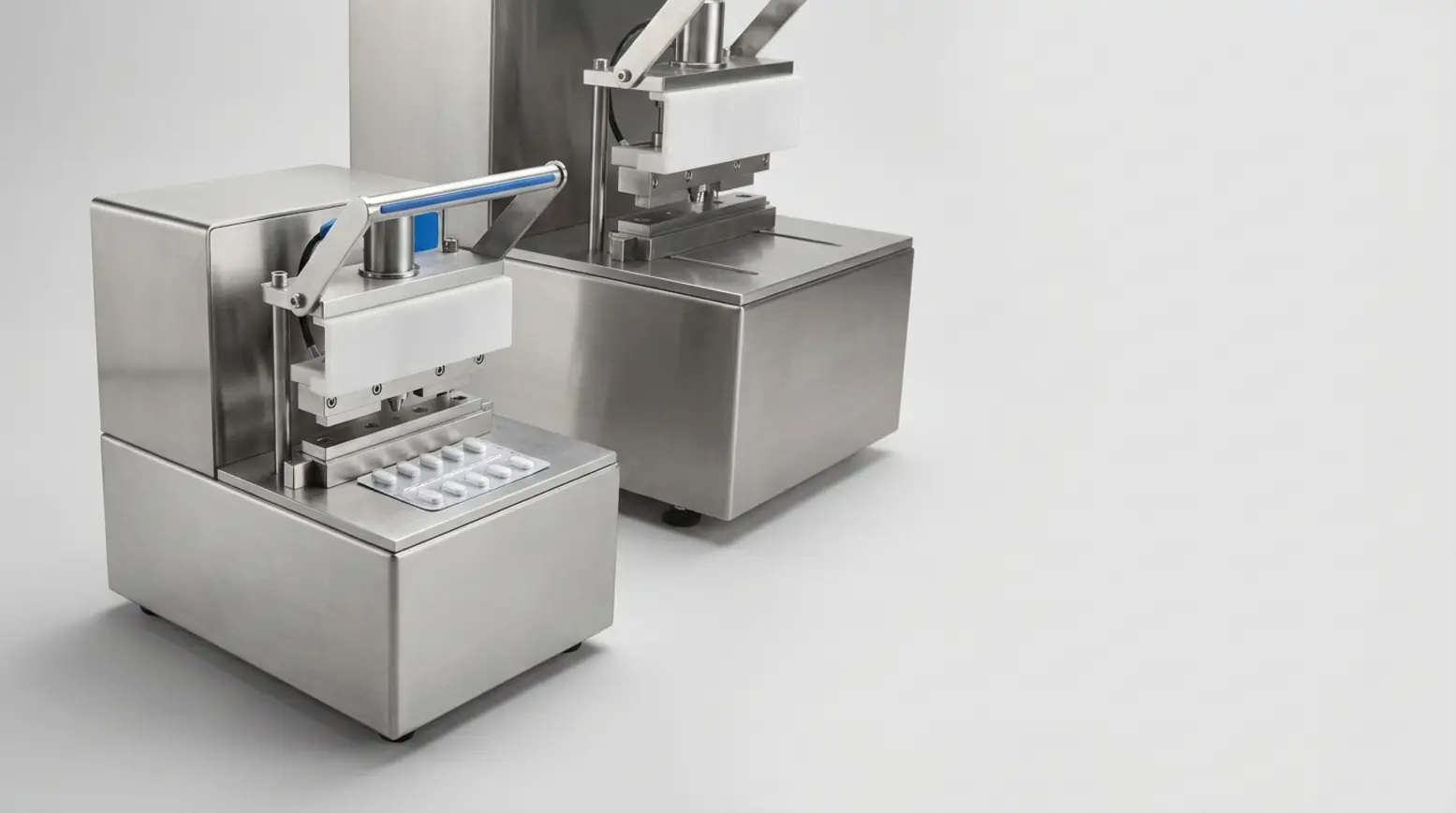
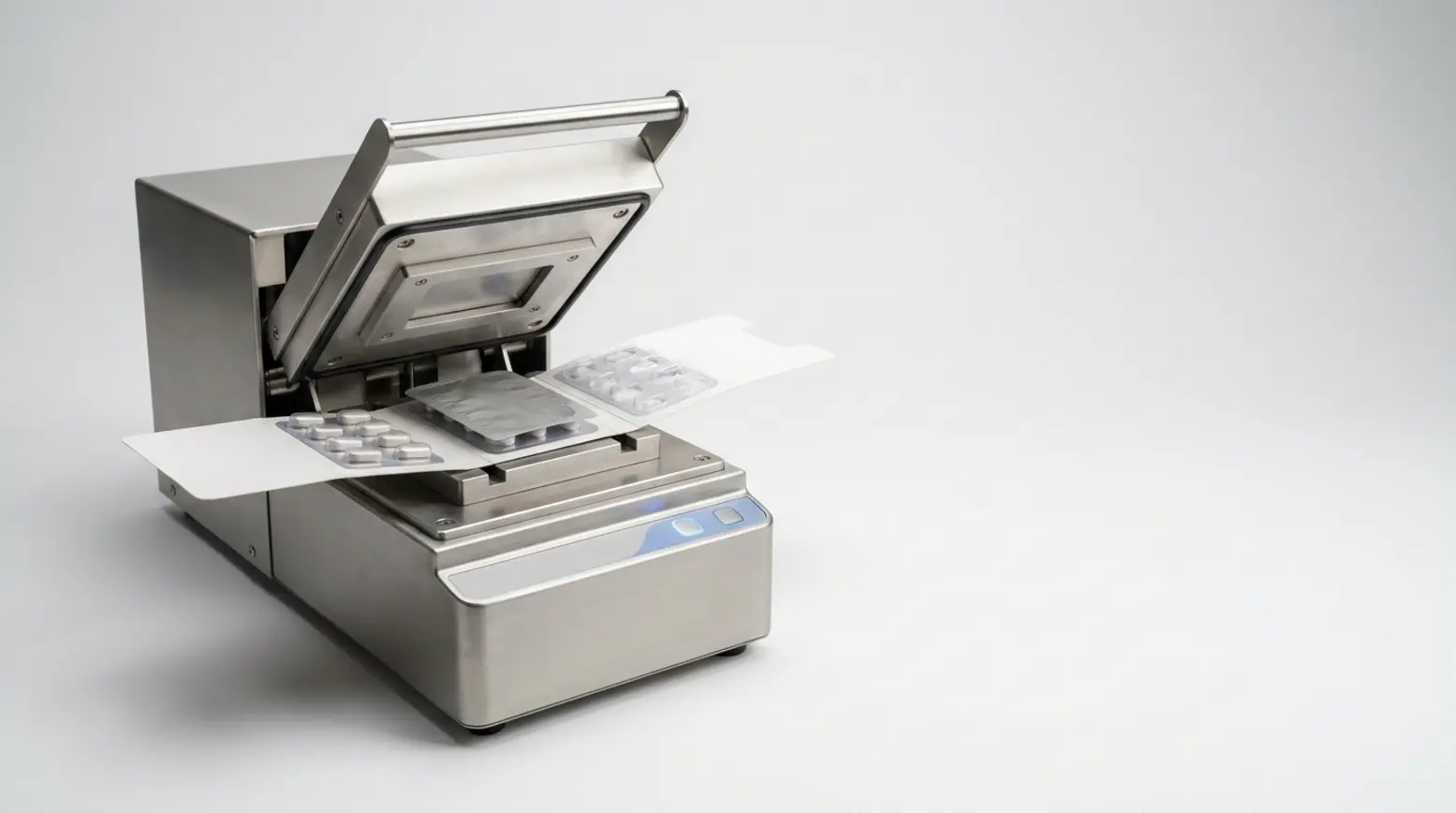
Manual shuttle machines for lower-volume work
Manual shuttle machines often serve as a practical choice for lower-volume operations requiring direct operator loading. They perfectly suit projects involving frequent changeovers, extensive manual handling, or relatively modest output demands. Within this category, pharmaceutical shuttle machines can effortlessly process lid materials like medical paper and Tyvek, depending on the precise application. If you would like to view a platform example, this manual shuttle machine example highlights the type of format frequently considered for smaller, highly variable production runs.
Rotary machines for repeated multi-station handling
Rotary machines become highly valuable when production scales into repeated, multi-station handling. They facilitate a highly structured flow from loading to sealing, and seamlessly onward to the next process step. This configuration is particularly beneficial when the package design is stable and repeat demand exceeds what a manual shuttle format can comfortably support.
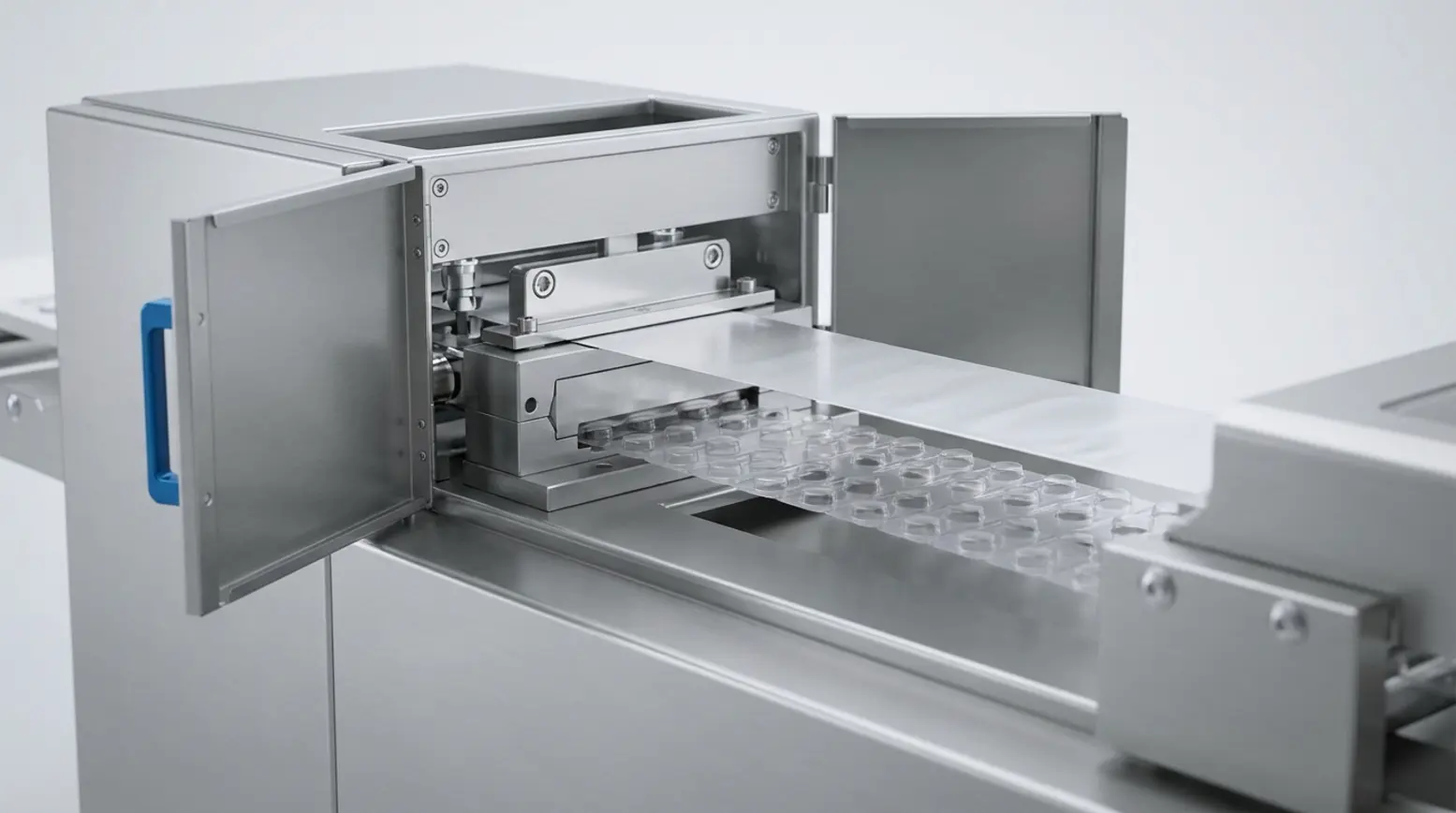
Automatic inline machines for high-volume continuous production
Automatic inline machines are built for high-volume, continuous production. They become essential when feeding, transfer, inspection, and various downstream functions must operate simultaneously within a single line. At this stage, proper line integration matters just as much as the seal head itself, since the sealing process acts as one interconnected step within a broader production flow.
• Manual shuttle: Typical volume direction: lower. Handling style: direct operator loading. Best fit: smaller runs, frequent changeovers, and manual handling requirements.
• Rotary: Typical volume direction: medium. Handling style: repeated multi-station handling. Best fit: stable packaging formats featuring higher repeat demand.
• Automatic inline: Typical volume direction: high. Handling style: continuous production featuring integrated functions. Best fit: large output requirements and deeply connected line processes.
What to send before a Tyvek lidding blister sealing machine review
Before we can accurately review a sealing machine or tooling concept, we require the actual package inputs. Gathering this data is the fastest way to avoid incorrect assumptions and quickly narrow down the right machine category. It also assists us in developing and implementing the correct sealing setup alongside the ideal tooling, machine format, and overall line fit.
Required pack and process inputs
• A rigid tray or blister drawing featuring the actual package dimensions.
• Usable seal flange dimensions, clearly detailing the width and shape of the sealing area.
• The exact Tyvek grade selected for the lidding material.
• The specific coating specification for the seal layer.
• The sterilization process that the packaging system must ultimately support.
• The required peel or seal strength specifications.
• The precise testing method mandated by the customer’s quality team.
• Representative samples derived directly from the intended material structure.
Why tooling must match the real pack
Tooling must support the tray and lidding seamlessly and evenly throughout the seal cycle. If the underlying support is flawed, the process might superficially appear stable even as the seal quality fluctuates across the flange. Consequently, tooling design must always be based on the actual pack drawings and real-world sample sets. A practical project flow is typically straightforward: first, the drawing is reviewed; next, the exact Tyvek grade and coating are confirmed; then, physical samples are tested. Only after these steps are complete do we discuss the tooling concept and machine class based on the projected production volume.
FAQ about Tyvek lidding and sealing setup
Can I use the same settings for two packs that both use Tyvek?
No. The settings must precisely match the real pack combination because the tray material, coating, flange geometry, and sealing area can all dramatically alter the final result.
Does visual inspection prove sterile barrier performance?
No. While visual inspection is highly useful for checking seal appearance and identifying obvious defects, it cannot independently verify sterile barrier performance.
What test is commonly used to measure seal strength?
ASTM F88 is the standard commonly used for quantitative seal strength measurement. However, the exact method executed in production must always match the customer’s specifically approved quality approach.
When should I choose the machine category?
You should select a machine category only after the sealing area, tray support needs, material specifications, and production volumes are completely clear. This sequenced approach helps avoid conducting a machine review based on incomplete package data.
What is the fastest way to start a technical review?
Begin by submitting the pack drawing, flange dimensions, exact Tyvek grade, coating details, intended testing methods, and representative samples. Gathering this information upfront provides a much stronger foundation for accurate machine and tooling advice.
Next step when requirements are clear
Once the essential package details are confirmed, the next logical step is a machine review based on physical samples, technical drawings, and expected output requirements. If the machine class remains open, we can help you request a Quick Scan or quotation discussion to ensure the project launches with accurate technical information. Alternatively, if the pack and production levels are fully defined, we can move directly into detailed quotation discussions and subsequent engineering steps.