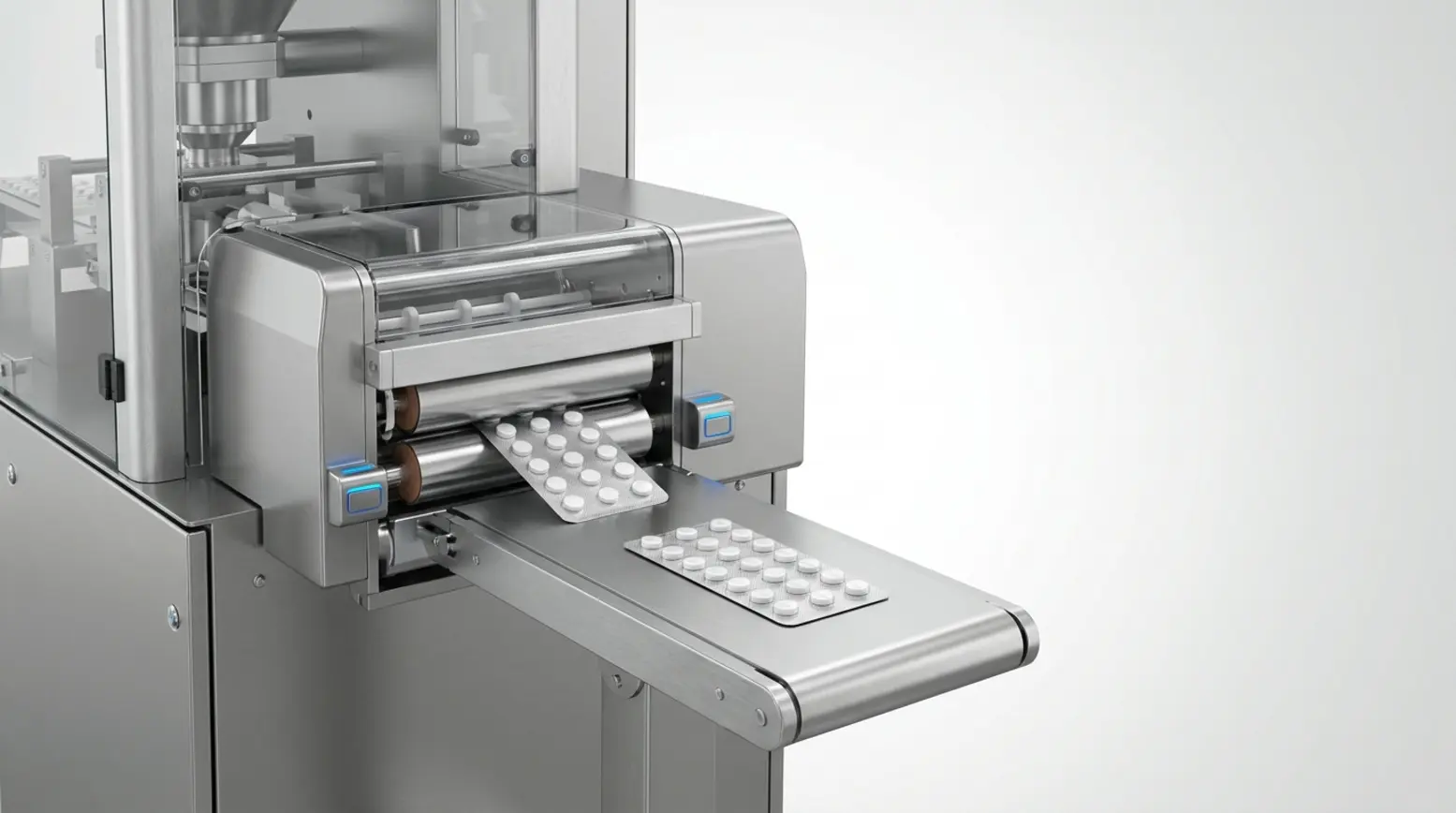
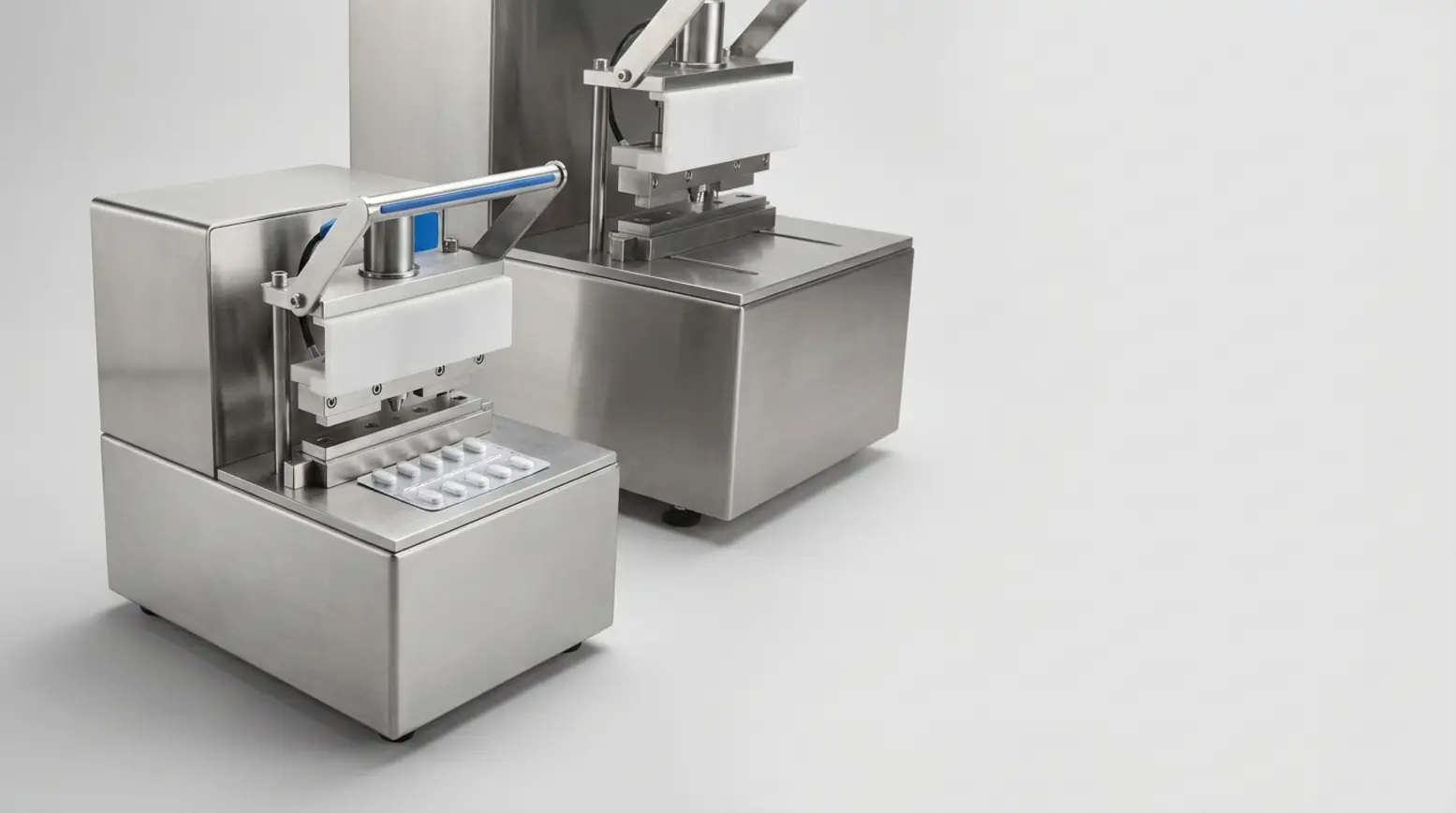
GMP blister packaging machine: what pharma teams must arrange

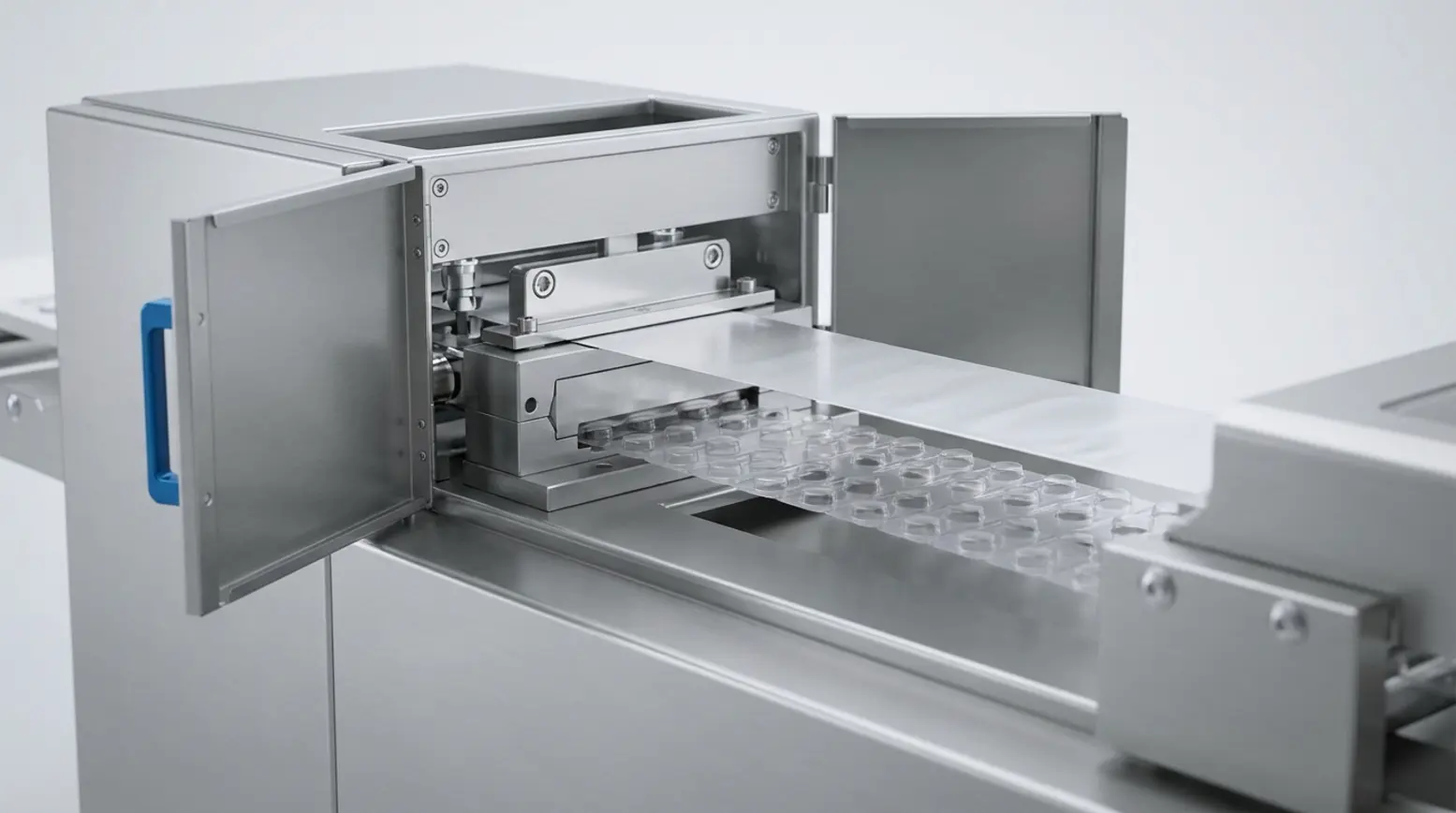
A GMP blister packaging machine can support controlled pharmaceutical packaging, but it does not make a site GMP compliant by itself. The manufacturing site still owns the procedures, training, testing, records, pharmaceutical machine qualification, validation, and product release. This matters when you compare equipment, as machine design affects daily tasks like cleaning, inspection, line clearance, and packaging changeover procedures.
• A machine can support compliant blister production, but the site must control GMP decisions and product release.
• Cleanability, access, and visibility matter because they affect routine checks, pharmaceutical equipment cleaning, and error prevention.
• Changeover involves more than just tooling; therefore, teams should also define clearance procedures, settings, printed items, and records.
• Documentation requirements should be defined before purchase, as standard supplier packages often vary.
• Software, recipes, and settings require site control. Consequently, buyers should ask clear questions early in the project.
A GMP blister packaging machine: what it can support and what it cannot do
A GMP blister packaging machine can help teams run a controlled process when the layout fits the actual packaging line and product. Even so, the equipment is only one part of the system. The site must still manage pharmaceutical packaging compliance through its own quality system. This includes standard operating procedures (SOPs), training, qualification, validation, deviation handling, batch review, and release. In simple terms, a machine can make GMP compliance easier or harder, but it cannot replace the site's responsibilities.
Good Manufacturing Practice (GMP) means producing and controlling medicines consistently so that quality remains within defined limits. In packaging, the goal is to reduce risks such as mix-ups, incorrect labels, wrong components, and cross-contamination. Because of this, buyers should look beyond speed and output. A machine that is difficult to inspect or clean may add unnecessary work and increase risk during daily operations.
It helps to separate responsibilities early in the process. A supplier can provide GMP packaging equipment that supports access, control, and repeatable settings. However, the site must decide how that equipment is used, checked, documented, and approved. This simple boundary keeps the project clear and helps teams avoid making weak assumptions during procurement.
| What the machine can support | What the site must control |
|---|---|
| Accessible design for cleaning and inspection | SOPs, training, and operator discipline |
| Stable settings, recipes, and monitoring functions | Approval rules, review steps, and release decisions |
| The documentation package from the supplier | Qualification, validation, and record ownership |
| A layout that supports line clearance visibility | Line clearance procedures, checks, and sign-offs |
The GMP blister packaging machine and its intended use in pharma production
Equipment selection should always start with intended use. This refers to the actual job the machine must perform within your specific process. A machine might look suitable on paper, but that is rarely enough. Teams need to define the product, blister format, lidding material, coding requirements, output targets, and line integration needs. Once these factors are clear, it becomes much easier to judge whether a GMP blister machine fits the process or if it will create extra steps later. If your team needs a broader overview first, our guide to medicine packaging equipment explains the main choices used in pharmaceutical lines.
Defining the intended use also helps teams ask better questions. What do operators need to inspect during a batch? Which parts require routine cleaning? What components need preventive maintenance? What changes most frequently: the product, format, foil, print, or settings? These details matter because a machine designed to support the actual workflow is much easier to operate in a controlled, compliant manner.
It is also important to map actual contact points. Some parts may touch the product or process materials, while others merely guide packs or web materials. Buyers should never assume that every part of a machine carries the same risk level. A practical review of contact points helps define a packaging machine's cleanability needs, identify suitable materials, and establish realistic cleaning instructions. This is a primary reason why pharmaceutical machine qualification should be linked to the actual process rather than general marketing claims.
Your machine choice also affects the wider line. Because of this, teams often compare different categories before defining the final project scope. Our overview of pharmaceutical packaging machines can help you see how various machine concepts fit different production volumes and setups. Ultimately, the final choice still requires site approval, as only the site can confirm that the selected setup suits its specific processes and controls.
GMP blister packaging machines: cleanability, access, and routine checks
Cleanability and visual access are key buying criteria for a GMP blister packaging machine. Operators and maintenance teams must be able to see critical areas clearly. If a guide rail hides leftover parts, a cover blocks inspections, or tooling creates small pockets for debris, daily work becomes slower and less reliable. These issues can negatively affect batch start-ups, line checks, and pharmaceutical equipment cleaning.
Visual access is crucial because routine controls are much easier when teams can actually see what they need to inspect. Cleaning is also more effective when operators can reach surfaces without removing multiple parts or working in unsafe positions. Similarly, planned maintenance and calibration are straightforward when access is clear and key points are easy to identify. These practical details support compliant blister production by reducing uncertainty during actual production work.
Before finalizing a layout, it helps to review the main blister packaging machine types and consider how they affect material flow, operator access, and line integration. Different concepts can all work well in the right setting. Still, no layout is inherently compliant on its own. The site must test the chosen design, define routine checks, and confirm that the process can remain controlled during normal production.
A short buyer checklist can help during equipment review:
• Cleaning access: Can teams reach all routine cleaning points safely and clearly?
• Inspection visibility: Can operators confirm that areas are empty, clean, and correctly set?
• Maintenance access: Are wear parts, calibration points, and service areas easy to reach?
• Material flow: Are there hidden pockets, complex routes, or places where components can remain?
• Format handling: Are tooling and guides easy to remove, identify, and reinstall correctly?
The GMP blister packaging machine and line clearance during changeovers
Many equipment reviews treat changeovers purely as a tooling topic. In pharmaceutical packaging, that perspective is much too narrow. A proper packaging changeover procedure also involves removing the previous product, clearing away labels and printed materials, checking for leftover components, loading new materials, confirming settings, and recording the required checks. This broader view is critical because packaging line clearance failures can occur even when tooling is swapped out correctly.
A GMP blister packaging machine can support line clearance when its layout is easy to inspect and operators can clearly confirm that all old products and components are gone. Good visibility makes these checks significantly more reliable. Simple material paths also help by minimizing hidden areas where items might remain after a batch is completed. As a result, the machine can support packaging line mix-up prevention, but the site must still dictate the procedure, the checklist, and the sign-off rules.
Teams should also evaluate coding, scanning, and vision functions with a balanced perspective. These tools can greatly support the process, especially when they help detect printing or packaging errors. However, they do not eliminate the site’s fundamental responsibility. The quality system must still define acceptance limits, response actions, investigation steps, and final release decisions. The same principle applies to sensors used on automatic inline equipment. Monitoring is highly useful, but robust site control is what ultimately turns data into correct action.
A practical changeover scope should include more than speed targets:
• Product removal from all relevant machine zones and guides.
• Clearance of labels, cartons, foils, leaflets, and other printed items if they are part of the line.
• Loading and verification of the new approved components.
• Confirmation of recipes, format parts, counters, and machine settings.
• Recorded line checks before batch start and after first output review.
GMP blister packaging machine documentation and qualification support
Documentation needs should be defined before purchase, as one supplier’s standard package may differ dramatically from another’s. This discrepancy is a common gap in machine projects. Teams frequently assume the necessary records will come standard, only to discover later that vital details are missing. For this reason, discussions regarding GMP machine documentation should start early, involving engineering, quality, operations, and procurement teams together.
A comprehensive package typically includes manuals, drawings, configuration records, maintenance instructions, spare parts lists, and available test documentation. Depending on the project, teams may also require software information, recipe structure details, format setting records, and delivered machine configuration summaries. These documents support pharmaceutical machine documentation needs and help the site prepare for qualification tasks. Still, they do not replace the site's ultimate responsibility for pharmaceutical equipment qualification and validation.
Software and system settings deserve special attention since control can quickly weaken if ownership is unclear. Buyers should ask how recipes are created, who is authorized to change them, how those changes are reviewed, and how software versions are tracked. These questions are paramount because even the strongest hardware design still relies on controlled use. If version control, recipe approvals, or access rights are left vague, the site may face avoidable compliance risks later during production.
A simple document checklist before purchase can save time later:
• Core records: manuals, drawings, configuration details, maintenance information, and spare parts lists.
• Operational records: setting instructions, format part information, recipe structure, and calibration points.
• Technical records: software version details, available test records, and delivered system descriptions.
• Project records: installation scope, training scope, and any agreed support for start-up and integration.
A GMP blister packaging machine: what to define with the supplier before the project starts
A robust equipment project begins with a crystal-clear scope. Teams should define the intended process, pack formats, sealing methods (if relevant), production volumes, coding needs, and line integration requirements long before requesting final proposals. Taking these steps helps the supplier propose equipment that fits the actual work. It also significantly reduces the risk of buying a machine that looks impressive in a brochure but ends up requiring extra controls or frustrating workarounds on site.
The scope of supplier support should be defined with equal care. Always ask what is included regarding installation, start-up, training, and integration with upstream or downstream equipment. We can assist with machine installation and process integration to ensure the equipment flawlessly fits your line and packaging specifications. However, your site still completely owns qualification, validation, and release, as these steps remain a non-negotiable part of the site's quality system.
It is also smart to align all departments before placing an order. Procurement might focus strictly on price and delivery times, while engineering focuses on layout and utilities. Operations, meanwhile, will prioritize output and changeover speed, and the quality department will insist on accurate records and strict controls. Because all these viewpoints matter, maintaining a shared project checklist helps teams make a unified decision with far fewer gaps.
A practical pre-project checklist should cover intended use, actual contact points, a packaging machine's cleanability needs, inspection access, line clearance visibility, changeover steps, recipe control, software version control, documentation scope, and support expectations. By addressing these areas upfront, the supplier's scope stays perfectly clear, and the site's ongoing responsibilities are firmly established.
FAQ
Can a blister machine be considered GMP compliant on its own? No. While a machine can support controlled pharmaceutical packaging, the site itself ultimately owns the procedures, qualification, validation, training, records, and final product release.
What should we inspect first when comparing machines? Start by looking at intended use, access for cleaning and maintenance, actual product contact points, line clearance visibility, and documentation support. These practical points affect daily process control much more than a simple list of features.
Does a vision system completely prevent mix-up risks? No. It can certainly support packaging line mix-up prevention, but the manufacturing site must still define routine checks, acceptance rules, action limits, investigation steps, and final release decisions.
Is a changeover only about swapping tooling? No. A full changeover also includes product and component removal, label and print clearance, loading new approved materials, verifying machine settings, and performing recorded checks before the next batch ever begins.
What documents should we request before purchasing? Ask for the exact documentation package your project requires, which typically includes manuals, drawings, configuration records, maintenance information, software details, and available test documentation. Never assume that every supplier includes the same standard records.
Why does cleanability matter so much during machine selection? Cleanability matters because poor access and hidden structural areas make routine cleaning, visual inspection, and ongoing maintenance much harder. In turn, this increases downtime, adds uncertainty, and magnifies the overall workload needed to control the packaging process.
Discuss your site requirements
If your team is still trying to define the right machine, we can help review the intended process, pack formats, machine categories, integration needs, and documentation expectations with you. This collaborative approach helps separate what the equipment should support from what the site must strictly control. If you would like to begin that discussion, you can contact us for a free Quick Scan while your project scope is still taking shape. Alternatively, if your machine scope is already well-defined, you can simply ask for a quotation based on your exact project needs.