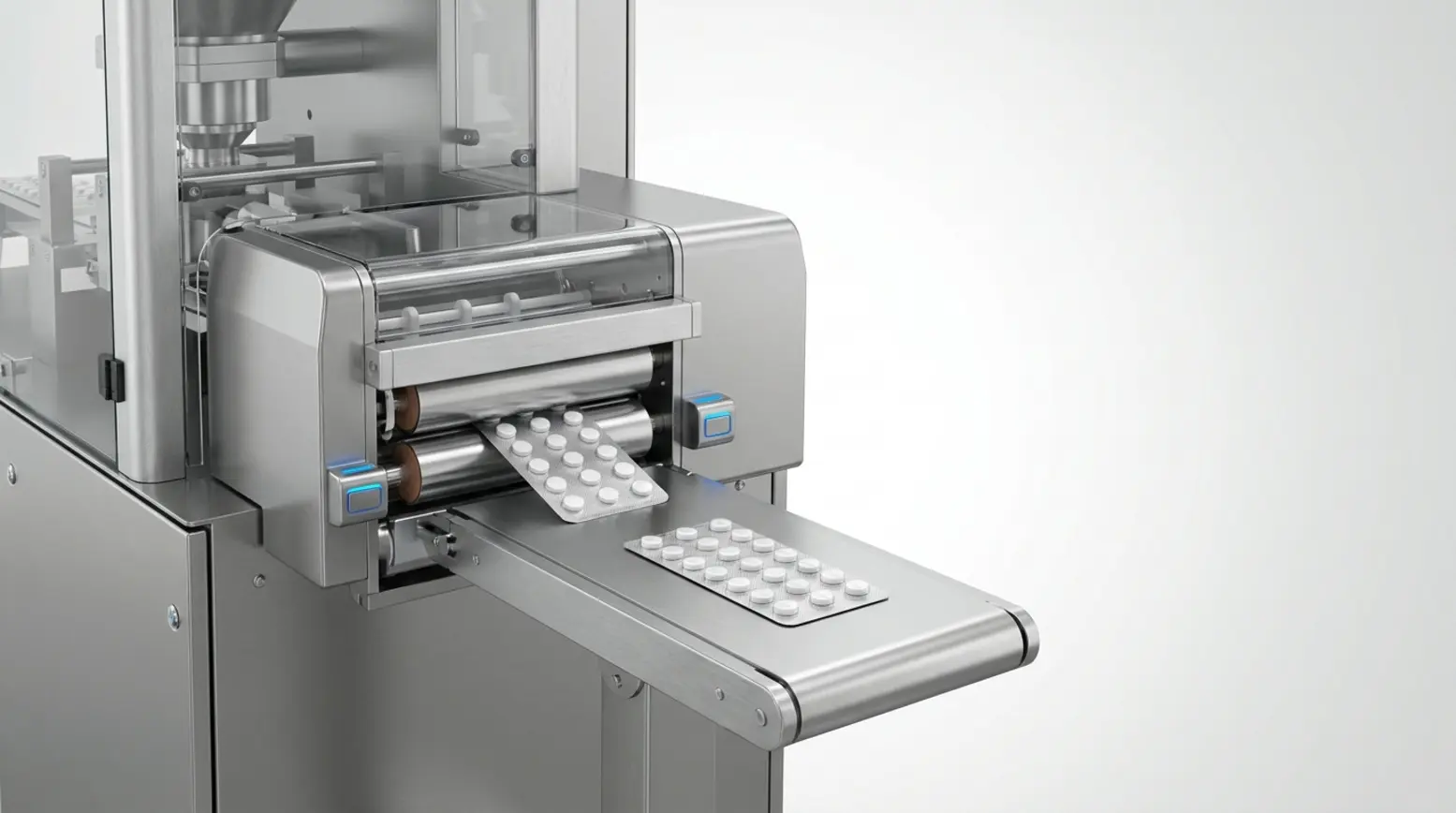
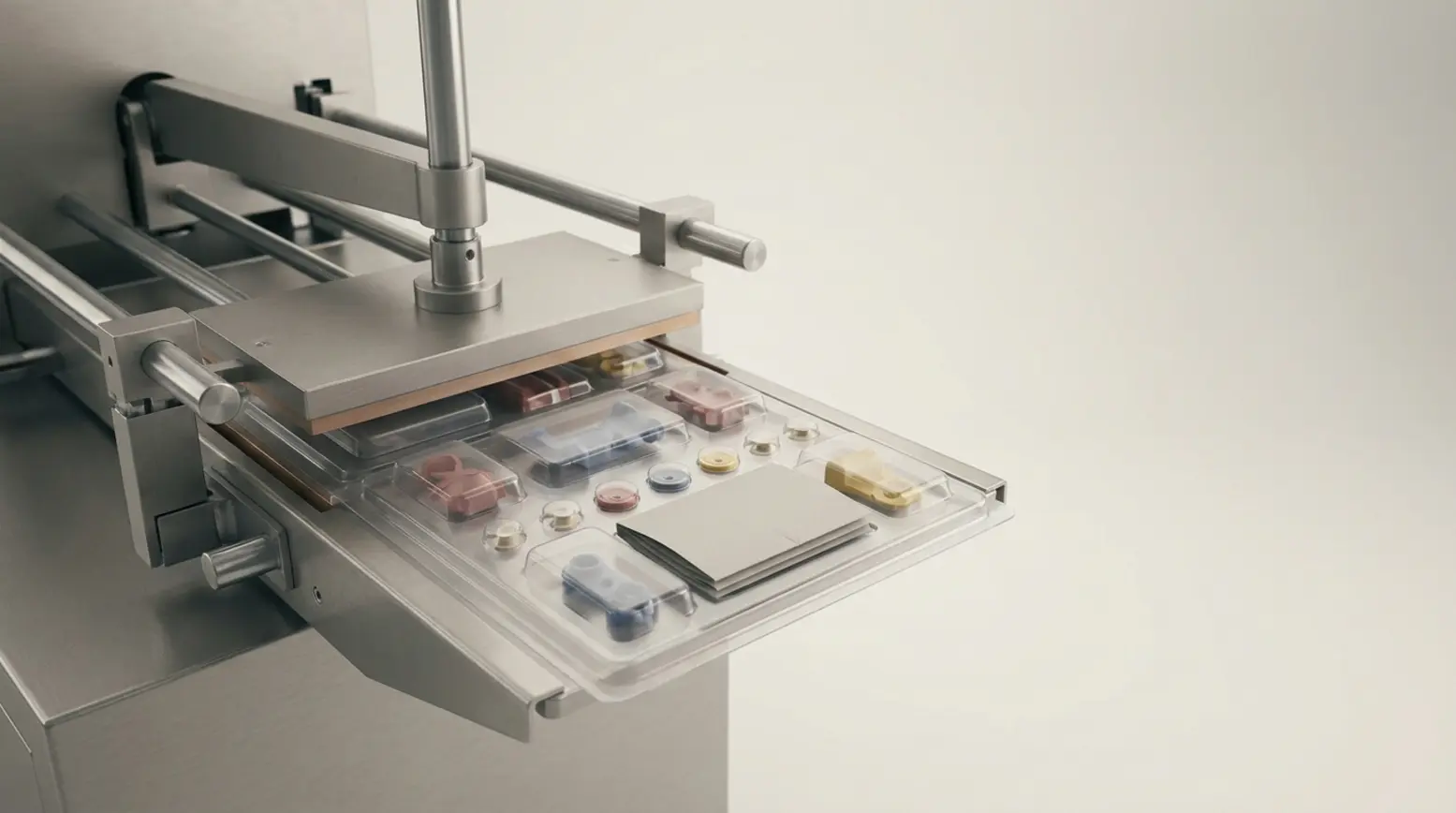
Stretch pack packaging machine: suspending a product between two films


A stretch pack holds a product between two flexible films inside a card frame, allowing shoppers to see the actual item from both sides. A stretch pack packaging machine is typically used when this clear view is essential. However, the format only works well if the product's shape, weight balance, film contact, frame strength, and loading method all suit the design. Before selecting equipment, you should test the physical product for movement, twisting, puncture risk, transport behavior, and shelf or hanging presentation.
• Stretch pack packaging provides excellent front and back visibility because the product is suspended between the films.
• A stretch pack packaging machine differs from standard blister equipment because film handling is an integral part of the production cycle.
• Product shape, thickness, weight distribution, and sharp edges determine whether suspended product packaging is a realistic option.
• Early testing with physical samples or accurate drawings helps prevent incorrect machine selection.
• Automation can improve efficiency, but awkward loading requirements or numerous product variants may still require part of the process to remain manual.
What a stretch pack packaging machine makes
A stretch pack packaging machine creates a retail pack that suspends a product between flexible films inside a framed or windowed card design. Because the product is visible from both sides, this format is frequently used when retail appearance is a priority. Simply put, it is a form of suspension packaging or transparent suspension pack design where the structure and film securely hold the item in place. For teams comparing different packaging styles, this is a specialist format that requires careful review from both a packaging and an equipment perspective.
What makes this format useful at retail
This format is highly effective when shoppers need a clear, unobstructed view of the actual product. The shape, color, finish, and fine details remain highly visible because there is no deep cavity blocking the line of sight. Consequently, stretch pack packaging works exceptionally well for accessories, small tools, electronics, and other items that benefit from two-sided visibility. In floating pack retail concepts, the product can even appear lighter and more open, creating a stronger visual impact than a traditional enclosed package.
How this differs from blister packaging
A standard blister pack typically holds the product within a pre-formed cavity. In contrast, a retail stretch pack relies heavily on film behavior and frame support, as the item is firmly gripped between films rather than resting inside a standard pocket. As a result, the production logic and testing requirements are entirely different. For a simple comparison with blister packaging, it is helpful to review that format first before returning to the equipment considerations discussed here.
When a stretch pack packaging machine is a good fit
A stretch pack packaging machine is an ideal fit when a product can be held securely and cleanly between films, provided the frame can support that presentation throughout production, transit, and retail display. While this sounds straightforward, actual performance heavily depends on the product's outline, weight balance, overall thickness, and specific contact points. Therefore, a packaging concept that looks appealing on paper still requires practical testing before finalizing an equipment strategy.
Product shape, thickness, and weight balance
The outline of the product dictates how effectively the films can grip and secure it. Symmetrical, well-balanced shapes are generally easier to suspend because the pressure remains consistent across the entire pack. If one side is noticeably thicker or heavier, the product may tilt, rotate, or settle at an awkward angle. Complex shapes can certainly still work, but they require closer evaluation since a stretch film pack reacts to structural details much more directly than a standard cavity pack.
Sharp points, movement, and film risk
Sharp corners, narrow points, and uneven edges can stress the film and potentially cause punctures. Additionally, certain products may shift more than anticipated when shipping cartons vibrate during transit or when the package hangs on a peg for extended periods. For these reasons, a suspended product packaging concept should never be approved based solely on its appearance. It is crucial to evaluate shifting, twisting, film stress, and frame durability under realistic conditions.
Pack presentation in real retail conditions
The finished package must be tested in the exact display position it will utilize in retail stores. Some packs hang on pegs, whereas others are designed to stand upright or sit flat on shelves. A pack that appears perfectly stable on a desk might behave very differently after hanging for several weeks. Transport cartons and routine store handling also play a critical role, as external pressure and movement can alter the final presentation long before the product ever reaches the shelf.
How a stretch pack packaging machine process differs from standard blister sealing
The fundamental difference in the process lies in how the film must be manipulated around the product during the machine cycle. In standard blister production, a pre-formed cavity does the majority of the holding work. In a stretch pack format, the machine must simultaneously manage card handling, product placement, film positioning, and the final joining process. Consequently, the film, the frame, and the machine concept must be evaluated together as a single, unified system.
Film handling is part of the full cycle
With suspension packaging, the production process involves much more than simply bringing components together. The flexible films must be positioned precisely, the product must be loaded in a stable orientation, and the resulting pack has to secure the item without compromising its presentation. As a result, a stretch packaging machine designed for this application requires an entirely different setup compared to a standard blister card sealer. Because film behavior is factored in from the very beginning, machine control and pack design become inextricably linked.
The role of the frame or board
The outer frame or board dictates the overall shape of the pack and provides a stable surface area for sealing or joining. If the card frame is too weak, the pack may warp, lose its crisp appearance, or become difficult to process consistently. Likewise, if the joining area is too narrow or improperly positioned, production stability will likely suffer. Therefore, windowed card packaging is not merely an aesthetic choice; it directly influences how smoothly the process runs on the equipment.
Specialist equipment and standard blister platforms
Because Stretch Pak is a specialized retail application, it must be treated accordingly. Starview offers a dedicated automated Stretch Pak machine platform that feeds the cards, forms the cavities, folds the board, seals the pack, and cleanly unloads the finished product. We can help you determine where this type of specialized setup fits within a broader packaging project, as the final decision usually depends on product geometry, loading requirements, and anticipated volume. It should never be viewed as identical to a standard blister platform, even if the purchasing process appears similar on the surface.
What to test before choosing a stretch pack packaging machine
The best starting point is always a physical product sample. If a working sample is not yet available, highly accurate drawings serve as the next best option, as they help teams assess the overall shape, frame size, and likely handling points. A stretch pack packaging machine should only be selected after completing these critical checks, since the format relies heavily on realistic product behavior. Our machine implementation approach begins with a practical review and comprehensive testing, ensuring your equipment decision is driven by actual production needs.
Start with real samples or accurate drawings
A tangible sample demonstrates exactly how the product sits, where the films make contact, and how much the item might shift inside the packaging. Accurate technical drawings remain incredibly useful during early development, especially when they clearly illustrate the outline, thickness, and weight distribution. Even minor details can dictate whether a transparent suspension pack functions properly, meaning early project information must be as thorough as possible.
Test product stability and pack strength
Thoroughly test whether the product shifts, twists, punctures the film, or distorts the shape of the frame. You should also simulate transport movement, as shipping vibration and carton pressure frequently reveal structural issues that go unnoticed in a static, tabletop sample. Afterward, evaluate the pack in its intended display position, whether hanging or standing, as long-term presentation is just as vital as the initial visual impact.
• Checklist: sample available, accurate drawing available, product shape reviewed, transport movement tested, display position tested, loading method defined.
Test loading and format change in real use
Consistent product and card geometry simplify automation because the packaging components behave in a highly repeatable manner. Conversely, if placement is awkward, if the product can rest in multiple orientations, or if there are numerous variants, a portion of the process may still require manual loading. These factors directly influence tooling design, changeover expectations, and total output, which is why they must be reviewed early in the process rather than addressed as an afterthought.
How to select the right stretch pack packaging machine setup
The optimal setup depends on your specific product, expected production volume, and how the pack will be loaded and inspected. Some projects follow a relatively standard route, whereas others demand a highly customized concept to accommodate unique feeding, product positioning, printing, scanning, or vision inspection requirements. When buyers begin comparing broader retail packaging machines, it helps to remember that this remains a distinct, specialized process within that larger category. Ultimately, the machine choice must align with how the product behaves in real-world production, not just how the packaging concept looks on paper.
Match machine choice to product, volume, and handling
A lower-volume project might initially rely on manual steps, particularly during early trials or a limited market launch. As production volume scales, increased automation generally becomes beneficial, though only if the product and card shape remain stable enough to allow for repeatable handling. If achieving the correct loading position is difficult, manual support might remain the smartest choice, even on a highly automated line. For this reason, we always review the actual application first, ensuring the final recommendation perfectly fits both the product and the manufacturing process.
Consider setup and rollout beyond the machine
The machine itself is only one part of a comprehensive purchasing decision. Installation, line integration, daily operator use, and post-delivery support are equally important, as specialized pack formats often place extra demands on material handling both before and after sealing. If inline coding, vision inspection, or specific product checks are required, those integrations must be planned meticulously from the start. A more successful outcome typically arises from planning the entire production line holistically rather than focusing exclusively on the sealing station.
When to ask for an early review
If you are still determining whether this format is viable for your product, a free Quick Scan serves as an excellent next step. Simply share the product shape, packaging concept, target volume, and loading requirements, and our team will assess whether specialized equipment is necessary. To initiate this discussion, please contact us with your physical samples or accurate technical drawings. Doing so will help transition your project from a basic concept to a realistic, actionable technical review.
Simple comparison of stretch pack and conventional blister pack
The information below provides a practical comparison, ensuring early discussions remain clear and focused on the true production differences.
Topic: product support. Stretch pack: the product is firmly held between flexible films inside a frame. Conventional blister pack: the product rests primarily within a pre-formed cavity.
Topic: visibility. Stretch pack: provides strong front and back visibility. Conventional blister pack: offers good visibility, but the plastic cavity shape is far more pronounced.
Topic: key process need. Stretch pack: requires active film handling around the product during the machine cycle. Conventional blister pack: involves sealing a pre-formed blister to a backing card or lidding material.
Topic: main testing focus. Stretch pack: requires testing for internal movement, twisting, puncture risk, and frame behavior. Conventional blister pack: focuses heavily on cavity fit, seal quality, and accurate product placement.
Practical examples for early testing
Imagine a retail accessory that customers ideally want to inspect from both sides. A stretch pack will likely present it much better than a deep cavity pack because the actual product remains entirely visible. However, if one end of the accessory is significantly heavier, the item could easily rotate inside the films. In this scenario, the packaging concept might still be viable, but the physical product must be rigorously tested before any machine layout receives final approval.
Next, consider a product family containing several similar items with slightly varying outlines. One specific size might process flawlessly, while another variation might require a stronger frame, a modified loading step, or increased manual support. This scenario is incredibly common in suspended product packaging, as even minor geometric changes can dramatically alter film contact and overall product stability. Consequently, the machine setup must accommodate the complete product range, rather than relying solely on the most forgiving sample.
Common questions about stretch pack production
Is stretch pack packaging the same as blister packaging? No. A standard blister pack usually relies on a pre-formed cavity to contain the product. Conversely, stretch pack packaging suspends the item between flexible films inside a structured frame, meaning the pack design, the testing requirements, and the fundamental machine process are entirely different.
Can every product work in a transparent suspension pack? No. Factors such as shape, thickness, outline, weight balance, and film contact all matter immensely. Because certain products tend to shift, twist, or place excessive stress on the film, they must undergo extensive testing before appropriate equipment is selected.
Does a higher level of automation always make sense? No. Automation is most beneficial when the product and card geometry are completely consistent. If manual loading is inherently awkward or if there are numerous product variations, a portion of the process may remain manual, even on a highly advanced production line.
When is specialist equipment needed? Specialized equipment becomes necessary when the packaging format, film handling requirements, and loading methods extend beyond the capabilities of standard blister card sealing. This is frequently the case when a dedicated Stretch Pak machine concept is required to achieve stable production.
What is the best first step in a new project? Start with real, physical samples whenever possible. If actual samples are not yet ready, utilize highly accurate technical drawings. Taking this step provides a solid foundation for testing, accurate machine selection, and thorough implementation planning.