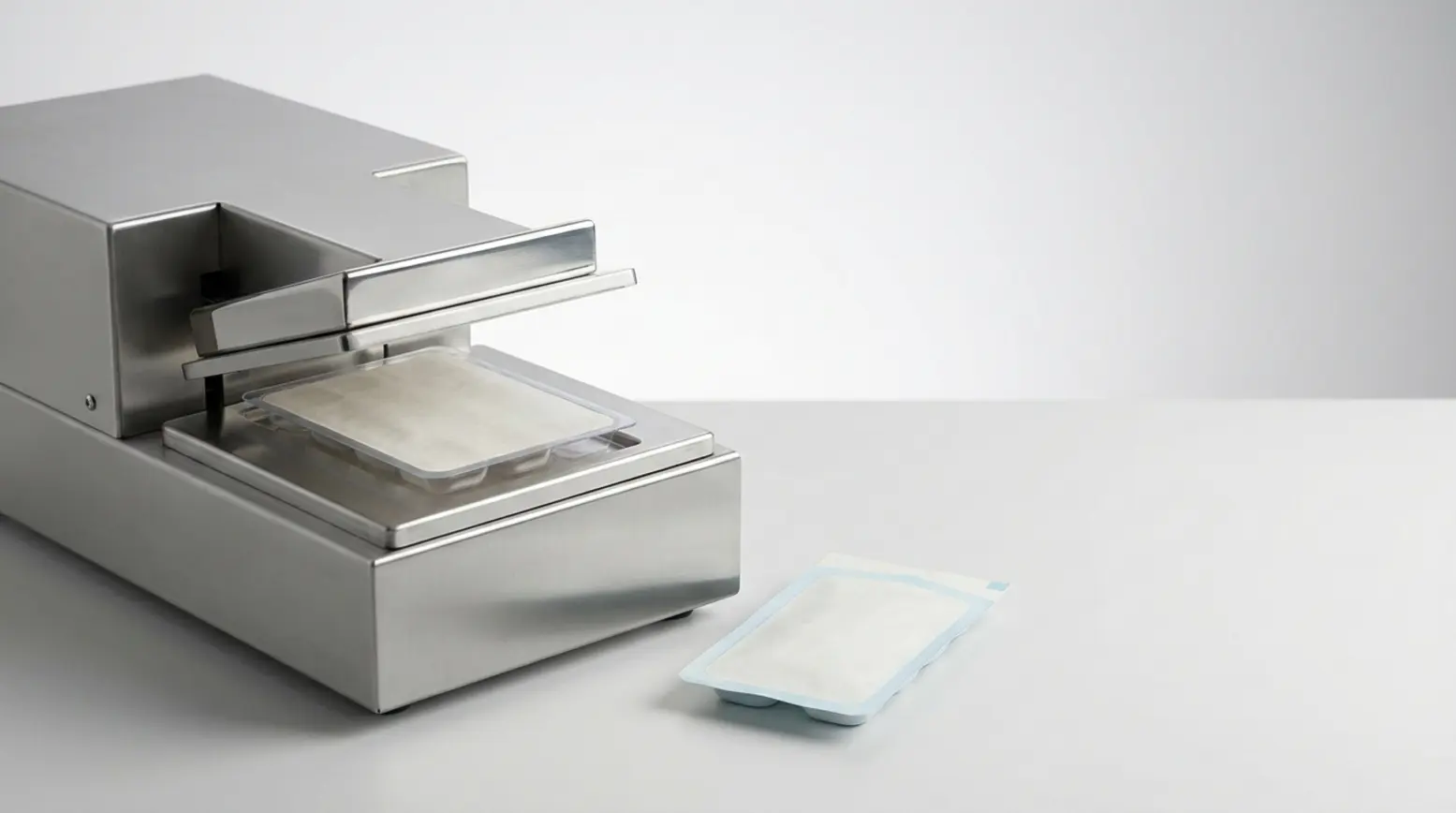
Toy blister packaging machine for multi piece set loading

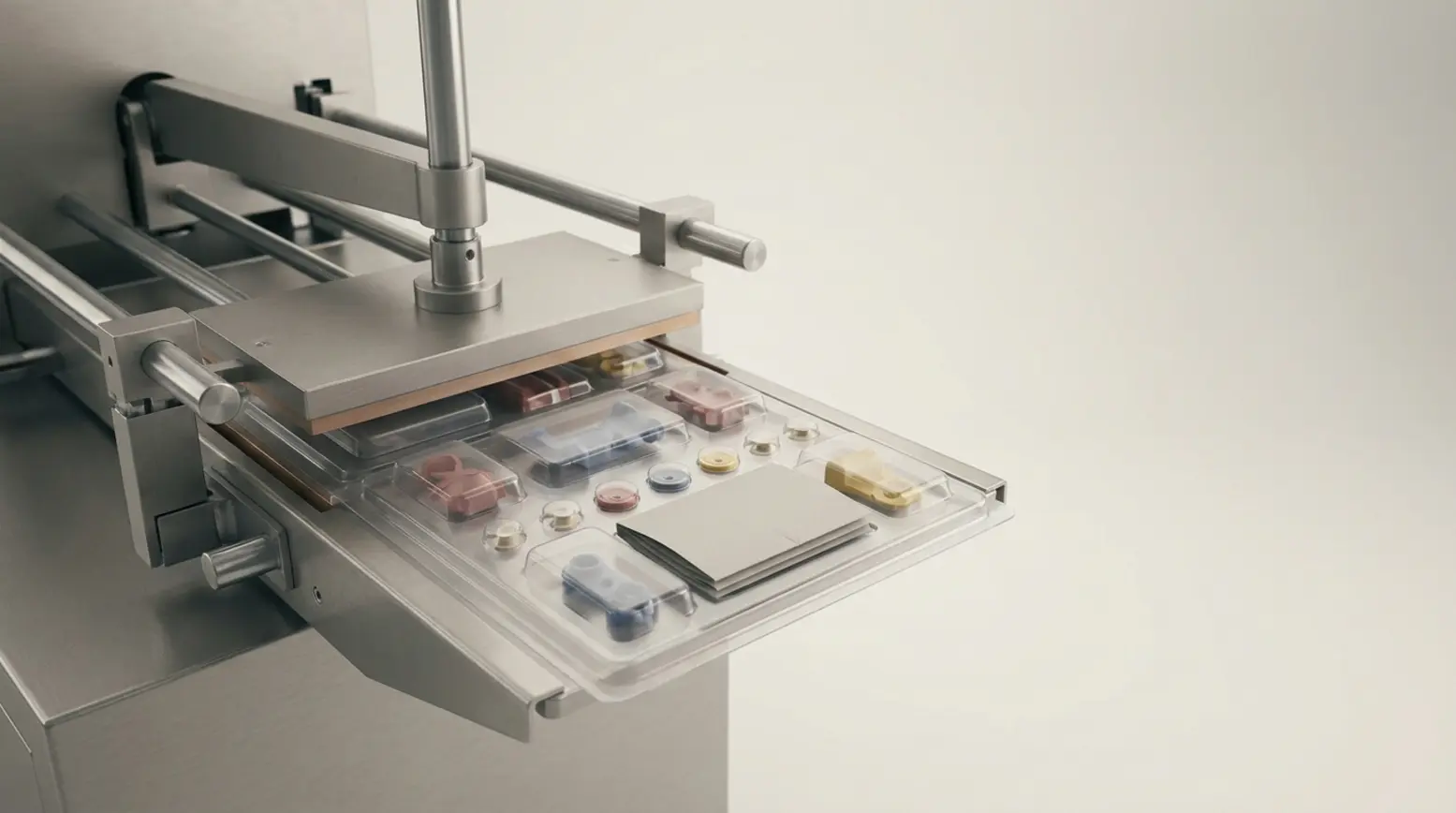
A toy blister packaging machine for multi-piece sets must keep every part in the correct place before sealing begins. This is the primary challenge, as sealing only works effectively when each item sits inside its own cavity and remains clear of the seal area. The ideal setup depends on part shape, cavity layout, loading order, feeding method, tooling, and seasonal volume. For this reason, machine selection should start with actual parts and a realistic packaging concept, rather than focusing solely on target speed.
• Each additional part adds a new loading step, making placement errors and slower output more likely.
• A multi-cavity blister helps organize components, but the cavity shape must match the physical product and the loading sequence.
• Manual, semi-automatic, and automatic loading methods each suit different products, volumes, and changeover requirements.
• Capacity planning should account for loading time, quality checks, and changeovers, since sealing speed alone does not reflect true output.
• A successful project begins with trials, allowing the pack geometry and machine setup to be evaluated together before any investment is made.
Why a toy blister packaging machine starts with part position
In multi-piece set packaging, the initial task is simple to describe but difficult to execute consistently: every component must land in the correct position before the pack is sealed. A toy blister packaging machine only operates reliably when part placement remains stable from loading through sealing. If a single item turns, sits too high, or shifts during transfer, the pack might jam, the seal could become uneven, and overall output may drop. This is precisely why production challenges begin with placement and retention, rather than just speed.
Why handling multiple parts creates a different loading challenge
Each extra item introduces another placement step, and every step carries a risk. In retail set packaging, this might result in a missed cavity, incorrect orientation, or an awkward hand movement that slows down the operator. Small hobby parts often behave quite differently from larger molded items, meaning a single pack can contain both easily placed pieces and those that are difficult to control. Therefore, a toy packaging machine designed for these sets must match the actual loading rhythm and the specific mix of components.
Why sealing depends on stable part retention
Once loaded, a part must remain inside its designated cavity. If it shifts into the seal area, the resulting seal may become weak or incomplete. This can lead to rejects and rework, particularly as production speeds increase. For this reason, retention should be verified early using actual product samples. A pack that appears perfectly fine at lower speeds can still fail if parts bounce, slide, or lift during full production.
How a toy blister packaging machine utilizes a multi-cavity blister
A multi-cavity blister provides each item with its own fixed location, making the loading process more straightforward and the final pack much more organized. This approach supports multi-component blister design by using separate cavities to keep parts isolated until the sealing process is complete. For broader background information on blister packaging, that guide explains the basic formats, whereas this article focuses specifically on machine selection and loading dynamics for multi-piece sets.
Matching cavity geometry to real parts
The cavity must match the physical product, not just a technical drawing. Width, depth, spacing, and entry angle are all crucial factors because parts can easily tilt, bounce, or rest above their intended level. This is especially important for a toy blister card designed to hold mixed items of varying weights and shapes. A design might look flawless on paper yet still cause significant trouble in production if the parts fail to settle in a repeatable manner.
Planning the loading sequence before tooling is finalized
The loading sequence often determines whether an attractive layout is actually practical. A center cavity might appear efficient during the design phase, but it can become difficult to reach once the surrounding cavities are filled. Therefore, the pack layout, cavity spacing, and intended tooling should all be evaluated together before committing to a specific production method. When comparing different options, it is helpful to review broader packaging styles for retail products before returning to the specific loading challenges at hand. This ensures that the chosen pack format remains firmly linked to real-world assembly conditions.
When a toy blister packaging machine might require a multi-panel pack
Some product sets become far too crowded on a single front face. This typically happens when the part count is high, the components are large, or the graphics and instructions simply require more room. In these situations, a multi-panel pack can serve as a highly practical solution, as it creates additional space and enhances part presentation. Even so, the design must still be evaluated based on how well it loads, secures the parts, and seals on the intended equipment.
What changes with a multi-panel pack
A multi-panel pack alters much more than just visual appearance. It impacts card handling, tooling, the overall pack shape, and the sequence in which parts, cards, and blisters are assembled. Consequently, you cannot assume that a single design will run smoothly on every machine format. The complete geometry must be reviewed beforehand, as loading access and movement through the equipment can change drastically once extra panels are introduced.
Where cold sealing can support pack construction options
Cold sealing relies on pressure rather than heat. Within our equipment range, this technology can support unique pack construction options, including various multi-panel concepts. However, every design still requires a thorough review because the machine format, tooling, card handling, and loading sequence ultimately determine what is viable. It is always better to confirm the complete construction early on, rather than assuming that any cold seal setup can accommodate every panel concept.
How loading defines the right toy blister packaging machine
The loading process frequently dictates the best equipment choice even more than the sealing station does. A toy blister packaging machine might boast an impressive sealing rate on paper, but true output depends entirely on how parts arrive, how they are placed, and how frequently the line must stop for adjustments or corrections. This is especially true for toy sets packaged in blisters that combine larger molded parts with small, loose components.
When manual loading remains the better option
Manual loading is often the ideal choice when product sets change frequently, production volumes are modest, or parts are simply too difficult to orient automatically. It provides excellent flexibility for product changeovers and accommodates shorter runs with ease. This is particularly valuable in seasonal packaging production, where demand can spike rapidly before returning to smaller repeat orders. The tradeoff, however, is clear: every additional part significantly increases labor and handling time.
When automatically feeding small parts is beneficial
Automatically feeding small parts can drastically improve consistency, provided the part can be separated, oriented, and presented in the exact same manner every cycle. If components tend to stick together, nest inside one another, or arrive in random orientations, feeder performance becomes much harder to predict. This is why any decisions regarding automated feeding should follow practical trials using real components. It is always safer to test the actual behavior first before defining the appropriate level of automation.
Why a single set might require different feeding methods
A single set might include a molded base, a small round accessory, a folded leaflet, and a printed insert. Since these items do not behave in the same way, they often require different loading methods on the same line. Some parts may need to be placed manually, while others are perfectly suited for semi-automatic handling or an automated feeder. For this reason, full automation is not always the best solution for a toy packaging machine handling mixed component sets.
Using vision checks in a practical way
Vision systems can effectively verify whether a part is present, situated in the correct location, and facing the right direction. This enhances process control, provided the inspection rules are clearly defined. The customer must still establish these parameters, as the system can only evaluate what has been agreed upon and made visible to the cameras. Before making a final equipment decision, conducting trials with actual parts and the intended loading sequence remains crucial. This allows teams to develop pack geometry and machine setup together, avoiding the costly mistake of finalizing tooling too early.
Choosing a toy blister packaging machine for seasonal packaging production
The ideal equipment should align with your annual demand pattern, rather than just hitting the highest theoretical speed. A toy blister packaging machine chosen solely for peak output can become a poor fit during the rest of the year if jobs are smaller, product ranges change frequently, or labor availability fluctuates by season. This is why seasonal packaging production constraints must factor into the machine selection process from the very beginning.
Looking beyond sealing cycles
True capacity amounts to much more than simple cycles per minute. A realistic estimate must account for loading time, operator movement, part supply replenishment, inspection steps, expected rejects, and format changeovers. These factors ultimately determine the actual output in retail set packaging, because even the fastest sealing station cannot recover time lost to inefficient loading or setup delays.
Matching equipment to repeat batches and changing jobs
Manual and semi-automatic machines remain highly useful for lower volumes and frequently changing product ranges because they are inherently easier to adapt. Conversely, rotary machines make excellent sense for repeat seasonal batches at higher volumes, provided the format and loading patterns remain stable. If you would like to compare these approaches, our page on retail packaging machines for multi-piece products offers a practical starting point for evaluating output, flexibility, and the best loading fit.
When a second flexible machine might help
Sometimes, relying on a single, highly specialized line is not the most effective strategy for peak seasons. Investing in a second, more flexible machine can help support smaller runs, accommodate changing formats, and balance labor requirements during exceptionally busy periods. The best approach depends on your format mix, chosen loading methods, and how frequently jobs change. In many cases, running two complementary systems provides a much more balanced operation throughout the entire year.
What to prepare before selecting a machine
A productive machine consultation starts with concrete facts regarding your specific pack and product. If key details are missing, comparisons remain far too general, and important limitations may only become apparent when it is too late. It is highly recommended to compile a simple internal overview first, enabling the project to transition quickly from basic assumptions to practical, data-driven decisions.
Information to gather
• Part count: Note exactly how many items go into a single pack and determine whether the set configuration always remains the same.
• Part sizes and shapes: Record which items are unusually deep, lightweight, prone to nesting, perfectly round, or otherwise difficult to guide.
• Intended pack layout: Detail the cavity positions and card size, and specify whether a toy blister card or a completely different format is planned.
• Loading method: Clarify which parts will likely require manual placement and which could be handled by semi-automatic systems or automated feeders.
• Seasonal volume curve: Chart your average demand, anticipated peak periods, and typical batch sizes throughout the year.
• Changeover frequency: Note precisely how often formats, component sets, or artwork will need to change.
• Extra requirements: Outline any necessary vision checks, inline printing, scanning capabilities, or broader line integration.
Why the pack and machine should be evaluated together
Because we understand packaging materials just as thoroughly as the machinery, we always evaluate the finished pack construction in tandem with the equipment setup. This is vital when working with a multi-cavity blister or other multi-piece set configurations, as part retention, seal area integrity, loading access, and tooling dimensions all heavily influence one another. A concept that looks perfect in a 3D drawing must still perform flawlessly in real production, using the actual parts, the planned sequence, and realistic machine conditions.
Practical example: a mixed hobby set
Imagine a small retail set containing a molded plastic tool, three round accessories, a folded instructional leaflet, and a printed backing card. On paper, this assembly looks completely straightforward. In actual production, however, the molded tool might load seamlessly, while the round accessories could roll, twist, or sit slightly above the cavity edge. Furthermore, the leaflet could block access to the remaining cavities if it is inserted too early in the sequence. In this scenario, the most effective solution might involve a hybrid approach: manual placement for the most awkward parts, guided automated loading for others, and a final vision check right before sealing. This type of example clearly illustrates why your machine choice must be dictated by real-world loading behavior.
FAQ
What is the main challenge in multi-piece set packaging? The primary challenge is keeping every single part securely in the correct position from the initial loading stage right through to sealing. If a single item moves, rotates, or enters the designated seal area, overall pack stability and seal quality will inevitably suffer.
When does a multi-cavity blister make sense? This approach is ideal when every item in a set requires its own fixed location. A multi-cavity design ensures reliable part separation, supports a much cleaner loading process, and greatly improves sealing consistency.
Can every toy packaging machine run a multi-panel pack? No. The complete pack geometry, necessary tooling, card handling mechanisms, and loading sequences must all be evaluated beforehand, as specific constructions naturally fit certain machine formats much better than others.
Is full automation always the best choice for blister machine toy sets? Not necessarily. Automation is only effective when parts can be easily separated, correctly oriented, and presented in a highly repeatable manner. For mixed sets, a combination of manual and automated handling methods is frequently the most reliable solution.
What should be included in a capacity estimate for retail set packaging? A thorough capacity estimate should factor in loading times, sealing cycles, labor requirements, part supply logistics, inspection steps, format changeovers, and your seasonal demand patterns. Factoring in all these elements provides a far more realistic view of your true output potential.
If you are currently planning to package a new set, please send us the part count, pack concept, seasonal volume curve, and your expected loading method. We can review the practical suitability of different machine and tooling options through our free Quick Scan, or we can discuss the project in greater detail once your specific requirements become fully clear.