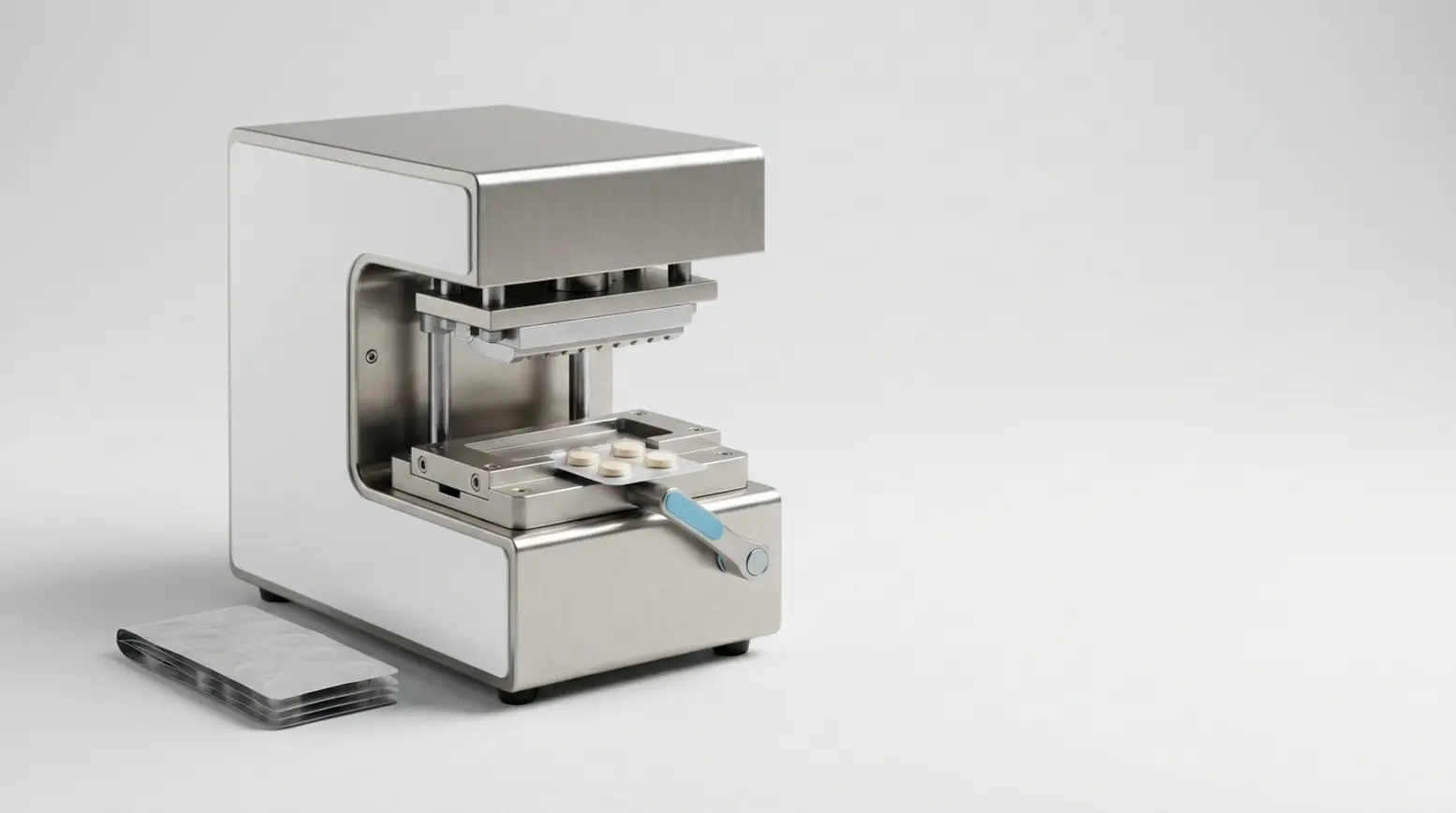
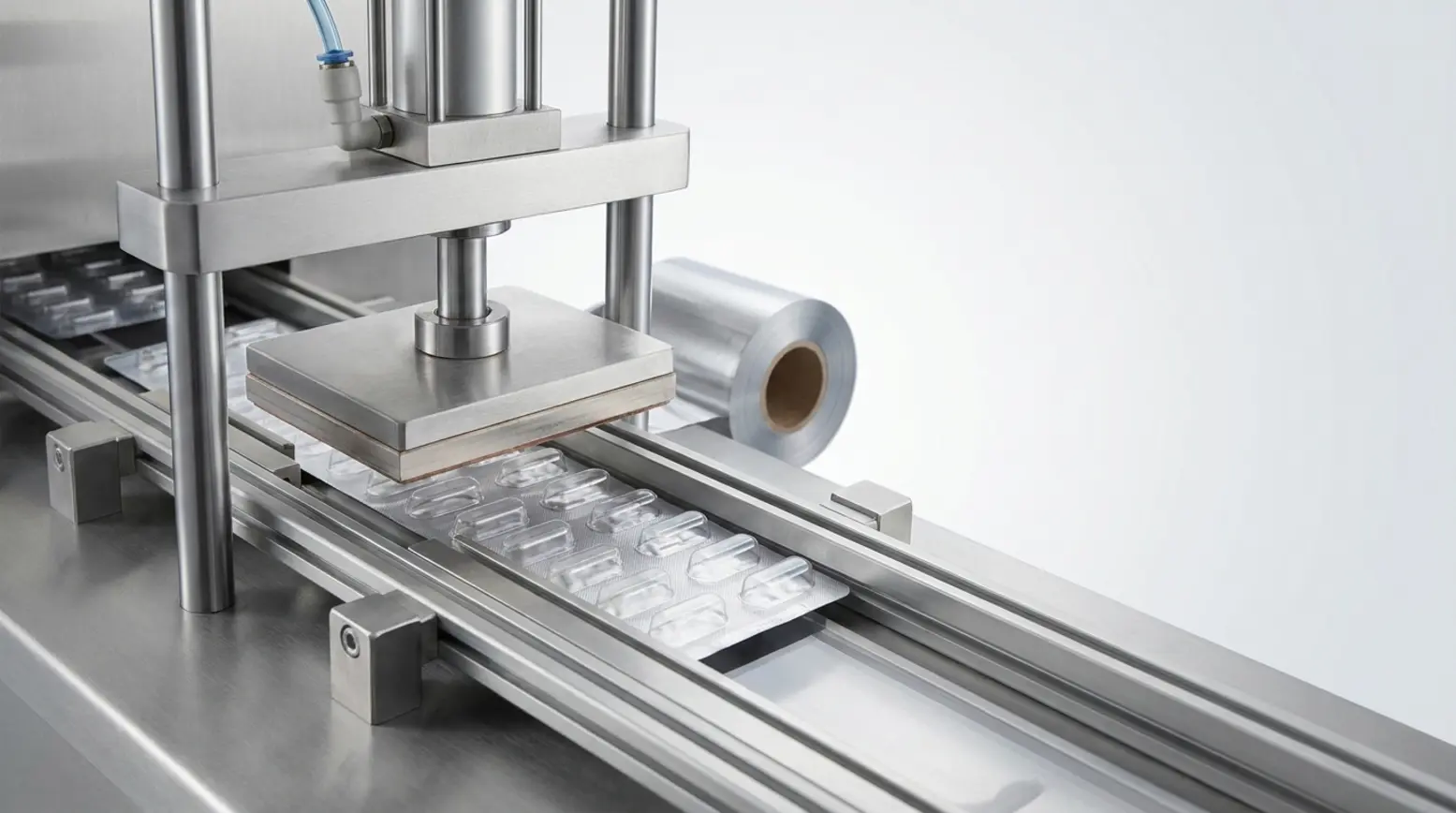
Electronics blister packaging machine for small electronics products


Choosing the right electronics blister packaging machine starts with four key factors: the pack format, how the product stays in place, how it will be loaded, and how often the format changes. Small electronics and accessory packs often look simple, but items like cables, adapters, earbuds, connectors, and small kits can easily shift during loading or move into the seal area. Because of this, the best machine is not always the fastest. Rather, it is the one that perfectly fits your product mix, your loading method, and your actual production volume.
• The right machine depends on pack construction, retention, loading method, and automation level.
• Broad SKU ranges typically lead to more tooling, frequent changeovers, and increased setup time.
• Product retention is critical, as loose cables and small parts can enter the seal area and cause rejects.
• Static and moisture requirements must be clearly defined before finalizing any material and machine decisions.
• Since manual, rotary, and inline systems each suit different demand patterns, your machine choice should always be driven by real production data.
Why an electronics blister packaging machine decision starts with your product mix
An electronics blister packaging machine must align with your product mix, primarily because small electronics often come in a wide array of sizes, shapes, and pack versions. A charger, cable set, adapter, or connector kit may each require distinct pocket shapes, unique loading steps, or different card layouts. In consumer electronics packaging, this creates significantly more variation than many buyers expect. Therefore, your decision should begin by evaluating your SKU range, shape variation, and demand patterns, rather than focusing on speed alone.
Many variants mean more tooling and frequent changeovers
A broad product range inevitably requires more tooling and frequent changeovers. While one accessory blister pack might only need a simple cavity, another may require precise shape control to ensure the product stays completely clear of the seal area. This is especially crucial in retail accessory packaging, where minor changes in a plug's shape, a cable's length, or an added component can significantly affect both the blister design and the machine setup. If changeovers happen frequently, flexibility is often much more valuable than maximum output.
Common card footprints reduce unnecessary variation
Standardizing card sizes across product families is often highly beneficial. By maintaining a single card footprint, you only need to change the formed blister when necessary. This approach significantly reduces storage complexity, shortens setup work, and optimally supports small parts blister packaging across multiple product lines. It also provides a clear path forward when you want to build a cohesive format family rather than managing dozens of unrelated packs.
Volume patterns matter just as much as total annual output
Total annual volume is merely one part of the equation. A stable product with consistent, repeat orders may perfectly suit a higher level of automation, whereas short runs with frequent format changes simply will not. We see this frequently in retail cable packaging programs and mixed accessory portfolios, where demand patterns shift much faster than expected. Consequently, your actual order flow is typically a much better guide than annual output figures alone.
Pack formats that work with an electronics blister packaging machine
Common formats include carded blisters, trapped formats, clamshell-style packs, and other sealed retail packages. These formats remain popular because buyers typically want to inspect the connector type, color, size, or included parts before making a purchase. If you are looking for a basic overview of blister packaging for retail presentation, our comprehensive guide explains the main format options. Here, however, our focus remains on machine fit and how your chosen pack style impacts loading and sealing.
When visibility enhances retail presentation
Visibility is highly advantageous in electronics blister packaging, as shoppers usually want to inspect the product quickly before buying. This is especially true for earbuds, charging cables, adapters, memory accessories, and small device kits. While a clear pack beautifully supports shelf presentation, it must also hold the product securely in a stable position. For this reason, you should evaluate any pack design based on both its retail display value and its overall machine performance.
Where to place barcodes and artwork
The printed card is typically the best location for product information, compliance text, and the barcode. It provides a flat surface, making printing much easier to manage and ensuring that scanning is highly reliable. Always keep the barcode away from curved or reflective areas, as glare and uneven surfaces can easily degrade scan quality. While this may seem like a simple step, it has a direct, profound effect on machine handling and downstream quality checks.
Closed packs and when they are the best choice
Closed packs are frequently selected when a securely sealed retail format is required. This approach supports tamper-evident closures and premium shelf appearances for high-value products, though the final result still heavily depends on the overall design, the chosen material, and the sealing method. Because of these variables, no single format should be treated as the universal best choice. The right format is simply the one that perfectly balances display aesthetics, product retention, and machine suitability.
Product retention needs in an electronics blister packaging machine setup
Product retention refers to securely keeping an item in its correct position during loading, sealing, and normal handling. In an electronics blister packaging machine setup, this is easily one of the most critical design elements, since cables, small connectors, and loose parts are prone to shifting. If a product accidentally enters the seal area at the wrong moment, the pack may be rejected or seal improperly. A well-designed blister pack with strong product retention helps you avoid these costly problems before production even begins.
Keeping cables and small parts out of the seal area
Cables, leads, adapters, and loose pieces must be firmly controlled before the seal closes. If a cable loop springs out or a small part shifts during placement, the sealing area will no longer be clean and clear. Ultimately, this creates unnecessary waste and forces extra quality checks on the line. Thoughtful pack geometry naturally guides the product into a safe position, allowing the machine to run with far greater repeatability.
Using cavity shapes and inserts to secure the product
A custom-shaped cavity can securely hold a product in a clear, stable position. In some cases, the pack also requires specific inner geometry or a separate retention feature to ensure each part stays exactly where it belongs. This is particularly useful for oddly shaped items, mixed kits, or small parts applications where several different items share a single blister pack. Because product retention and cavity shape directly impact loading and sealing, your pack design and machine choice should always be reviewed together.
Testing retention before tooling is finalized
Product retention should be tested early on, well before final tooling is approved. It is always better to discover movement issues during the development phase rather than after installation, as late-stage changes cost valuable time and money. This testing is especially critical for electronics accessories and other small goods, where even the slightest shift in position can dramatically affect sealing performance.
Material checks before choosing an electronics blister packaging machine
Material choices should always be driven by specific product requirements. For instance, you should never assume that a standard clear retail blister naturally provides static control or moisture protection. Because of this, any sensitivity requirements must be explicitly defined before finalizing your material and machine setup. Doing so keeps the packaging project grounded in facts and drastically reduces the risk of committing to the wrong specification.
Static sensitivity must be explicitly specified
If a component is sensitive to static, this fact must be stated clearly in the packaging specification. Do not assume that a standard clear blister used in consumer electronics packaging will inherently meet that need. The packaging machine, the chosen material, and the full pack concept must all be evaluated against this specific requirement. Without this vital step, the entire project may move forward on a flawed foundation.
Moisture requirements must be clearly defined
Moisture sensitivity should be handled in the exact same manner. If barrier performance is required, the specification must explicitly say so right from the start. Without that upfront input, no one should assume that a given material or sealed format will adequately meet the product's needs. Defining these requirements early protects the decision-making process and ensures that machine selection stays directly linked to actual product facts.
Product, pack, and machine must be assessed together
These decisions yield the best results when the product, pack, and machine are assessed together from the very beginning. Taking a holistic approach makes it much easier to review retention, material choices, loading methods, and line options as a single, cohesive project. Early assessment is also the ideal time to discuss optional features like inline printing, scanning, or vision systems, provided they are relevant to your application.
Choosing the right electronics blister packaging machine by loading method and volume
Finding the right automation level depends just as much on loading difficulty as it does on raw sealing speed. Many small products still require careful placement, precise orientation, or manual grouping before the sealing process can begin. If you would like broader context regarding blister packaging machines, our comprehensive guide explains the primary machine types. This article, however, remains strictly focused on electronics blister packaging and the practical, day-to-day issues that dictate machine fit.
When manual equipment is the best choice
Manual equipment is often the smartest choice for low or irregular demand, particularly when the product range is wide and formats change frequently. For a small accessory program, manual loading can be the most practical solution whenever flexibility matters more than pure speed. It also provides production teams with a simple, low-risk way to validate pack handling before ultimately upgrading to a higher level of automation.
When rotary equipment fits broad accessory ranges
Semi-automatic and fully automatic rotary equipment are perfect fits for consistent, medium-to-high production runs where several different product shapes still demand format flexibility. We design our rotary range to accommodate products of varying shapes and sizes, making it exceptionally well-suited for broad accessory portfolios and numerous retail pack variants. Once you define your loading method and product mix, you can explore our retail blister packaging machines for electronics to find the specific machine family that best fits your job.
When inline automation makes the most sense
Automatic inline equipment is ideal for stable, high-volume formats where product loading can be automated reliably. This setup typically works best when the product's shape remains highly consistent and format changes are strictly limited. Conversely, if your line frequently runs many different cables, adapters, or small kits in short, varied runs, inline automation might actually add complexity instead of reducing it. Therefore, the chosen machine level should always match your genuine production patterns.
When automatic feeding is realistic
Automatic feeding can be specified whenever a product's shape and orientation allow for highly repeatable feeding. While certain solid adapters or small devices may suit this perfectly, flexible cables or mixed hardware kits are typically much harder to automate. As a result, we rigorously assess loading behavior early on before suggesting the final automation level for an electronics blister packaging machine project. This practical approach ensures smarter decisions and significantly reduces the risk of overbuying equipment.
Questions to answer before you select an electronics blister packaging machine
Before selecting a machine, you must gather the fundamental facts that will shape your decision. Doing so provides production, engineering, and procurement teams with a clear, shared vision of the job at hand. It also speeds up early discussions, as the primary constraints are already identified and understood. For most projects, the absolute best starting point is collecting basic production data, physical product samples, and details regarding the intended pack format.
Product and pack details to collect first
Begin by identifying the product count, dimensions, weight, overall pack size, card size, blister style, barcode placement, and any static or moisture requirements. You should also note whether the product must stay securely in a fixed display position and whether loose parts will be packed together or individually. These vital details influence tooling, loading protocols, sealing methods, and your overall machine choice right from the very first step.
• Collect first: The complete SKU mix, product size, product weight, pack format, card footprint, and all retention needs.
• Check clearly: The barcode location, artwork area, potential seal area risks, and any specialized material requirements.
Loading and changeover questions to test early
Carefully review whether operators can place the product quickly and correctly, whether the item tends to twist or spring open, how many changeovers occur each week, and whether common card sizes can be utilized across several different packs. These points often matter far more than buyers expect, as they directly impact machine downtime, setup burdens, and the practical limits of your automation. Answering these questions will quickly reveal whether manual, rotary, or inline equipment is the best fit for your facility.
• Ask early: Can the product be oriented easily, will it stay firmly in place, and can the manual loading step be repeated without costly errors?
• Review often: How many format changes actually happen each week, and does the current pack family create unnecessary, time-consuming variation?
When to request a Quick Scan
If you are still comparing different machine automation levels, a quick scan is an incredibly useful first step. Simply share your SKU mix, pack sizes, target production volume, and your current loading method, and we can help you narrow down the options based on practical machine fit. Whenever you are ready, feel free to contact us for a free Quick Scan to discuss product samples, automatic feeding questions, and the best next steps for your packaging project.
FAQ
What is the best machine for packaging electronics accessories? The ideal machine ultimately depends on your product variation, loading difficulty, pack format, and production volume. Manual equipment perfectly fits low or irregular demand. Rotary equipment is best for repeat, medium-to-high output that still requires format flexibility. Finally, inline automation is meant for stable, high-volume packs where loading can be automated reliably.
What pack style is most common for electronics accessories? Carded blister packs, trapped formats, clamshell-style packs, and other sealed retail formats are the most common. They are widely used because they offer excellent product visibility while leaving ample space for printed information on the backing card.
Why is product retention so important in small electronics packs? Proper retention keeps the item safely in the correct position during loading, sealing, and handling. This is especially vital for cables, adapters, connectors, and loose parts, as they can easily shift into the seal area and cause immediate pack defects.
Does a standard clear blister pack provide static or moisture protection? You should never assume that it does. Static sensitivity and moisture requirements must be clearly defined in the packaging specification long before your materials and machine setup are chosen.
When is rotary equipment a good choice for electronics products? Rotary equipment is generally a fantastic fit when you handle repeat, medium-to-high production but still require flexibility for different shapes, sizes, or accessory sets. It serves as a highly practical middle step between basic manual loading and full inline automation.
What information should buyers prepare before a machine discussion? Buyers should gather product dimensions, overall pack sizes, target volumes, SKU mixes, retention needs, preferred loading methods, barcode placements, and any static or moisture requirements. Preparing these details helps ensure the machine discussion stays entirely focused on real-world production needs.