
Pharma sample pack machine, shared line or dedicated compact unit?

A pharma sample pack machine should stay on a shared line when the sample format closely resembles the commercial pack, changeovers are manageable, and the schedule can easily absorb short runs. However, a separate compact unit is often a better choice if packaging samples or starter packs causes frequent stops, requires extensive cleaning, demands tooling exchanges, and forces repetitive restart checks on the main line. Ultimately, the right decision depends on your actual production calendar, specific pack formats, available labor, floor space, and identification needs.
Small packs still require controlled sealing, stable feeding, repeatable positioning, and clearly printed information. Because of these requirements, pharmaceutical sample packaging must be treated as standard production work. By comparing both approaches using real pack data, you can select a setup that safeguards product quality while seamlessly fitting into your daily operations.
• A small pack size does not guarantee simple production, because even a small format blister often requires dedicated tooling, careful inspection, precise printing, and thorough cleaning.
• A shared line is generally effective when the sample format mirrors the standard pack and changeovers remain highly predictable.
• A dedicated compact machine is worth considering when short runs repeatedly disrupt commercial production.
• Machine selection must be based on the impact to your schedule, as well as sample pack tooling, available labor, floor space constraints, and product handling requirements.
• Quality and regulatory teams should outline the required pack information early on, ensuring that the print area and positioning are evaluated from the very beginning.
Why a pharma sample pack machine is a production decision
First and foremost, investing in a pharma sample pack machine is a production decision, not merely a question of pack size. A physician sample pack, a promotional pharmaceutical pack, or any other limited-quantity format may appear simple, but the equipment must still operate in a controlled, highly repeatable manner. This demands stable product positioning, reliable sealing, practical cleaning procedures, and adequate support for necessary printing, scanning, or inspection tasks. If you are new to this broader topic, our guide to the medicine packaging machine offers valuable context regarding how pharmaceutical packaging equipment is typically evaluated.
For these reasons, teams should avoid treating sample work as an afterthought. A pharmaceutical sample machine must perfectly suit both the product and the intended production method. Similarly, short-batch blister packaging generates distinct setup work, specific operator tasks, and complex line planning questions. Therefore, the most efficient machine route should be analyzed with the exact same rigor applied to standard commercial formats.
Look beyond the sample batch itself
Batch size alone will not answer your machine-related questions. You must also evaluate setup times, cleaning durations, product changeover steps, tooling exchanges, line clearance procedures, and the overall impact on your weekly schedule. In some instances, the required support work consumes more time than the actual sample run. When this occurs, a short-run packaging machine designed for dedicated, low-volume work is often much more practical than repeatedly relying on a shared commercial line.
Measure the changeover burden
Many teams initially focus solely on the number of packs required. However, the more significant issue is usually how frequently the line must stop, change formats, undergo cleaning, and restart. When sample runs are squeezed between larger commercial batches, the true burden stems from these repeated scheduling interruptions. Consequently, any low-volume packaging decision should always factor in the number of changeovers rather than just the total pack count.
When a pharma sample pack machine stays on the main line
Sometimes, the optimal solution is to keep sample work on a shared production line. This strategy can be highly effective when the sample format is nearly identical to the commercial format, product feeding remains stable, and tooling changes are manageable. It is also advantageous when operators are already familiar with the pack logic and the associated cleaning requirements are minimal. Before committing to this route, it is helpful to compare available pharmaceutical packaging machines to ensure the chosen equipment class aligns with your actual production patterns.
A shared line is frequently practical when format changes are rare and the setup process is entirely predictable. It can also be viable when both sample packs and commercial formats utilize similar cavity layouts or handling logic. Even under these ideal conditions, assumptions should be verified using real pack data. Small discrepancies in the seal area, printable surface, or product orientation can easily trigger problems during active production.
When shared production is often practical
Shared production typically makes sense when sample work does not heavily disrupt the main operating line. If the schedule has sufficient buffer room for short runs, cleaning and restart steps are straightforward, and operators can transition between formats without major delays, introducing a separate machine might add more complexity than it resolves. Ultimately, this decision must be rooted in daily reality, because a line that appears available on a planning spreadsheet might still be incredibly difficult to interrupt during actual production.
What a pharma sample pack machine still needs in tooling and identification
Tooling and identification requirements do not vanish simply because a pack is small. A pharma sample pack machine still needs well-defined format dimensions, distinct cavity patterns, proper seal areas, precise product orientation, and adequate printable space for all mandated information. In many packaging projects, these exact details dictate whether the overall process remains simple or becomes unnecessarily difficult. Furthermore, this is precisely why sample pack tooling should be directly compared with the commercial format, as certain parts or setup logic might be shared following a thorough technical review.
We strongly advise teams to document both the sample format and the commercial format well before beginning the machine selection process. Doing so helps determine whether setup logic, handling steps, or underlying tooling concepts can successfully overlap. It also significantly mitigates the risk of making early assumptions that could cause expensive delays later. Our approach to machine implementation begins with this practical comparison because the equipment must ultimately accommodate both the pack itself and the reality of the production plan.
Document both sample and commercial formats
Start with the basic physical facts. Carefully record the pack length and width, cavity count, cavity layout, lidding area, seal area, and precisely how the product must sit within the cavity. Additionally, note the printable area and identify where repeatable positioning is necessary for accurate printing or scanning. Gathering this data is incredibly useful for starter pack packaging, physician sample pack formats, and any other small presentations, because these subtle details generally dictate whether a shared production route remains realistic.
Treat identification as normal production work
Product identification is a fundamental part of standard production control. The packaging machine must support sufficient print space while maintaining a highly stable pack position. Depending on the specific project, it may also require integrated printing or scanning support. Quality and regulatory teams should clearly define exactly what information must appear on the pack, as this often varies widely by product type and regional market. The machine review process should therefore remain sharply focused on repeatable positioning, the available print area, and any necessary technical integrations.
How to compare a pharma sample pack machine with larger machine classes
Low-volume equipment and larger systems are designed to solve entirely different production patterns. Manual tabletop units, shuttle machines, rotary systems, and automatic inline machines each accommodate distinctly different ways of working. The right choice depends entirely on how often you run sample packs, how disruptive format changes tend to be, and exactly how much operator time the work demands. A small format blister does not automatically dictate the use of the smallest machine, and a short run does not inherently justify purchasing a separate unit. Instead, the production schedule must always drive the final decision.
A dedicated, low-volume blister machine can be an excellent option when sample work occurs frequently and continuously interrupts a larger primary line. Conversely, if these runs are purely occasional and the main line already handles the format beautifully, investing in a separate compact machine will likely not improve your overall scheduling efficiency. Therefore, it is always best to map out your anticipated annual run pattern first, then evaluate the various machine classes against that specific data.
Low-volume equipment and larger systems fit different patterns
Manual tabletop units and other compact machines perfectly suit flexible, low-volume work because their design closely aligns with the nature of short-run tasks. Conversely, larger rotary and inline systems operate on an entirely different rhythm. These machines are typically deployed for broader production needs where lengthy, continuous runs and deep line integration matter far more than frequent format changeovers. For this reason, a pharmaceutical sample machine should always be selected based on your overriding production pattern rather than pack size alone.
A dedicated compact machine can reduce disruption
Procuring a separate machine can certainly help when sample work regularly interrupts your primary commercial line. However, realizing that benefit depends on much more than just the physical size of the machine. Available floor space, labor availability, operator skill levels, cleaning protocols, and identification support requirements all demand thorough review before a dedicated setup truly makes financial sense. If these crucial factors align, the compact route can successfully protect your main production schedule while making short runs significantly easier to manage.
Choosing a pharma sample pack machine setup for your real schedule
The most robust purchasing decisions stem from analyzing your real production schedule, rather than relying on a rough estimate of low-volume needs. You must determine how often the sample format changes, exactly how long internal setups take, and whether the main line can effectively absorb those interruptions. Additionally, confirm whether you possess the necessary floor space and appropriately trained operators to support a separate unit. You should also evaluate whether related formats can realistically share setup logic following a thorough technical assessment. Sometimes they seamlessly overlap, but often they do not, as cavity layouts, sealing requirements, feeding behaviors, and print areas can differ far more than initially expected.
Conducting a highly practical comparison is equally beneficial for your procurement and technical teams. Relying on a shared line might limit the need for purchasing extra equipment, but it can simultaneously generate massive, hidden scheduling pressure. While a compact, short-run packaging machine may drastically reduce production disruptions, it still demands valuable floor space, dedicated operator training, and routine maintenance support. As a result, the superior route is always the one that best fits your specific product, your available workforce, and the gritty reality of your weekly production environment.
• Checklist for machine selection: Thoroughly review how often the sample format changes and exactly how long the subsequent setup and cleaning take. Assess whether the main line can comfortably absorb those stops, check if floor space is readily available for a separate unit, verify that trained operators are on hand, and confirm whether related formats can genuinely share parts or setup logic following a technical review.
• What to document early: Accurately prepare pack dimensions, cavity patterns, seal areas, product orientations, required print areas, expected run patterns, strict cleaning needs, labor availability, and facility space limitations long before you begin comparing distinct machine routes.
One concrete low-volume pharma example
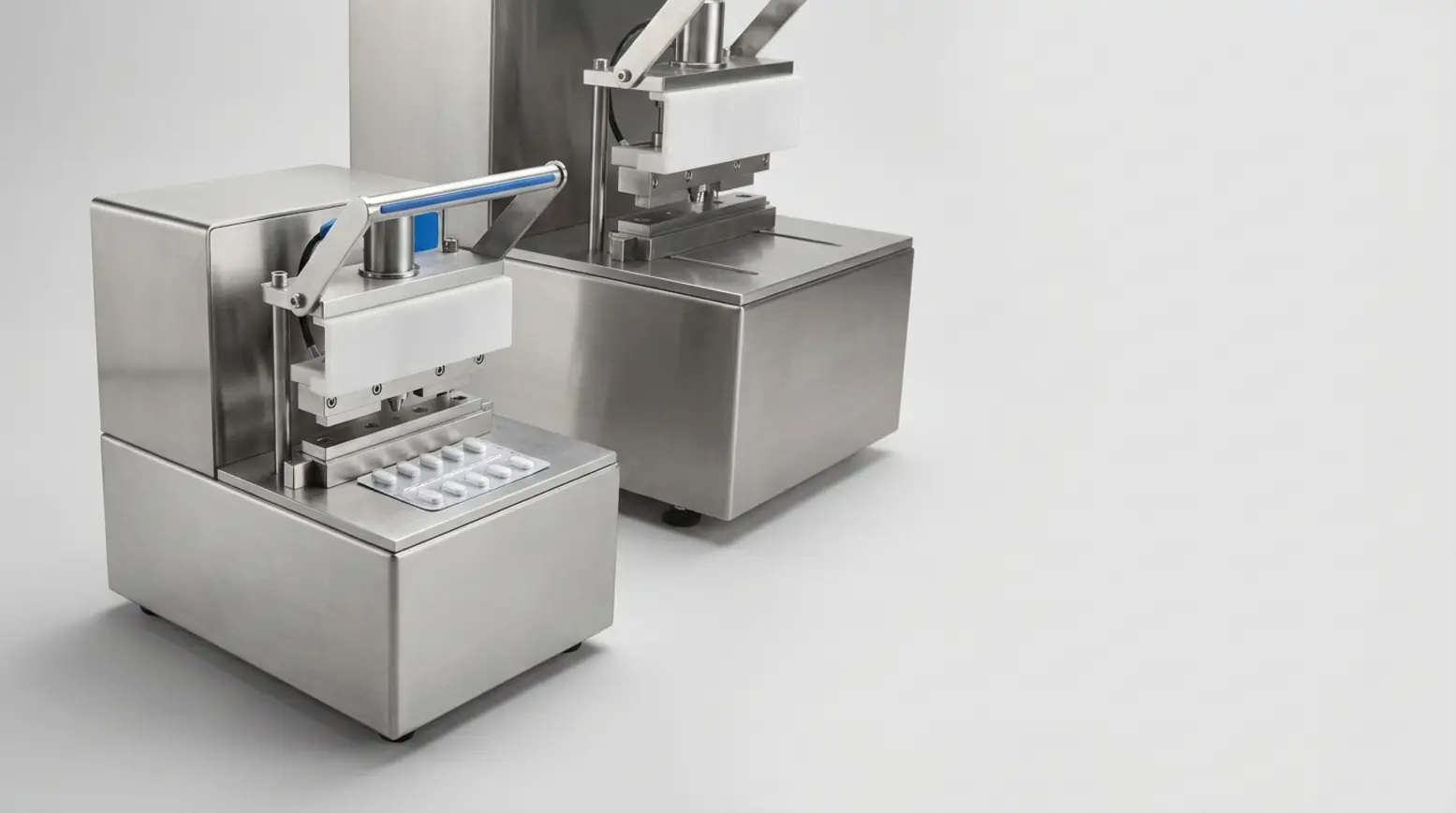
A prime example at the low-volume end of the spectrum is the EJR-PH1-350-500. We present this specific model as one highly capable, compact pharmaceutical manual tabletop option, though it is certainly not a universal answer for every packaging program. It proves exceptionally useful when introducing a separate, smaller machine is the best strategic way to protect the main line and keep short runs easily manageable. However, the broader operational decision must still come first, as any chosen machine absolutely must match the specific format, the production process, and your master schedule.
Questions buyers ask about pharma sample pack machine planning
Does a small blister format always mean simple production?
No. A small blister pack frequently requires specialized tooling, highly stable feeding mechanisms, strict print control, thorough inspection protocols, and incredibly careful setup. The final pack may be small, but absolute repeatability still matters immensely in pharmaceutical production. Because of this, small formats should be reviewed with the exact same level of discipline applied to larger commercial runs.
Can sample and commercial formats share tooling?
Occasionally, they can share interchangeable parts or underlying setup logic. However, this should only be decided after directly comparing their cavity layouts, seal areas, product positioning, and respective print needs. Without that vital preliminary review, it is dangerously easy to assume compatibility too early and inadvertently create massive problems down the line.
When is a dedicated machine worth reviewing?
It is generally worth reviewing whenever frequent, short runs begin creating far too many costly interruptions on a shared commercial line. A dedicated setup is also advantageous when setup procedures, mandatory cleaning, intensive line clearances, and restart checks disrupt the main schedule more than the actual sample run itself. Under those specific circumstances, shifting to a compact equipment route may significantly improve your overall production flow.
What should be ready before talking to a machine supplier?
You must meticulously prepare the exact pack dimensions, cavity patterns, seal areas, required product orientations, mandatory print areas, expected run patterns, documented cleaning needs, available labor levels, and precise floor space constraints. If possible, provide documentation for both the intended sample format and the established commercial format so that any technical comparison is comprehensively complete from the very start.
How do sample packs differ from commercial packs in machine planning?
The most significant difference is typically the production pattern itself, not any reduction in the need for strict quality control. Sample packs generally require shorter, much more frequent runs, meaning the real underlying issue is often the heavy changeover burden. Because of this dynamic, your machine planning process should focus heavily on minimizing schedule interruptions, expediting tooling exchanges, streamlining cleaning work, and ensuring robust identification support.
Next step for teams comparing shared and dedicated production
If you are currently still comparing your packaging options, we proudly offer a free Quick Scan service. Simply share your target sample format, the existing commercial format, and your expected annual run pattern, and our team can help you properly review the most practical equipment fit. If you would prefer tailored advice spanning several different machine classes, please contact us directly so we can accurately assess your real-world production situation together.
If your team already strongly suspects that a compact route is the superior fit, you can confidently move forward to a formal quotation request for the specific machine model that best matches your immediate project needs. In either case, the ultimate goal remains exactly the same: carefully choose a reliable machine setup that fully supports high product quality, smooth daily operations, and a highly stable production schedule.
.jpeg)


