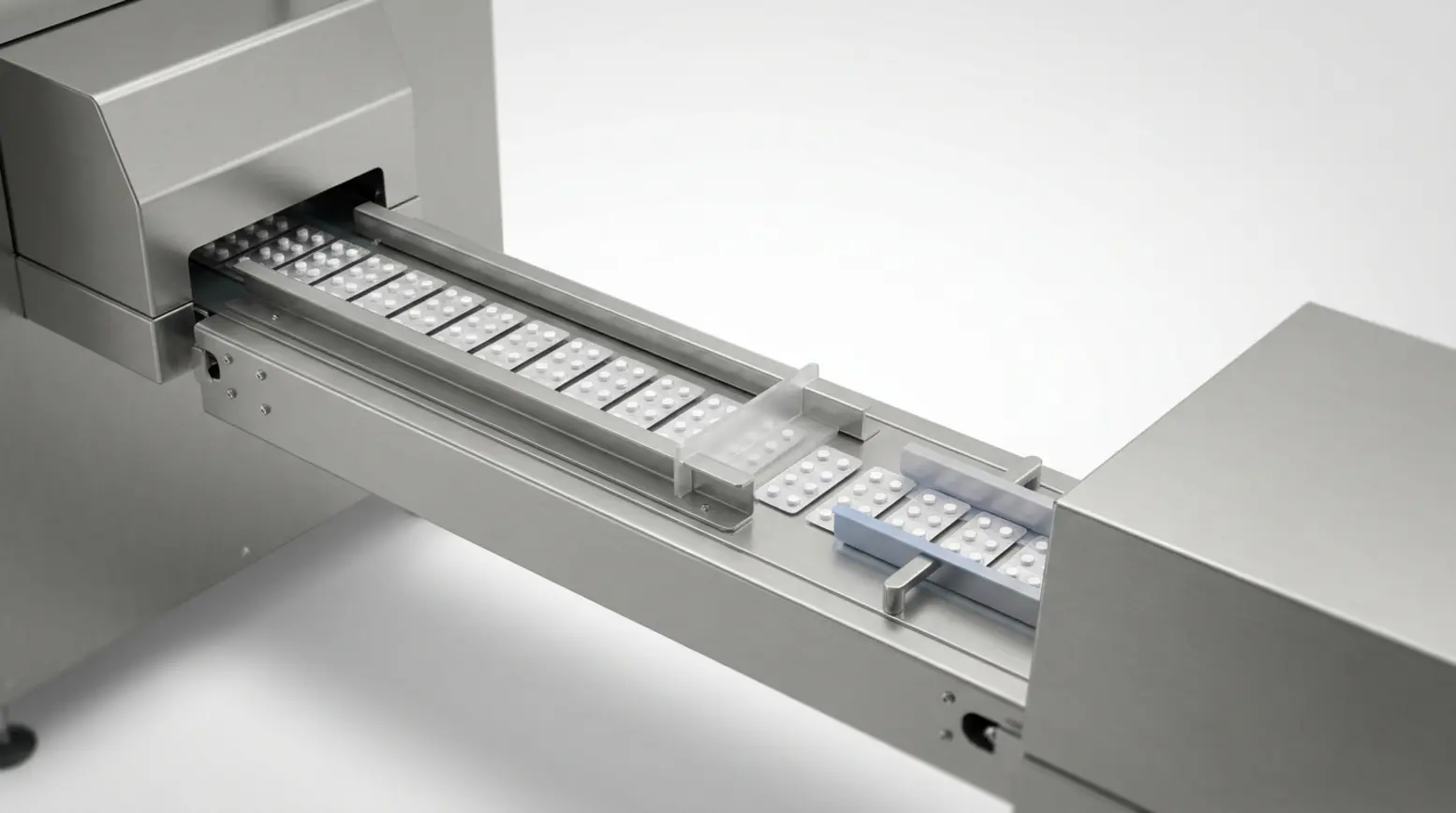
Pharmacy repackaging blister machine for low-volume dispensing

A pharmacy repackaging blister machine can be an excellent fit for low-volume pharmacy work when you run many small jobs, require clear operator steps, and have limited space. The ideal setup depends on your actual workflow, pack format, changeover frequency, traceability needs, and room layout. For many teams, compact manual equipment is easier to assess and control than larger automated systems because a single operator can manage loading, sealing, checking, and routine adjustments under standard site procedures.
• Low-volume pharmacy packaging typically requires flexibility rather than maximum speed.
• Patient-specific packaging and unit-dose pharmacy work often involve short runs and frequent format changes.
• A compact dispensing packaging machine should be evaluated based on the complete operator sequence, not just the sealing step.
• Traceability, readable pack data, and record linking must be defined before choosing a machine.
• Site assessments matter because space, access, utilities, tooling storage, and support planning directly affect daily use.
Why a pharmacy repackaging blister machine fits low-volume work
In packaging terms, repackaging involves taking a finished drug product from its original container and placing it into another suitable package. In low-volume pharmacy operations, this typically happens in small batches with frequent job changes, meaning your machine choice should reflect your actual order pattern. A pharmacy repackaging blister machine is often considered when teams need a more repeatable process than manual packing, but do not require a large, fully automated line. Our focus here is strictly on packaging operations. We do not provide advice on prescribing, selecting, or administering medications.
Many buyers start by comparing speeds, but that is only one part of the decision. If your weekly schedule includes short internal orders, patient-specific packaging, or varied unit-dose tasks, flexibility and operator control generally matter more. It helps to review loading, sealing, checking, printing, and changeovers as a single, connected process. If you want a broader background after this initial workflow review, our guide to choosing a medicine packaging machine provides useful context.
What repackaging means in packaging operations
In this context, repackaging begins after the drug product is already finished. The packaging operation then transfers that product into another suitable package following the site’s approved processes. This keeps the discussion firmly focused on handling, packaging materials, pack identification, and record-keeping. It also helps buyers separate their machine selection from the broader quality decisions that remain within their own internal systems.
Why patient-specific work changes machine selection
Patient-specific packaging often involves numerous small jobs, which may require different cavity layouts, materials, or print specifications from one day to the next. This variability affects setup times, tooling changes, operator checks, and the likelihood of routine delays. Similarly, unit-dose pharmacy packaging requires careful handling of product identification, as every finished pack must remain clear and completely readable. As a result, a machine that looks simple on paper might still prove difficult in daily use if changeovers are slow or awkward.
How to assess a pharmacy repackaging blister machine for one-operator use
The compact repackaging equipment used by pharmacy teams is primarily operator-led. This means output and consistency depend heavily on what a single person must do during each cycle. Before choosing a pharmacy repackaging blister machine, walk through the full sequence in order and ask whether one operator can perform it clearly, safely, and repeatably under your site's procedures. This review is essential whether you are comparing a pharmacy blister packaging machine, a pharmacy tabletop sealer, or other medication repackaging equipment.
Check the full operator sequence
Review each task in sequence: loading the product, positioning materials, sealing, removing the finished pack, and carrying out routine checks. Next, consider where the operator stands, how far they need to reach, how materials flow across the work area, and how finished packs are inspected. Small delays add up quickly in low-volume work because they repeat many times throughout the day. A compact medication pack machine should support steady, routine use, making visibility and hand movement highly practical considerations rather than minor details.
Review changeovers and routine adjustments
Frequent format changes can have a greater impact on your workflow than actual sealing time. If your jobs change often, routine adjustments must be simple enough to perform under approved site procedures without relying on a technician every time. This is where many buyers discover that the best repackaging equipment for pharmacy applications is the setup that handles variation smoothly. Test the machine using actual pack changes, real materials, and authentic operator steps, as a single sample job rarely provides the complete picture.
When a pharmacy repackaging blister machine should remain compact
A compact machine is often the ideal solution when jobs are short, variation is high, and workspace is limited. In these situations, direct operator control helps create a clear, highly repeatable process. It can also be a logical intermediate step for teams moving away from fully manual packing that want dedicated medication repackaging equipment without jumping straight to large-scale automation. A pharmacy repackaging blister machine should therefore be sized according to your actual production patterns rather than future assumptions alone.
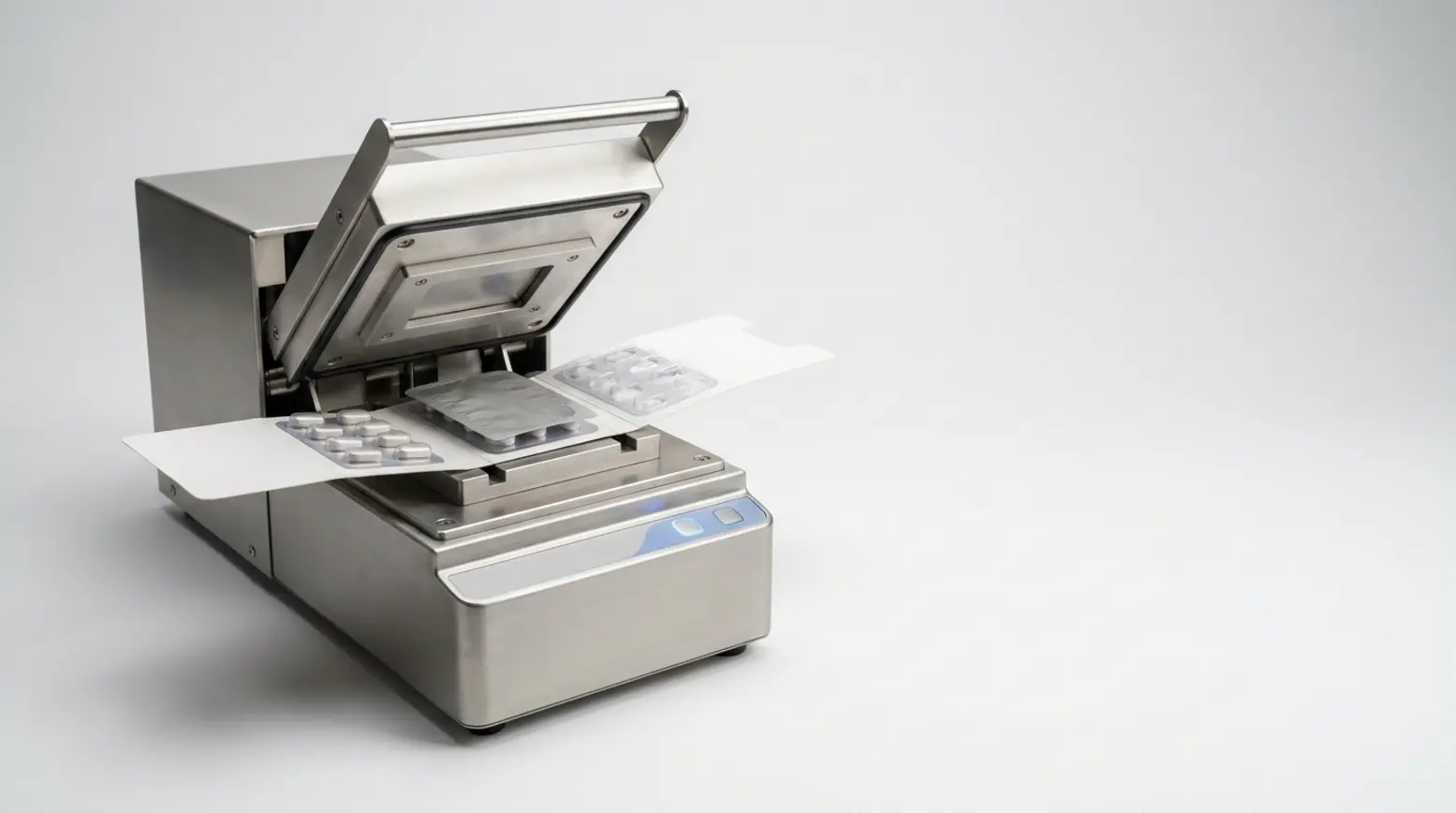
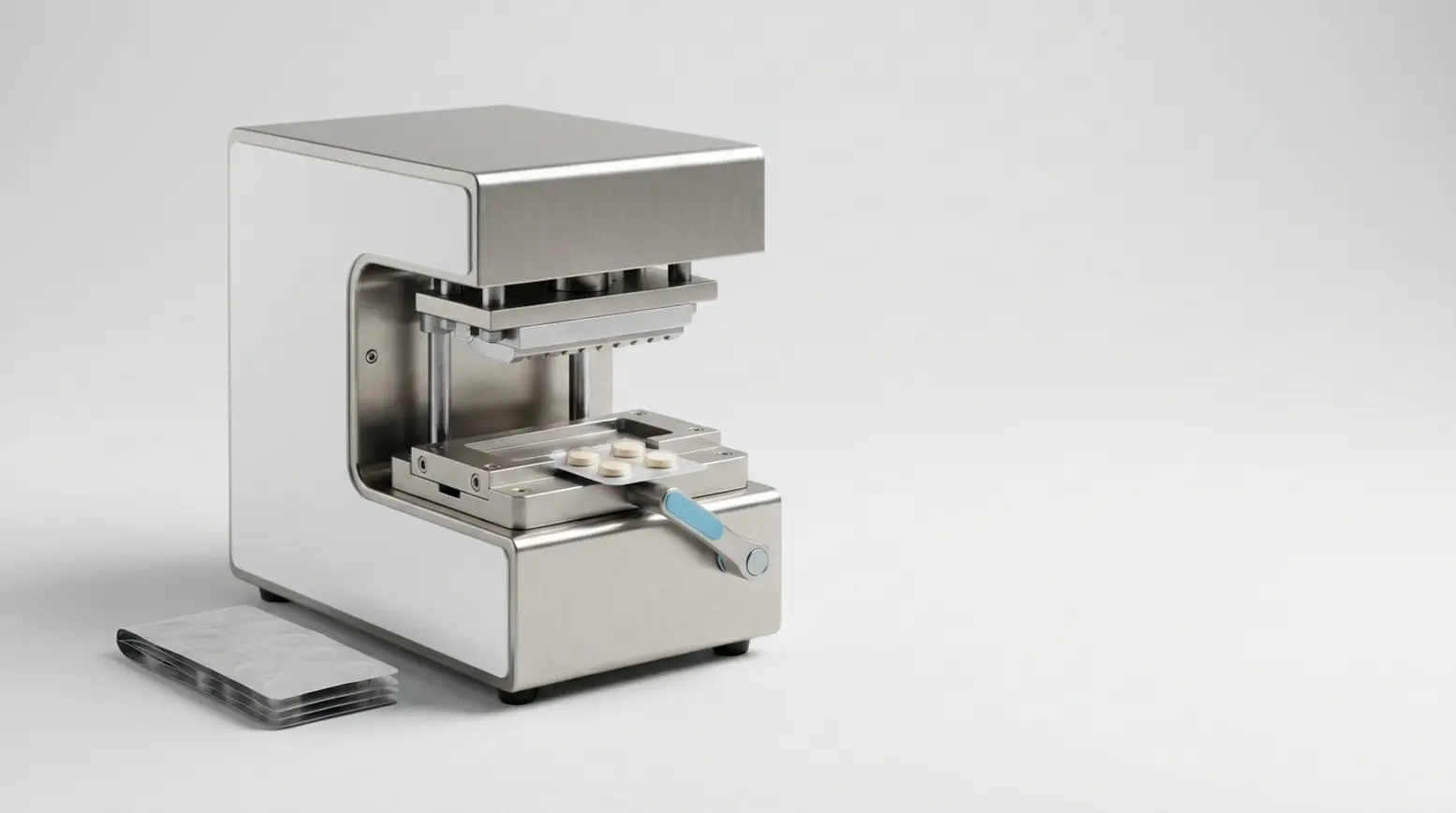
Within our range, Manual Tabletop and Manual Shuttle equipment sit at the low-volume end of the spectrum. These formats are well worth assessing when you need a pharmacy blister packaging machine or a small blister sealing machine for short, varied work. Their primary value lies in direct operation and compact production, making them perfectly suited for sites where a single operator manages the entire cycle from start to finish.
Manual Tabletop and Manual Shuttle equipment in low-volume operations
A pharmacy tabletop sealer or manual shuttle system supports simple daily control by allowing one operator to follow the process step by step. This approach simplifies training, setup, and repeatability, especially in confined rooms. For buyers comparing compact options, the most crucial question is whether the machine accommodates your pack format, operator sequence, and frequency of changeovers. Focusing on these factors is far more useful than merely asking which machine operates the fastest under ideal conditions.
Example route for a specific compact machine
One model worth reviewing is the EJR-PH1. It should be carefully evaluated against your material choices, pack layouts, operator tasks, and daily run patterns. We do not present a single compact model as a universal answer, as the right fit always depends on your specific operation, available room, and the level of variation you handle each week.
Traceability needs around a pharmacy repackaging blister machine
Traceability is a fundamental packaging requirement and must be discussed early in the process. The finished pack needs to support your internal processes, records, and local regulatory requirements. Because of this, a pharmacy repackaging blister machine should always be reviewed alongside your specific print needs, label flow, and post-sealing readability requirements. This matters significantly for both patient-specific packaging and unit-dose pharmacy work, as clear identification is absolutely central to the packaging task.
Define what data must be available on the finished pack
Start by evaluating the pack that leaves your work area. Determine exactly what data must appear on it, what information originates from another labeling system, and what details must remain readable after sealing. There is no universal checklist, as the correct setup depends entirely on your product, process, and local regulations. However, defining these needs early is critical since they directly influence material choices, print positioning, and routine operator checks.
Link the original product, repackaging job, and finished packs
Buyers must also define how records connect within their own internal systems. Consider exactly how the original product, the repackaging job or batch, and the finished packs are linked. By doing this, traceability is inherently built into the process rather than being tacked on as an afterthought. This proactive approach also proves invaluable when teams need to audit a job after production, as the resulting records are far easier to track and follow.
When printing or scanning should be discussed
Some facilities require more than just a basic sealing step. If that is the case for your site, printing or scanning can be introduced as a customized machine function where appropriate. The overarching goal is to support a practical record flow and guarantee a readable pack output. It is highly recommended to review these elements during your initial machine assessment, since printing and scanning features will affect both your workflow and the physical layout around the machine.
Preparing your site for a pharmacy repackaging blister machine
Purchasing the equipment is only one phase of the project. You must also evaluate your workspace, access points, material flow, and installation plans well before the machine arrives. Even a highly compact setup requires sufficient room for loading, unloading, cleaning, and routine checks, so site readiness must be factored into your decision from the very beginning. Many teams navigate this stage using our integral approach, as machine selection and physical implementation are inextricably linked.
Room space and operator access
Evaluate your available counter or floor space first, then assess the access surrounding the machine. The operator must be able to load materials, remove finished packs, clean the workspace, and perform routine checks without feeling cramped. Safe material handling is just as critical as the machine's physical footprint; tight access can severely slow down work and increase the likelihood of handling errors.
Utilities and installation planning
Utility requirements are model-specific, so they must be confirmed for the exact machine you are reviewing. Verify your electrical supply and compressed air availability if required, and compare them directly against what the room provides. It is also beneficial to plan for delivery access, installation timing, startup phases, and where operators will physically work during the initial production period.
Tooling, spare parts, and support across sites
Tooling and spare parts should be stored clearly and identified properly. This becomes especially important if a single facility expands into multiple locations, because repeatable format parts, common print formats, and standardized working methods make ongoing support significantly easier. Some buyers find that operating several identical compact systems is more manageable than relying on one central machine. Meanwhile, other teams may eventually transition into a broader review of pharmaceutical packaging machines. Ultimately, the right path depends entirely on your staffing, workflow, and site layout.
Quality boundaries and support after machine selection
Repackaging can inherently impact product stability and packaging suitability. Because of this, the customer’s own quality system must define acceptable materials, storage conditions, and beyond-use dates. Compliance ownership, process validation, and quality decisions remain entirely with the customer. This distinction is critical, as supplying and supporting a machine is very different from making product quality decisions for your facility.
Our role is to support the mechanical and operational side of your project. We help assess your technical requirements, select the optimal setup, install the machine, integrate it into your existing line, and provide ongoing support after delivery. In doing so, we ensure the selected equipment perfectly fits your pack format, allowing your operation to transition smoothly from initial assessment to daily use with a highly practical plan.
What to check before you request a quote
• Run pattern: Evaluate how many short runs you process, how frequently jobs change, and the degree of variation across your products and pack formats. This typically provides much more insight than a rough daily output number.
• Pack format: Review your required blister style, material choices, readability standards, and identification needs. A dispensing packaging machine must accommodate the finished pack just as well as it manages the sealing process.
• Operator tasks: Map out the exact sequence for loading, sealing, pack removal, quality checks, and changeovers. If these routine steps are too complex, maintaining daily control becomes significantly harder.
• Print and scan needs: Determine exactly what needs to be printed directly on the pack, what data will come from another system, and whether barcode scanning should be integrated into your workflow.
• Site limits: Confirm your available space, physical access, utilities, tooling storage, and spare part storage capacity before comparing machine options in deep detail.
Example scenario for low-volume buyers
Consider a pharmacy team that handles several short jobs each day, faces frequent pack variation, and relies on a single operator for most of the process. In that specific scenario, a compact setup is generally much easier to manage than a larger machine because the workflow remains close to the operator, and changeovers are straightforward to oversee. This does not mean compact equipment is universally the best answer; rather, it highlights that every operation should choose the machinery that matches its actual work, available space, and concrete traceability needs.
FAQ
What is a pharmacy repackaging blister machine used for?
It is used for packaging applications where a finished drug product is placed into another suitable package, a process commonly seen in low-volume or varied pharmacy operations. The best machine should be chosen based on your specific workflow, pack formats, and record-keeping needs.
When is manual equipment a good fit?
Manual equipment is frequently a great fit when production runs are short, changeovers are frequent, and a single operator needs direct process control within a limited space. This scenario is incredibly common in low-volume pharmacy packaging and patient-specific packaging environments.
What should we check first before buying?
Always start by evaluating your actual run patterns, pack formats, operator tasks, print requirements, and spatial limitations. These practical points shape machine suitability far more than a simple speed comparison ever could.
Who owns validation and quality decisions?
The customer ultimately owns all compliance, validation, and quality decisions. We are strictly here to support machine assessment, installation, line integration, and ongoing technical support on the equipment side.
Can printing or scanning be added?
Yes, in certain operations. Printing or scanning capabilities can be explored as customized machine functions whenever they actively support enhanced traceability and a practical record flow.
Next steps for low-volume buyers
If you are transitioning from manual packing toward a dedicated machine, we can help you assess the optimal path forward. You can contact us for a free Quick Scan to share your pack formats, products, run patterns, and location constraints. If a specific compact model naturally falls into scope after our assessment, we can then guide you through the quotation process.