Pharma blister machine capacity classes for realistic output planning

To choose the right blister machine capacity, start with your real process data rather than a generic packs-per-hour blister figure. The right output class depends on pack size, cavity layout, product type, seal method, changeovers, operator work, inspection, and the rest of the line. In simple terms, pharma blister machine capacity classes are useful as orientation ranges, but they do not provide a single, fixed answer for every project. A solid sizing decision is based on the rate your full process can sustain at the required quality, day after day.
• Capacity classes help you compare machine groups, but they are not fixed output promises.
• Real blister machine capacity depends on format, feeding, sealing, manual work, inspection, and downstream limits.
• Annual demand alone is too simple for packaging machine sizing, because batch patterns and changeovers also matter.
• Oversizing can add costs, space requirements, and complexity, while undersizing can create extra shifts and planning risks.
• A more productive initial supplier discussion starts with clear production data and a realistic view of usable output.
Pharma blister machine capacity classes: why a single output number is not enough
Many buyers begin with one simple question: how many packs can this machine run per hour? That question is understandable because it seems easy to compare. In real production, however, it is far too simple. Packaging machine output depends on the full process, so a single headline speed figure does not show what your operation can truly sustain. If you want a reliable answer, start with your actual pack format, product behavior, seal setup, staffing patterns, quality checks, and downstream steps. In this way, pharma blister machine capacity classes become a valuable planning tool instead of a weak shortcut.
What usable output really means
Usable output is the rate your full line can maintain over time while meeting the required quality levels. It accounts for normal stops, checks, handling, and the way operators actually work during a shift. Although a machine might have a higher technical top speed, daily packaging machine output is usually lower because the entire process must remain stable. This is why blister line capacity planning should focus on sustained performance, rather than just the fastest possible cycle.
Why generic packs-per-hour blister figures can mislead
Two lines in the same broad class can perform very differently. One project may run a small, simple pack with easy feeding, while another uses a larger blister with more cavities, strict product orientation needs, and extra inspection points. Consequently, the same class can yield different real outputs. A procurement team that only compares a single packs-per-hour blister number may overlook the underlying factors that drive true packaging production volume.
Pharma blister machine capacity classes: the three production classes as a guide
It helps to group equipment into broad production classes because this provides a practical initial view of the market. These classes are best used as orientation ranges, meaning they should guide your questions rather than replace them. This approach is highly useful when reviewing pharmaceutical packaging machines and deciding which categories deserve a closer look.
| Production class | Typical operating reality | Main capacity limits |
|---|---|---|
| Low to medium production | Often chosen for moderate output and high flexibility | Operator handling, manual loading, and frequent interventions |
| Medium to large production | More automated flow with multiple operating stations | Feeding stability, format complexity, inspection, and changeovers |
| Large production | Designed for high and steady automated flow | Product behavior, line integration, space, and downstream constraints |
Low to medium production
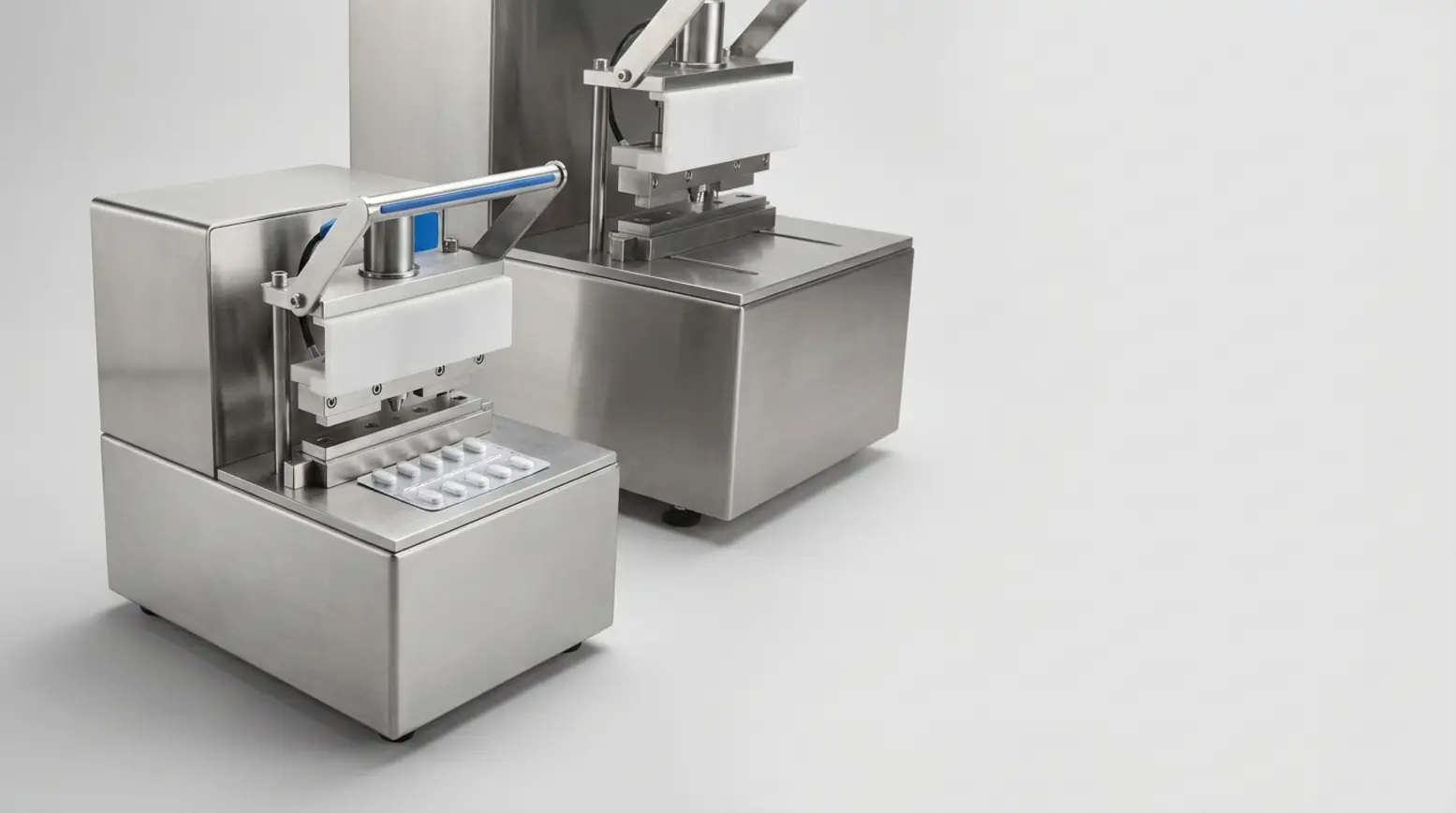
In the lower class, manual tabletop and manual shuttle equipment can be an excellent fit when output needs are moderate and flexibility is a priority. A low-volume blister machine is often useful for shorter runs, developing demand, or operations with frequent format changes. In this class, operator loading and handling usually become the main limitations, as manual work takes time and can vary by shift, product, and pack style.
Medium to large production
Semi-automatic rotary, economical rotary, and automatic rotary machines are commonly placed in the middle class. They introduce more automation and multiple operating stations, enabling a more stable flow. Even so, real blister machine capacity still relies heavily on feeding, inspection, pack layout, and packaging changeover capabilities. A facility with long, repeatable jobs may use this class very efficiently, whereas a site handling numerous product families might lose significant time between runs.
Large production
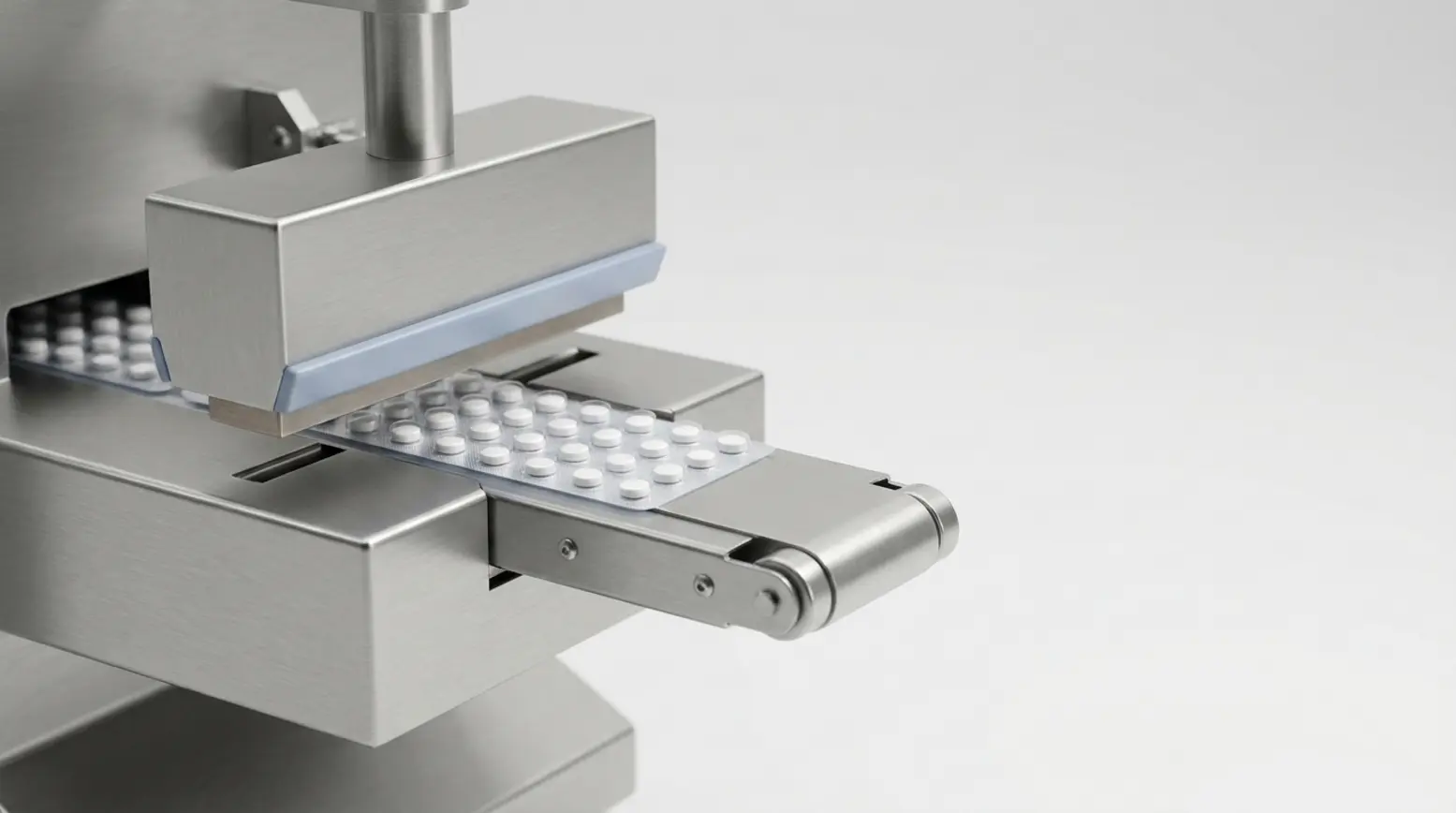
Automatic carousel and automatic inline machines fall into the largest production class. They are typically considered when a project requires a high level of automated flow and strong automatic blister line capacity. However, the largest class is not always the best fit. If the product is difficult to feed, the pack format is complex, or the downstream line is slower, a portion of the available machine capacity may never actually be used in practice.
Pharma blister machine capacity classes: what changes real blister machine capacity
To utilize pharma blister machine capacity classes effectively, you need to understand which variables drive output up or down. Many machine comparisons fail here because buyers often compare categories without evaluating the actual operating conditions behind them. Strong production machine selection begins with the factors that dictate sustained performance.
Pack format and cavity layout
Pack dimensions influence tooling size, material usage, sealing area, and cycle setups. Cavity counts and layouts are crucial because they dictate how much product goes into each cycle and how complex the format becomes. For instance, a simple, compact blister may run very differently than a wider format with more cavities and specialized layout requirements. Therefore, packaging machine sizing should always begin with the exact pack you plan to run.
Product type and feeding method
Different products behave in distinct ways. Tablets, capsules, liquids, and other dosage forms can require different feeding methods and varying levels of control. If feeding is sensitive or less stable, the line may need to operate at a lower rate to keep quality consistent. This is a primary reason why blister machine capacity cannot be evaluated separately from product behavior.
Seal type and process setup
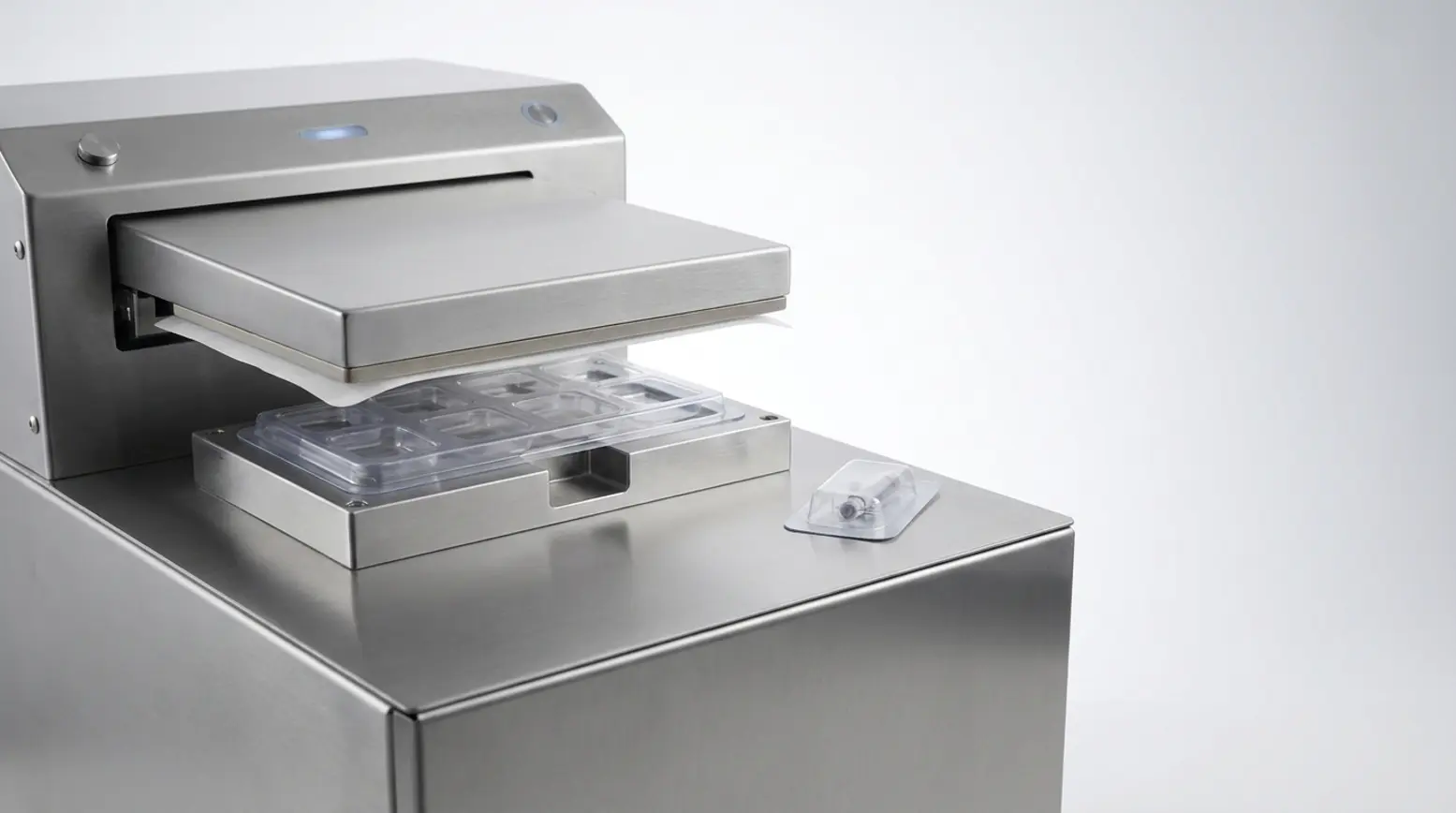
Both heat sealing and cold sealing are used in blister packaging, but they require entirely different process conditions. The right option depends on the material, the product, and the pack requirements. Because the process setup changes based on the seal method, the practical output can fluctuate as well. A single machine class might accommodate both methods, but the sustained rate will often differ once the specific setup is defined.
Manual tasks, inspection, and operator work
Some lines demand more human interaction than others. Loading, unloading, visual checks, sampling, and general handling all take time, directly reducing the daily packaging machine output. For example, a project involving extra inspection steps might yield a lower usable output than a simpler line, even if both use the same base machine class. This is vital in blister line capacity planning because labor and quality checks are unavoidable parts of the real process.
Changeovers and campaign patterns
Changeover time is a major factor, especially when running multiple formats or short campaigns. A facility with long campaigns utilizes its available time very differently than one that frequently changes tooling. Two sites might have the exact same annual volume, but the site handling numerous changeovers may require a completely different machine class because packaging changeover capacity becomes the key bottleneck. Accordingly, campaign sizes and job patterns should be central to every sizing discussion.
Pharma blister machine capacity classes: how to calculate your production volume packaging needs
The goal is to model demand realistically. This means separating different types of demand instead of blending everything into one generalized average. When you do this, pharma blister machine capacity classes become significantly more useful because they can be matched to actual operating needs rather than broad assumptions.
Separate average demand, normal peaks, and growth
Begin by distinctly defining your average demand, normal peak periods, and expected growth. Average demand represents your standard daily requirements. Normal peaks account for the higher demand levels that naturally occur during regular operations. Growth should be listed separately because future needs might eventually justify more automation, enhanced feeding support, or tighter line integration. This straightforward breakdown establishes a much stronger foundation for packaging production volume decisions.
Use real campaign data, not only annual volume
Dividing annual demand by available working hours might look neat on paper, but it usually yields a poor answer. It ignores batch sizes, format mixes, and time lost to changeovers or manual labor. A facility with short campaigns and numerous SKUs will likely need a different setup than a site running extended repeat jobs, even if their annual volumes look identical. If you also review choosing a secondary packaging machine, you will see how subsequent packaging steps can heavily influence the overall output picture.
Identify the peak that truly matters
Some peaks must be accommodated because they are built into the normal production plan. Other peaks are rare and simply may not justify investing in a larger, more complex machine. If you size the entire line around an unlikely maximum, you end up adding costs and floor space requirements with very little practical benefit. A smarter approach is to define exactly which peaks the operation realistically needs to handle as part of standard planning.
Pharma blister machine capacity classes: the production data to collect before supplier contact
A productive machine discussion starts with useful input. If you gather the right production and line data before reaching out to a supplier, the initial recommendation will be much more realistic and relevant. This transforms a broad question into a clear project brief, helping us accurately assess what your line can truly sustain.
| Data point | Why it matters for capacity |
|---|---|
| Pack dimensions | Affects tooling size, sealing area, and cycle setup |
| Cavity count or layout | Changes output per cycle and pack complexity |
| Product type | Influences feeding method and process stability |
| Seal type | Changes process setups and operating conditions |
| Batch size | Helps assess run lengths and setup losses |
| Campaigns per period | Shows how often the line shifts between jobs |
| Shift pattern | Defines available time and staffing realities |
| Changeover frequency | Shows planned time lost between runs |
| Manual tasks | Reduces sustained output and increases operator dependency |
| Feeding needs | Can limit speed if product handling is sensitive |
| Inspection needs | Adds checks that affect line flow |
| Available line space | Limits machine class and layout options |
| Limits in the next steps | Downstream equipment may cap usable output |
Core production data checklist
You should gather data on pack dimensions, cavity counts or layouts, product types, seal types, batch sizes, campaigns per period, shift patterns, and changeover frequencies. These details reveal how the process is likely to run and highlight where the largest time losses may occur. They also help determine whether the primary constraint will be format complexity, staffing, feeding, or available production time.
• Pack dimensions and cavity layouts define format complexity.
• Product types and seal types shape process conditions.
• Batch sizes, campaigns, and shifts show how time is actually used.
• Changeover frequency reveals how much output is lost between jobs.
Process and line data checklist
You should also document manual tasks, feeding requirements, inspection needs, available line space, and limitations in subsequent steps. A machine might perfectly match your target on paper, yet still be the wrong choice if the rest of the line cannot support it. Because of this, we always evaluate capacity as a system-wide issue, which is why line integration and machine selection must be part of your early reviews.
• Manual work impacts stable output across shifts.
• Feeding and inspection can become practical bottlenecks.
• Available space may reduce your layout choices.
• Downstream limits can strictly cap blister machine capacity.
Why this list improves production machine selection
Better input inevitably leads to a better machine class discussion. It also clarifies whether a standard or customized setup makes the most sense for your project. When buyers arrive prepared with real operating data, the initial recommendation becomes significantly more accurate because it reflects actual line conditions, rather than just a rough output target.
Choosing the right machine class without oversizing
It is common to think that more capacity is always safer. In real projects, the better choice is the class that exactly matches the work you truly need to do. The decision should balance current demand, normal peaks, format mixes, changeover burdens, and realistic growth.
The cost of buying too large
An oversized machine can unnecessarily increase capital costs, floor space usage, and process complexity. It can also create more setup work if your facility runs many short jobs or frequent format changes. For instance, a highly automated class might look attractive during a comparison, but it could be a poor fit if the real production pattern relies more on flexibility than on maximum output.
The cost of buying too small
An undersized machine can force a reliance on extra shifts and increased operator effort. It lowers planning confidence because it leaves less room for normal variations, minor stops, or urgent demand spikes. When this happens, teams spend far more time protecting output and less time running the process smoothly.
When future growth may support more automation
Future growth can sometimes justify added automation, improved feeding systems, or better integration with the complete line. However, not every machine can be upgraded endlessly. The practical approach is to review likely growth scenarios and decide which future needs warrant inclusion in the initial plan. This keeps the project realistic and prevents you from paying upfront for options that may never be utilized.
From sizing method to machine selection
Once the capacity picture is clear, the next step is matching it to the right machine category and line setup. We evaluate requirements with the customer, determine a suitable standard or customized configuration, install the machine, integrate it into the existing line, and provide ongoing support. In this way, machine selection remains firmly linked to production reality from the very beginning.
How packaging equipment works as a system
Capacity depends on much more than a single station or isolated speed figure. Feeding, sealing, inspection, unloading, and downstream flow all impact the final result; therefore, the line must operate as one cohesive system. For a broader view of packaging machine types, it helps to compare how each machine's role affects total output.
How we assess the right standard or customized setup
We start by analyzing your production data and pack requirements. Then, we review the machine class, sealing process, feeding needs, available space, and integration points. Consequently, our recommendation is based on what your operation can realistically sustain. This supports better production machine selection and avoids weak assumptions right from the start.
Next step: free Quick Scan with your production data
If you have your formats, batch patterns, shift setups, and expected peaks ready, we can help turn that information into a highly realistic initial machine class discussion. You can contact us for a free Quick Scan and share the facts that shape your usable output. We will review the data with you, knowing that the right answer always depends on the product, the pack, and the line itself.
Common questions about capacity planning for blister packaging
Can I size a machine from annual demand alone?
No. Annual demand on its own is too broad because it does not show format mixes, shift patterns, campaign sizes, or changeovers. A better method is to separate average demand, normal peaks, and growth, then compare those specific needs with the real process conditions.
Is the highest automatic blister line capacity always the best choice?
No. A larger class can bring higher costs, greater space usage, and added setup complexity. If your site runs many short jobs or changes formats often, a middle class or even a lower class may fit better because it directly matches the real way the line is utilized.
How important is changeover time in production planning?
It is incredibly important, especially when you have multiple formats or short campaigns. Changeovers reduce the time available for real production, so they have a direct effect on usable output and should always be factored into blister line capacity planning.
What should I share before asking for a recommendation?
Share pack dimensions, cavity layouts, product types, seal types, batch sizes, campaigns per period, shift patterns, and changeover frequencies. Also include manual tasks, feeding needs, inspection needs, available line space, and limitations in subsequent steps. With that information in hand, the first machine discussion becomes much more accurate and useful.