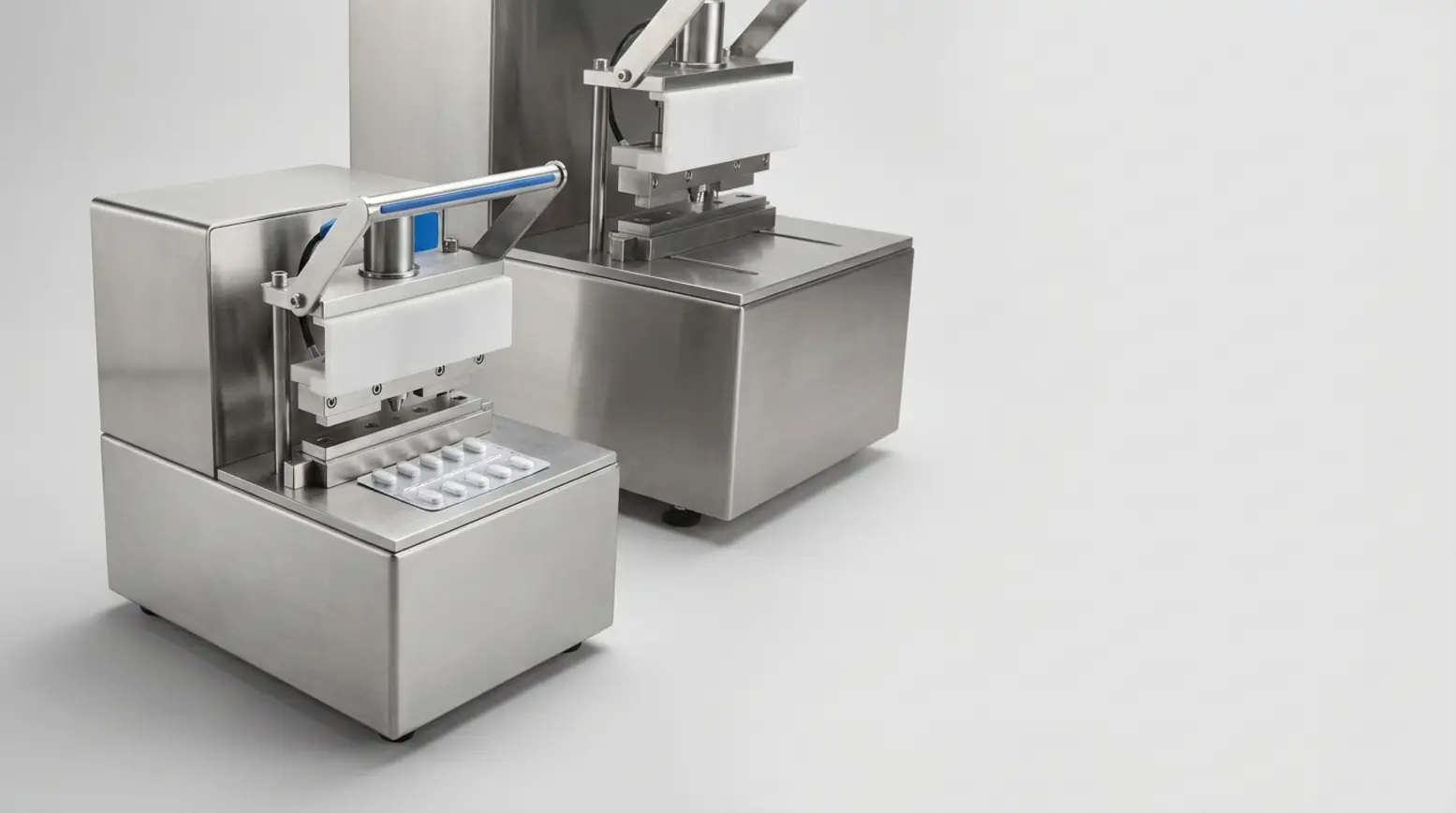
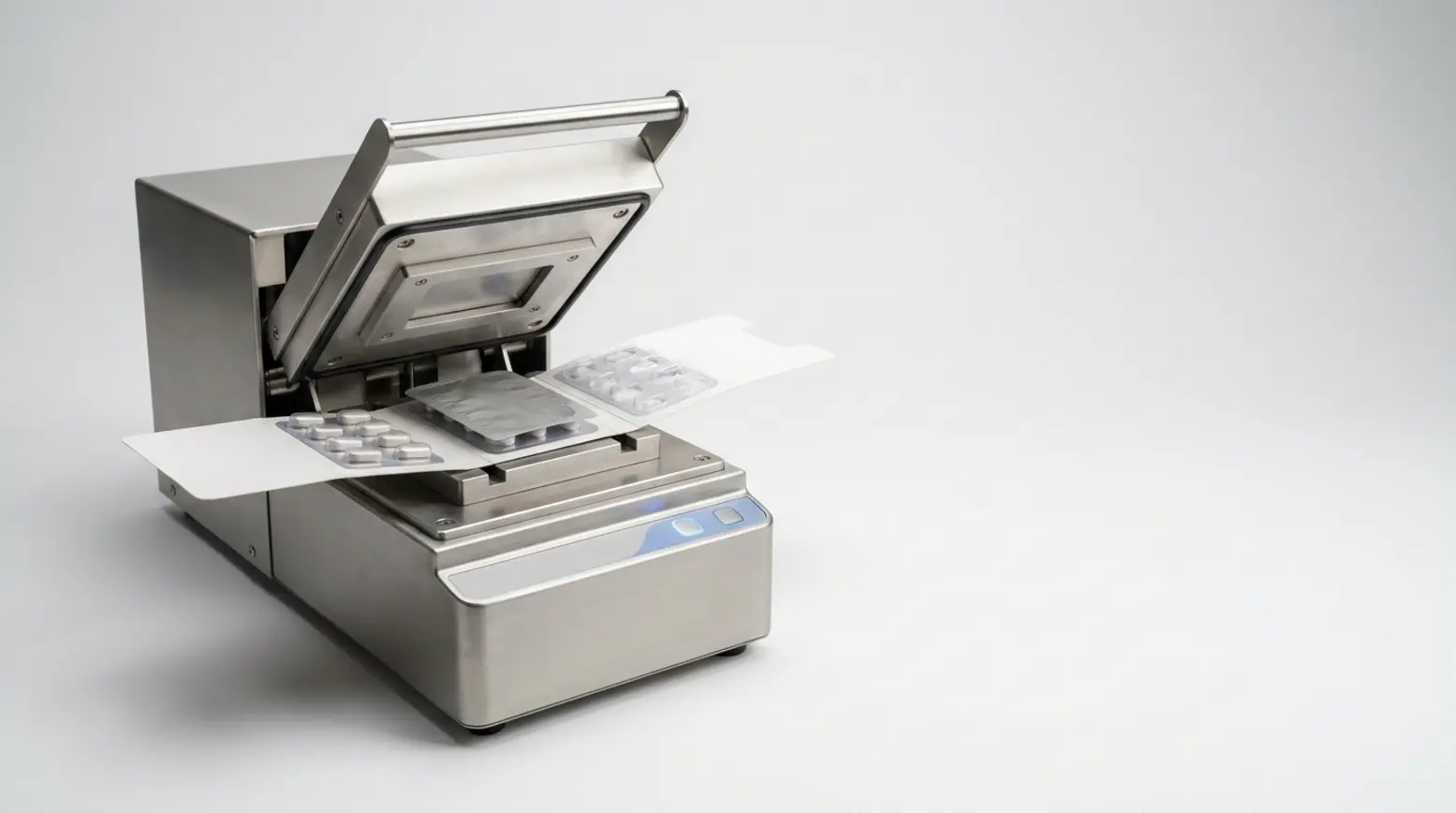
Multi format pharma blister machine for shared production

If you want to run different pharma blister formats on a single line, the answer is straightforward: one machine can work, but only if it accommodates your complete product mix during daily production. A multi-format pharma blister machine is useful when tooling, sealing, cleaning, quality checks, and changeovers remain manageable across all planned formats. Therefore, you must assess real products, pack layouts, and workflows before committing to a shared setup.
• Start with the complete product list, as the largest SKU alone does not reveal the true setup burden.
• Evaluate tooling and cavity layouts early, since shared parts are only feasible for certain product families.
• Decide between heat sealing and cold sealing during the machine selection stage, as both methods significantly impact materials, setup, and process steps.
• Review cleaning, line clearance, and documentation requirements per format, because shared equipment introduces additional control measures between runs.
• Compare a single-machine solution with a two-machine setup, as adding a smaller secondary line can minimize disruptions during mixed production.
What a multi-format pharma blister machine means in practice
In shared production, flexibility is a daily reality rather than just a claim on paper. A multi-format pharma blister machine is truly flexible only if it can run your required products with an acceptable level of effort regarding setup, adjustment, cleaning, verification, and documentation. This is why practical suitability matters far more than a broad specification range. If you need broader context before comparing setups, our guide to blister packaging machines provides a useful starting point covering machine types and output levels.
Many buyers initially focus on the maximum size range, but that specification does not tell the full story. A flexible packaging machine might still struggle with product extremes, such as deep cavities, unstable feeding, or unusual shapes. Similarly, a multi-format blister machine may appear highly adaptable on paper, yet prove difficult in daily operation because tooling and quality checks become overly complex. Therefore, the best starting point is always a review of the complete product mix.
Start with the full product mix
List every product family that might run on the line. Include product dimensions, shape, cavity depth, pack size, handling behavior, campaign frequency, and sealing method. Additionally, add notes on printing, inspection, and feeding requirements where they vary by format. This approach provides a realistic view of the actual burden of running multiple products on a shared line. It also helps identify where a single, adaptable blister machine will work efficiently and where dedicated parts might still be necessary.
Why size range claims are not enough
Adjustable does not necessarily mean universal. One product might feed smoothly, while another requires strict orientation control. One blister could form perfectly, while a different product with a deeper cavity demands entirely different tooling logic. For these reasons, conducting a comprehensive portfolio review is far more valuable than simply relying on a broad size range claim. It also prevents buyers from making weak assumptions during the early stages of supplier comparison.
How to assess a multi-format pharma blister machine by tooling and cavity layout
Tooling is often at the very heart of the decision, as it dictates how products sit within the blister, how many units fit into each pack, and which parts can be reused. When dealing with multi-product packaging equipment, the cavity layout directly impacts feeding, sealing, inspection, and pack handling. As a result, true flexibility depends less on a machine's marketing headline and more on whether the underlying tooling strategy is practical for your specific portfolio.
Which products can share components
Sharing components is most realistic when products feature similar dimensions, comparable cavity requirements, and a pack layout that avoids handling issues. Conversely, dedicated parts become necessary when product shapes, depths, orientations, or pack designs vary too significantly. Because even a minor tooling difference can impact blister format changeover times, every assumption regarding shared parts must be carefully verified prior to purchase.
What a tooling library packaging system should include
A robust tooling library system for packaging should encompass every approved format part, comprehensive setup instructions, clear part identification, and controlled records for each approved configuration. When this is included in the agreed project scope, tooling sets are stored logically and records are maintained systematically, allowing teams to prepare the correct setup with minimal confusion. This promotes process repeatability and helps quality assurance teams verify that the exact parts and settings are utilized for every product run.
Real work behind pharmaceutical changeover tooling
Pharmaceutical changeover tooling generates substantial work outside the machine itself. Production teams require adequate storage space, clear labeling, established inspection routines, and thorough pre-changeover preparation. Furthermore, format parts must be handled with care, as wear or mix-ups will inevitably compromise pack quality. This is a primary reason why pharmaceutical product changeovers should be measured using actual site data rather than estimated from brochure language alone.
Where a multi-format pharma blister machine succeeds or fails during changeovers
While many comparisons focus strictly on output, daily performance often depends heavily on how frequently the line changes over and how much time each switch consumes. A multi-format pharma blister machine works best when these changeovers are repeatable, well-documented, and practical within the site's quality system. If every format change demands lengthy setup work, additional quality checks, and heavy line clearance efforts, the true value of a flexible blister line quickly diminishes in a real production environment.
Measure your own changeover burden
Start by analyzing your own numbers. Review changeover frequencies, lost production time, cleaning efforts, verification steps, and operator preparation times across all current or planned runs. Doing so provides a much more honest picture of whether a single shared setup is truly sustainable. It also offers a solid baseline to compare one larger, flexible line against a secondary, smaller option dedicated to short campaigns or urgent work.
Documentation per format matters
Every approved format must be supported by controlled documentation covering machine settings, feeding adjustments, printing updates, inspection criteria, tooling details, and line clearance protocols. While some buyers also request electronic recipe management, this should be explicitly reviewed as a project requirement rather than assumed to be a standard feature on all platforms. Ultimately, a controlled format library is far safer than relying on operator memory, especially when a single line serves multiple products.
Seal type limitations in a multi-format pharma blister machine selection
The seal type must be decided early on, as heat sealing and cold sealing utilize completely different material systems and process logic. A multi-format pharma blister machine may support one method exceptionally well, or it might support both only after a careful review of the selected machine configuration. Therefore, buyers should always address this critical point during the initial machine selection stage rather than later in the project lifecycle.
Heat seal and cold seal in shared production
Heat sealing and cold sealing inherently affect tooling, machine setup, and material handling. They can also alter line adjustments, operator preparation routines, and validation efforts. If your facility expects to run mixed seal types, ask exactly how the proposed setup handles the distinct materials, the necessary changeover steps, and all associated quality checks. Doing so prevents unsafe assumptions and keeps the project perfectly aligned with actual production demands.
A practical rule during evaluation
Confirm the sealing method for each product before making a final machine comparison. Next, evaluate whether those products can share tooling families, whether the sealing method alters setup procedures, and whether the resulting workflow remains realistic for both operators and quality assurance teams. While this is a relatively small step early in the process, it frequently prevents expensive redesigns or significant operational friction down the line.
Cleaning and line clearance around a multi-format pharma blister machine
Shared equipment naturally raises cleaning and line clearance concerns between product runs, meaning the machine's design must support practical access and high visibility. A multi-format pharma blister machine is truly useful only when production teams can inspect and clean it in a highly controlled manner between campaigns. Even then, the machine alone does not dictate the cleaning standard; the site's own quality system ultimately dictates the required levels of cleaning, verification, and batch release.
Cross contamination control questions between products
When a single line processes multiple products, buyers must review exactly where product contact occurs and how those specific areas are checked after every run. This scrutiny becomes even more critical if the portfolio includes active materials requiring strict cross-contamination controls. Excellent machine access is beneficial because operators can remove parts with ease and inspect surfaces with greater clarity. However, final cleaning acceptance will always depend on the customer's quality system and approved procedural guidelines.
What buyers should ask during evaluation
During evaluation, ask about access for routine cleaning, visibility for thorough inspections, the handling of format parts during line clearance, and the system's support for controlled setup records. You should also ask how documentation is updated whenever a format changes. These specific points often dictate whether an adaptable blister machine remains manageable over the long term, particularly when it needs to integrate seamlessly with upstream or downstream equipment.
• Buyer check: Can operators access all product contact areas without difficult or complex disassembly?
• Buyer check: Are format parts clearly identified and easy to segregate during line clearance procedures?
• Buyer check: Do the approved records comprehensively cover machine settings, tooling, inspection parameters, and feeding adjustments for each format?
• Buyer check: Does the planned workflow actually support repeatable, efficient quality checks between short production campaigns?
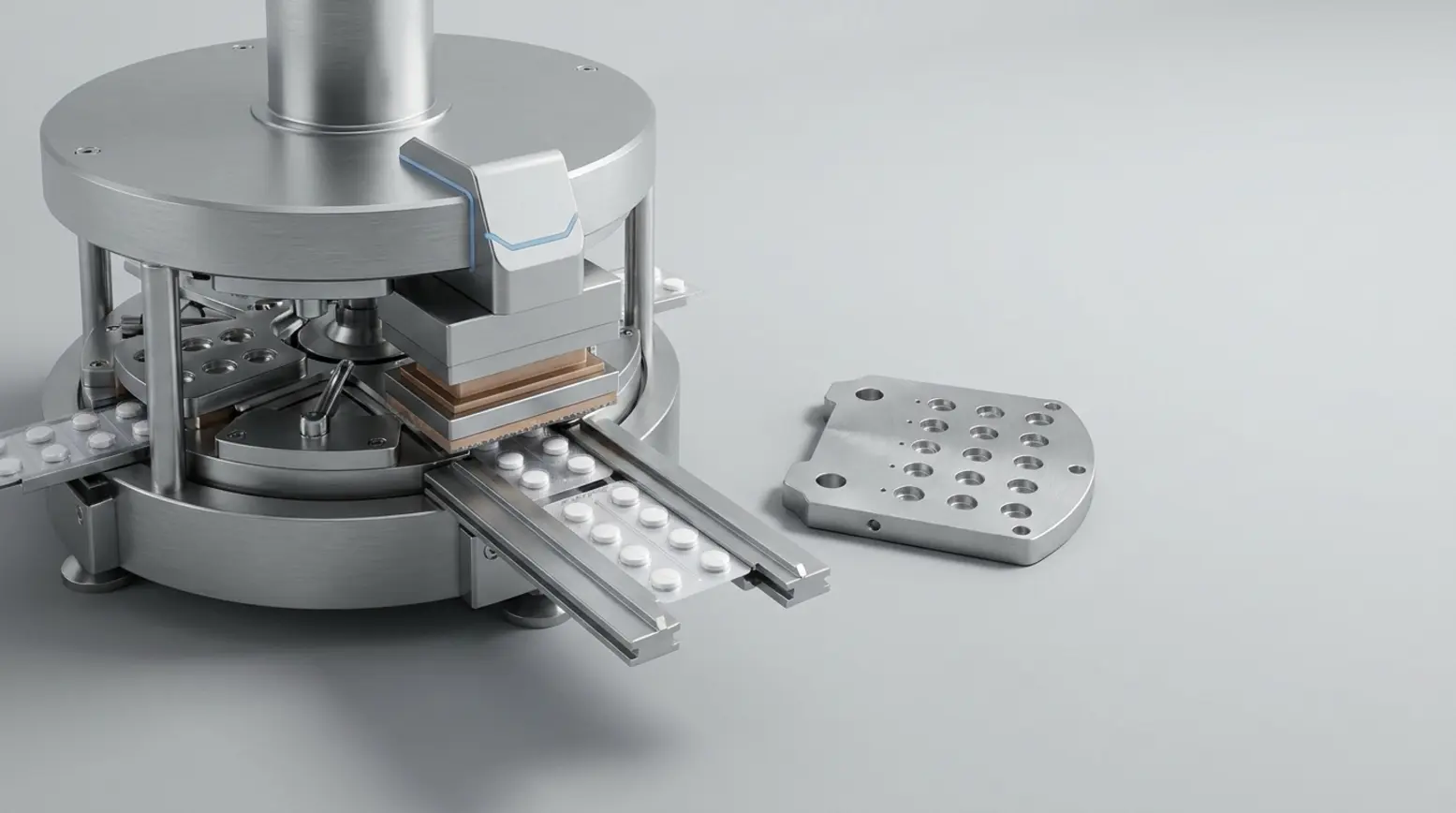
Rotary equipment as an example of a multi-format pharma blister machine
Rotary equipment can be an incredibly useful option when a facility needs to process products of varying shapes and sizes. However, this does not guarantee that a single setup will flawlessly accommodate every format, as success still depends on tooling strategies, sealing methods, feeding behaviors, and overall pack designs. To see a specific example from our wider range, you can review this rotary blister machine example and compare its capabilities against your own format list.
When rotary machines can support different shapes and sizes
Rotary machines generally support a more continuous production flow compared to smaller intermittent stations, while still permitting a strict, format-based review. This dynamic can greatly benefit mixed pharmaceutical portfolios where the product's physical form changes from one run to the next. Ultimately, the true value lies in the details, as each product family still requires a comprehensive tooling and process evaluation before any final purchase decision is made.
When a second smaller machine is better than one flexible machine
Relying on one shared machine is not always the optimal workflow. If small runs frequently interrupt a large-capacity line, the total operational burden can become overwhelmingly high, even if the primary machine is technically capable of the changes. In such cases, installing a second, smaller machine can protect the larger line's efficiency and drastically reduce production disruptions. The better choice typically depends on production planning, average run sizes, and how frequently short campaigns occur.
Compare workflow, not only equipment count
Examine your current scheduling practices and ask how often urgent work interrupts longer, more stable runs. A two-machine setup effectively separates high-volume, stable production from short or specialized work, making daily planning significantly easier. While this is not a universal rule, it provides buyers with a highly practical way to evaluate single-machine versus two-machine strategies based on real-world site behaviors.
Compare more than one volume class
It is highly beneficial to compare different machine classes, from manual equipment and single-station shuttle machines to semi-automatic rotary platforms and fully automatic inline systems. Because we support projects across all these volume classes, we can expertly help you review which level best accommodates your product mix, planned throughput, and changeover burdens. You can also explore our full range of pharmaceutical blister machines to understand how each machine category aligns with your broader format strategy.
Build a product and format matrix before you choose
A detailed product and format matrix is often the clearest decision-making tool available, as it translates a supplier's broad flexibility claims into your real-world production requirements. We utilize this kind of thorough review because a machine's true fit depends on tooling complexity, materials, process steps, and overall line integration. By taking this route, the setup is judged entirely on practical usability rather than a single standalone feature. You can read more about our integral approach to see exactly how we review the wider manufacturing process surrounding machine selection.
What to include in the matrix
Be sure to include the product name or code, format style, cavity layout, sealing type, tooling family, dedicated parts, cleaning requirements, inspection parameters, feeding configurations, and production run frequencies. This comprehensive breakdown clearly highlights where products can share components and where dedicated solutions are mandatory. It also helps identify any hidden labor linked to blister format changes, line verification, and operator preparation.
Product and format matrix examples:
Product family: Tablet A. Format: 2-by-5 cavity pack. Seal type: Heat seal. Tooling family: Shared with Tablet B. Dedicated parts: Feed guide only. Cleaning need: Standard. Inspection change: Print check only. Feeding change: Minor. Run frequency: Weekly.
Product family: Capsule C. Format: 1-by-10 deep cavity pack. Seal type: Heat seal. Tooling family: Dedicated. Dedicated parts: Forming and feed parts. Cleaning need: Higher. Inspection change: Vision and print. Feeding change: Major. Run frequency: Monthly.
Product family: Device D. Format: Custom cavity layout. Seal type: Cold seal. Tooling family: Dedicated. Dedicated parts: Full format set. Cleaning need: Product specific. Inspection change: Full check change. Feeding change: Major. Run frequency: Low.
Use the matrix to compare one machine and two machine setups
The matrix actively helps identify process bottlenecks, repetitive setup work, and likely friction points in daily production. It also clearly demonstrates whether forcing all product families onto a single machine creates an unreasonable operational burden. This transforms the comparison into a technical, objective exercise rather than a subjective feeling, allowing buyers to discuss setup options and clarify their priorities before ever requesting a quotation.
Simple setup comparison:
Single flexible machine: Offers a lower equipment count but carries a higher risk of disruption when numerous short runs are required. It relies heavily on rapid changeovers and strong documentation control.
Two-machine setup: Requires a higher equipment count but offers superior separation between stable production and short campaigns. It provides much more freedom to match the specific machine type to the product family and daily workflow.
FAQ
Can one machine really handle different pharma blister formats?
Yes, in many cases, it can. The critical question is whether the machine can process the full product mix with an acceptable level of tooling, setup, cleaning, and documentation effort. Buyers must evaluate real products alongside real format changeovers, as a broad physical size range alone does not guarantee a good operational fit.
What makes a machine truly flexible in daily production?
True flexibility means the equipment can run all required formats while requiring only manageable effort for changeovers, verification, line clearance, and format control. A machine might appear incredibly flexible in a sales brochure, but daily production realities will quickly reveal whether the setup is actually practical.
How do heat sealing and cold sealing affect machine selection?
Different sealing methods completely alter the material system, process steps, and setup logic. Because of this, the required sealing method must be defined early in the selection process. Buyers should meticulously verify the machine's capability for the planned configuration and never assume that free switching between both methods will be simple.
When is a second machine the better choice?
A secondary machine is often the better option when short runs frequently interrupt a larger, high-volume line, or when specific formats generate disproportionately heavy setup and cleaning workloads. The correct answer usually reveals itself through a detailed product and format matrix, cross-referenced with the facility's actual production schedule.
What should a comprehensive tooling library include?
It should include all approved format parts, clear setup instructions, distinct part identification, disciplined storage protocols, and controlled records for every machine configuration. A rigorous library helps production teams prepare the exact parts needed, drastically reduces mix-ups, and supports highly repeatable production runs.
Next step: Review your format list with us
If you are trying to choose between a single flexible platform and a two-machine setup, start by sharing your complete format list rather than just your highest-volume SKU. We can review critical tooling, seal type, machine class, and line integration questions during an early engineering discussion, as these points ultimately define whether the setup will remain manageable over time. If you would like to arrange this initial review, please contact us for a free Quick Scan, and we will gladly compare your equipment options against your true production burden.