Veterinary medicine blister packaging for mixed product ranges


Choosing the right machine for veterinary medicine blister packaging starts with the actual product mix. You need to compare the physical products, pack sizes, cavity layouts, seal types, feeding methods, and changeover requirements before asking for a recommendation. This matters because tablets, chewables, sachets, liquids, and devices do not behave the same way during a blister process. Consequently, a single generic setup will rarely fit every project.
• Build a product matrix first, as machine choices should follow facts rather than assumptions.
• Compare the smallest and largest real products, but do not let one large item dictate the entire platform.
• Check tooling, cavity design, feeding, sealing, inspection, and line integration together, as these elements directly affect each other.
• Match the machine category to the campaign size, format variety, and automation needs to avoid paying for unused capacity.
• Bring representative samples and line details into a Quick Scan, which leads to a far more realistic shortlist.
Why veterinary medicine blister packaging starts with the real product mix
Although many veterinary medicine packs look similar to pharmaceutical packs, the machine decision is often quite different. This is because animal health packaging typically includes a wider mix of product sizes, shapes, and handling requirements. A single portfolio might contain small tablets, large chewables, sachets, liquids, and simple devices. While some products sit perfectly inside a cavity, others might move, tilt, or require orientation before sealing. Therefore, blister packaging for veterinary medicine should always begin with a comprehensive product review.
The first task is to map the entire portfolio in a practical way. Product names alone are not enough, as two products in the same family can behave very differently inside a machine. You should compare dimensions, shapes, surface textures, fragility, and cavity stability. Products for larger animals often lead to larger individual units or wider veterinary medicine packs, meaning cavity depths and sealing areas will change. While the largest product is important, it should not dictate the complete platform on its own. In most cases, the best decision comes from comparing the smallest and largest actual products, and then evaluating everything in between.
What to map before you ask for a machine recommendation
A clear product matrix ensures that engineering, production, and procurement teams are all working from the same information. It also gives suppliers a solid basis for determining whether a standard setup is sufficient, or if dedicated change parts are necessary. We utilize this type of input in our integral approach, because the machine must ultimately fit both the actual product range and the broader production line.
| Input | Why it matters |
|---|---|
| Product dimensions | Affects cavity size, pocket depth, and product stability |
| Pack dimensions | Affects tooling size, sealing area, and machine footprint |
| Cavity layout | Shows how many units fit and how the pack is organized |
| Seal type | Determines the heat seal or cold seal setup and material choice |
| Annual pattern | Shows whether demand is stable, seasonal, or mixed |
| Campaign size | Helps match the machine type to the run length |
| Changeover frequency | Important when multiple formats share a single line |
| Feeding method | Affects the automation level and product handling |
| Inspection needs | May require vision systems, print checks, or scanning |
| Line space | Limits layout and integration choices |
| Downstream equipment | Shows how the blister machine connects to the rest of the line |
| Manual steps | Defines where operators remain involved |
| Automated steps | Defines where feeding, inspection, printing, or transfer should be automatic |
• Prepare before machine selection: include representative samples, target pack formats, cavity layouts, seal choices, campaign patterns, and line constraints.
• Prepare before machine selection: note which steps should remain manual and which should be automated, as this alters the machine's scope.
• Prepare before machine selection: group products by their actual handling requirements rather than simply by product family names.
Why veterinary portfolios often need more than one format view
Broad portfolios often look much simpler on paper than they actually are in production. For instance, a soft chew might require cavity control that is drastically different from a standard tablet. Similarly, a device may need a unique pocket shape and a different feeding logic compared to an animal medicine blister designed for solid doses. Because of this, buyers should review formats based on handling behavior, pack geometry, and sealing demands. This creates a much more useful basis for machine selection and supports better multi-format veterinary packaging decisions later in the project.
How veterinary medicine blister packaging influences tooling, cavities, and feeding
Products can only share equipment when their technical requirements are compatible. In veterinary medicine blister packaging, this typically means that the cavity design, feeding method, tooling, and seal setup must align well enough across the entire range. If one product requires strong positioning control while another flows easily, using the same setup may no longer be practical. This is exactly why tooling and feeding should be reviewed together right from the start.
Common tooling versus dedicated change parts
Some machine parts can remain common across several different packs, especially when pack dimensions and cavity layouts are closely aligned. Other parts frequently require dedicated change parts because the pocket shape, sealing area, or transport behavior changes too drastically. This is a critical issue in veterinary pharmaceutical packaging, where a mixed portfolio can introduce many small differences that ultimately affect uptime and repeatability.
For example, two tablet formats with similar geometry might share more tooling than a tablet pack and a device pack would. If the cavity layout changes only slightly, a common base setup may remain flexible enough. However, if the pack size or handling characteristics change significantly, dedicated parts are usually the safer choice. This approach helps reduce unstable feeding, poor product positioning, and potential sealing problems.
Feeding questions for tablets, sachets, liquids, and devices
Feeding mechanisms must always match the actual product. While tablets may allow for one specific approach, sachets, liquids, and devices often require completely different methods because their shape, weight, orientation, and pack control differ. A veterinary packaging machine must support stable product movement, as stable handling ensures high sealing quality and keeps printed information readable. Buyers should ask early on if the product needs orientation, whether automatic feeding is realistic, if the product moves inside the cavity, and whether it stays securely in place until sealing is complete.
These questions are equally relevant for vet medicine packaging equipment that might run several product groups on a single line. When the answers are clear, it becomes much easier to decide which formats can share equipment and which ones require their own dedicated setups.
Choosing machine categories for veterinary medicine blister packaging
Once the product matrix is clearly defined, you can compare machine categories in a highly practical way. The best choice depends on production patterns, campaign sizes, format variety, and the specific level of automation you require. This is the stage where many animal health blister machine projects become clearer, as the machine class should directly match the actual workload. Readers wanting a broader view of relevant platforms can explore pharmaceutical packaging machines for veterinary products and compare those options against their own portfolio.
| Machine category | Best fit | Main strength | Main point to check |
|---|---|---|---|
| Manual Table top | Lower volume work, trials, simple operations | Flexibility and low complexity | Operator involvement stays high |
| Manual Shuttle | Lower volume production with more control | Useful step up from table top work | Changeovers and handling still matter significantly |
| Rotary machine categories | Repeated medium to larger production | More automation for mixed product ranges | Tooling and feeding compatibility must be clear |
| Automatic Inline | Large, continuous production | High integration potential | Only suitable when the actual production pattern supports it |
Manual Table top and Manual Shuttle for lower volume work
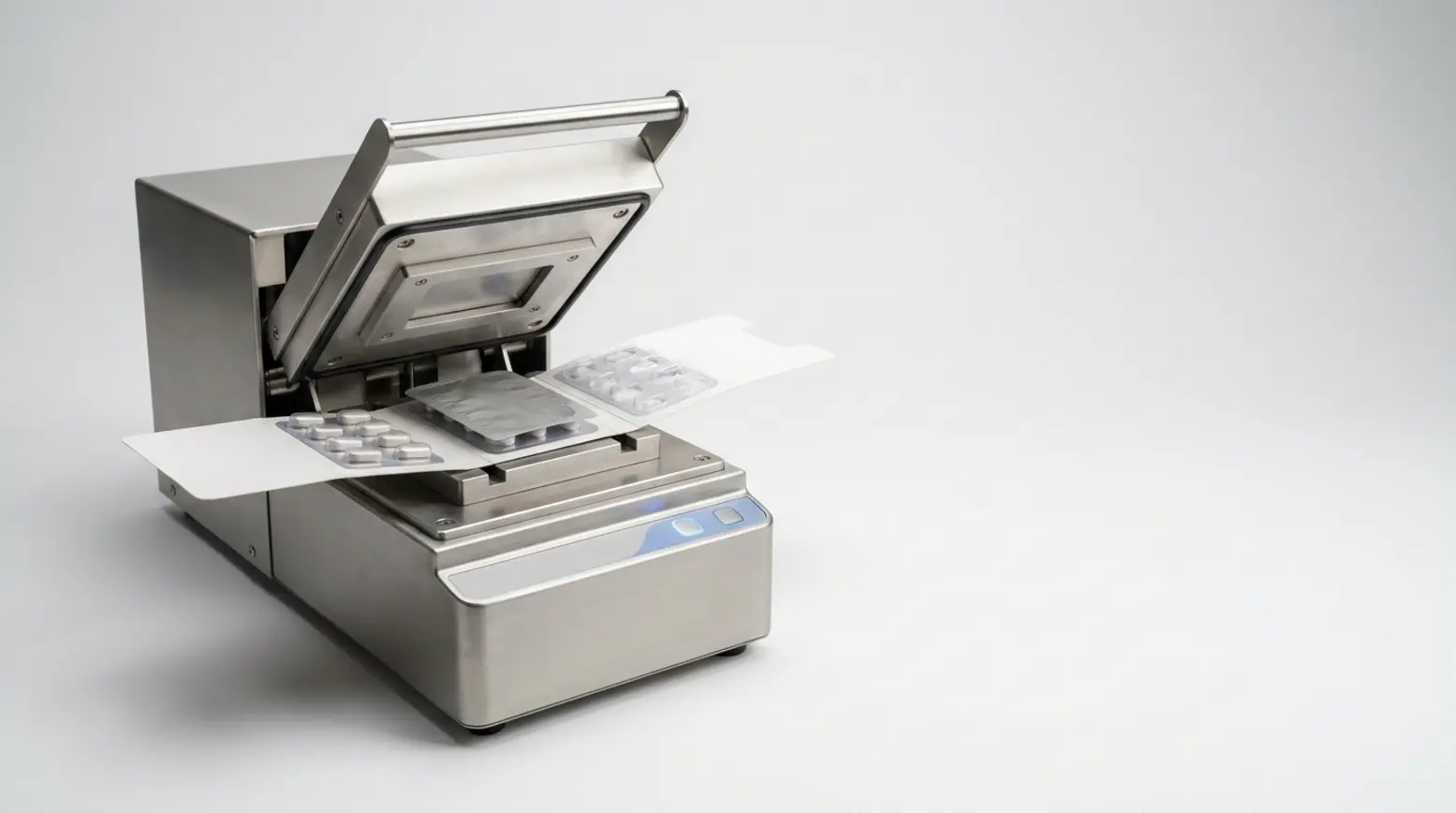
Manual Table top and Manual Shuttle machines are well-suited for lower volume runs, development work, and operations where flexibility matters more than maximum output. They are also highly useful when a team wants to learn from real veterinary product packaging processes before committing to a more automated line. In these scenarios, manual control can be a sensible business choice because it limits complexity while leaving room to carefully review pack behavior. For broader machine background, readers can review medicine packaging machines and then compare those functions against their own application.
Rotary machines for repeated medium to larger production
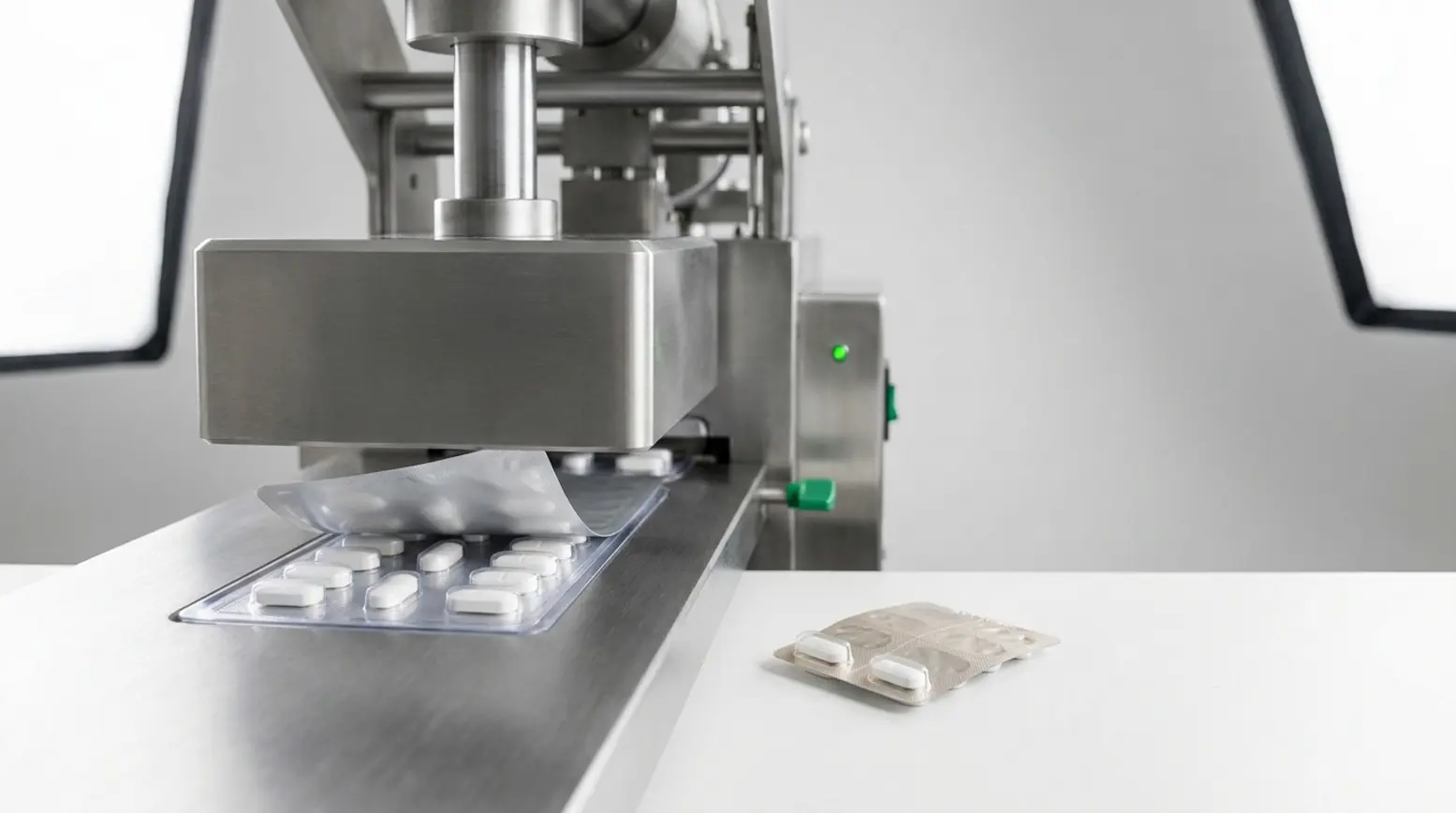
Rotary machines become much more relevant when production repeats frequently and more automation is required. Designed to handle products of varying shapes and sizes, they are essential for mixed portfolios where changeover behavior is a key factor. A rotary setup can provide an excellent balance between flexibility and output when multiple veterinary blister pack formats share enough underlying technical logic.
Automatic Inline for large continuous production
Automatic Inline machines make the most sense when actual production patterns demand larger, continuous output with robust line integration and repeatability. Conversely, they are less suitable when formats are highly mixed and changeovers are frequent, as such projects may not require that level of dedicated automation. This is precisely why buyers should evaluate actual run patterns rather than relying solely on future volume expectations.
Seal choice in veterinary medicine blister packaging: heat seal or cold seal
Seal choice should be a core part of the machine assessment right from the beginning. Heat sealing uses heat to bond materials, whereas cold sealing uses pressure instead of heat. Both methods can be highly relevant in veterinary medicine blister packaging, as the right answer depends entirely on the product, the material, and the intended pack style. If a project utilizes different veterinary medicine packs for different sales channels or product families, the seal type might also dictate which formats can successfully share equipment.
How seal type affects format and machine setup
Seal type directly influences material selection, tooling design, cycle behavior, and pack movement throughout the line. A change in the sealing method can also impact cavity design and the final layout of the pack. Therefore, it is always better to assess the seal type alongside format geometry and handling behavior. This proactive approach helps avoid late-stage changes that increase costs or reduce overall line efficiency.
When pack style changes the machine discussion
Pack style can completely reshape the entire machine review process. Some formats require different sealing logic, a larger sealing area, or more stable transfer mechanisms through printing and inspection steps. Cold seal technology may also support free-standing packs, multi-panel packs, or dispenser functions when these formats are beneficial for the product and its route to market. Readers who want more context on style differences can review different blister pack formats before finalizing their machine requirements.
Ensuring veterinary medicine blister packaging remains readable and stable during handling
Good pack performance goes beyond just a secure seal. Packs also need stable positioning and clear identification throughout normal handling and distribution. This matters immensely because printed data, codes, and visual checks all depend on repeatable pack control. In veterinary medicine blister packaging, readable information can easily be compromised by poor cavity stability, shifting products, or inconsistent transport through the production line.
Printing, scanning, and inspection questions to settle early
Printing, scanning, and inspection requirements should be discussed early because they directly affect both the machine setup and the line layout. Some projects demand vision checks, while others require code verification, print control, or scanning at specific transfer points. While we do not provide regulatory advice, we actively help buyers assess machine options that support clear marking and practical inspection processes. Depending on the application, this can seamlessly include automatic feeding, vision systems, printing, or scanning.
Line space and downstream equipment also matter
The blister machine must fit into the broader production line, rather than just functioning perfectly at a single station. Available floor space, transfer direction, cartoning systems, and any downstream equipment will all influence the final choice. A compact machine might still be the wrong answer if it cannot connect smoothly to the next process. This is one of the main reasons why animal health packaging projects benefit so heavily from a full-line view early in the review phase.
A practical supplier brief for veterinary medicine blister packaging projects
When your team is ready to speak with suppliers, bring the full product matrix and clearly define what should remain manual versus what should be automated. This transforms a broad request into a highly practical brief. We carefully assess these requirements to select either a standard or customized setup, while also supporting installation, integration, and ongoing use. Because we understand the pack just as well as the machine, we are better equipped to match tooling and handling to the specific product.
What to bring into a Quick Scan
Bring representative products from across the range, not just a single sample. Be sure to include pack dimensions, cavity layouts, seal choices, campaign patterns, expected changeovers, feeding questions, available line space, and details regarding downstream equipment that must connect. If certain steps should remain manual, note that clearly. This provides a much better foundation for a free Quick Scan and helps successfully separate formats that can share tooling from those that require dedicated parts.
When to move from shortlist to machine discussion
You are ready for a machine discussion once the product matrix is clear enough to compare compatibility across the entire range. At that point, the team should know which products are harder to feed, which pack formats might share tooling, and exactly where inspection or integration will shape the setup. If you already have samples, tooling questions, or layout concerns, you can contact us for a free Quick Scan or a direct project review.
Common questions buyers ask about veterinary medicine blister packaging
Can one machine run every veterinary product?
No. One machine can only run different products when the feeding, cavity design, tooling, and sealing requirements are fully compatible. That is exactly why a comprehensive product review matters before any recommendation is made.
Should the largest product decide the machine platform?
No. The largest product must certainly be part of the assessment, but the complete product matrix should guide the ultimate decision. If a single large product drives every choice, the resulting setup may be far less efficient for the rest of the range.
When is a rotary machine better than a manual machine?
A rotary machine is typically a better fit when production repeats frequently, more automation is required, and several formats share enough underlying technical logic. Conversely, a manual machine can still be the better option when flexibility, lower volume work, or operator-led handling matters most.
Is cold seal relevant for veterinary products?
Yes. Cold sealing can be highly relevant when a pack format benefits from pressure sealing, or when free-standing, dispenser, or multi-panel formats are useful. The right choice ultimately depends on the product, the pack style, and the overall machine setup.
What makes a veterinary packaging machine different from a standard pharma setup?
The main difference typically stems from the product mix. Animal health packaging often includes larger units, softer chewables, sachets, liquids, or specialized devices. As a result, the feeding mechanisms, cavity design, sealing processes, and changeover behavior may require a drastically different approach compared to a simpler pharmaceutical range.
What should buyers prepare before asking for vet medicine packaging equipment?
Buyers should prepare representative products, pack dimensions, cavity layouts, seal types, campaign sizes, changeover needs, line space dimensions, downstream equipment details, and a clear vision of which steps should remain manual or become automatic. Gathering this information leads to a faster and much more accurate recommendation.