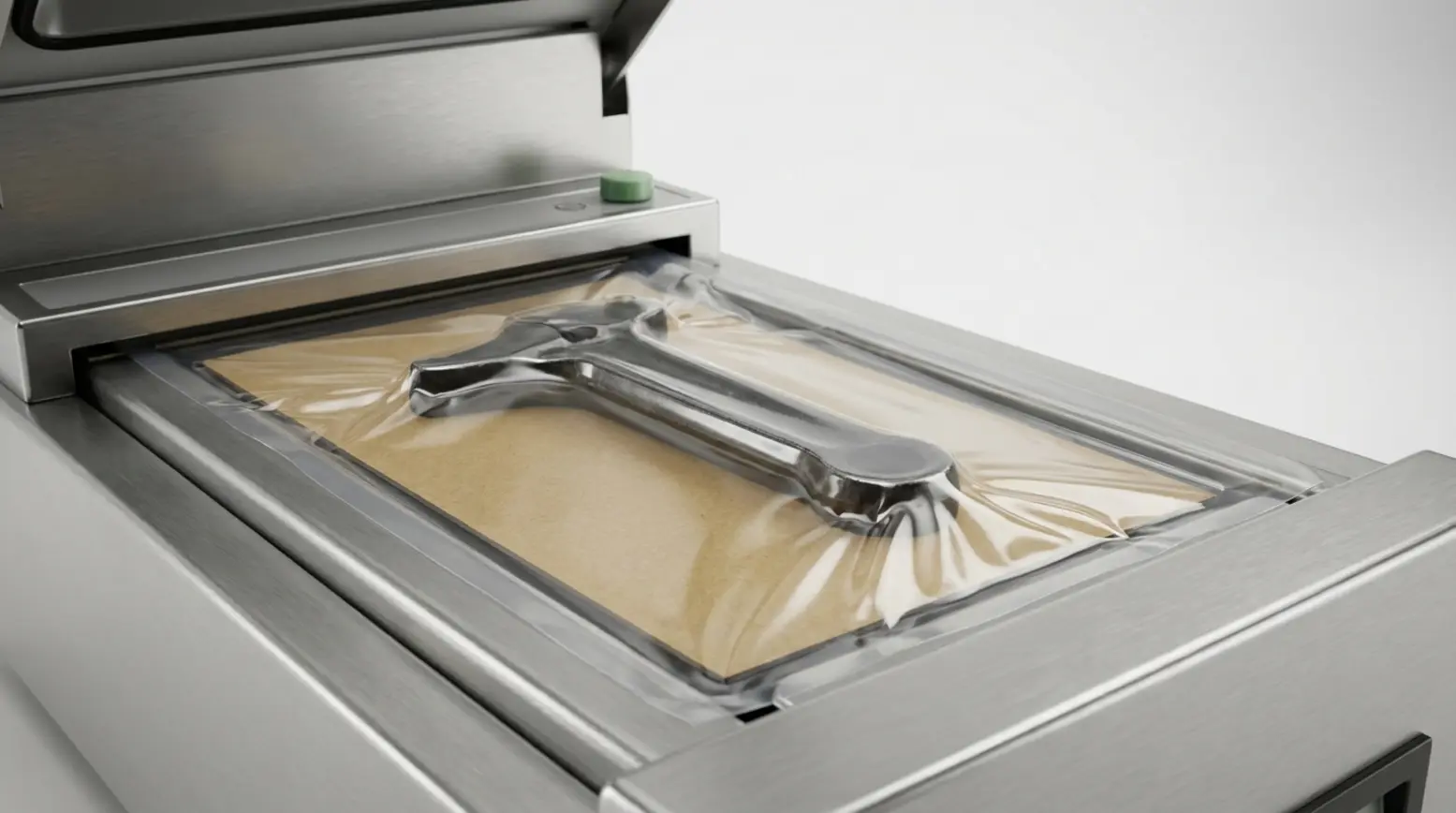
Medical paper lidding machine: sealing breathable medical packs

A medical-grade paper lidding machine effectively seals breathable medical packs when the paper, coating, tray or blister material, tooling, and sealing settings are all properly matched. The short answer is simple: there is no universal setting for medical-grade paper lidding, because paper behaves differently than smooth film and can react to moisture, storage conditions, and flange support. The safest route is to test the actual materials, define an approved process window, and select a machine class based on your specific packaging and output needs.
• Medical-grade paper lidding is a porous, fiber-based material that usually requires a defined sealable construction or coating.
• A medical-grade paper lidding machine should be selected based on the actual paper, the tray or blister, the seal flange, and the production target.
• Paper lid sealing depends on temperature, pressure, and dwell time, meaning settings must be developed using representative samples.
• Inconsistent seals should be investigated in a fixed order, starting with the material, storage conditions, flange quality, and tooling support.
• Seal strength should be measured using approved methods such as ASTM F88, alongside visual inspection of the qualified pack.
What buyers should know before choosing a medical-grade paper lidding machine
Medical-grade paper lidding is used to close medical packs when breathable packaging is required for the design or the chosen sterilization route. Since it is a porous, fiber-based material, it does not behave like a smooth film. In many cases, the paper includes a specific seal layer or a defined construction that allows it to bond to the tray or blister surface. Because of this, a medical-grade paper lidding machine must be matched to the exact pack build rather than a broad material category.
This is best understood as a matter of pack construction. The paper, coating, tray or blister material, flange shape, tooling, and process settings all work together. If any single element is incorrect, seal quality can become unstable even if the equipment functions perfectly. Therefore, machine selection should always be guided by the approved pack and its required opening behavior.
What makes medical-grade paper different from film lidding
Paper has fibers, a more variable surface, and often a coating that must react properly during sealing. Smooth film typically meets the seal area evenly, while paper is much more sensitive to handling and storage conditions. This distinction is crucial in paper lidding projects because a breathable paper lid must seal reliably and open exactly as intended. For more background on paper blister packaging, it helps to link material choices to coatings, tooling, and sealing control.
For a paper lid blister pack, the result after opening can vary depending on the approved construction. One peelable paper lid might show some fiber tear, while another might display coating transfer or a similarly defined result. Consequently, the pack should be judged against its specific acceptance criteria rather than a universal peeling appearance.
Why coatings and mating materials determine the seal
The exact coating type and amount must be derived from the material specifications. That data should then be tested with the intended tray or blister, as the mating surface strongly affects bond formation. You should never assume that any coated medical paper will seal perfectly under a single standard condition. Instead, sealable medical paper and the matching tray material must be qualified as a pair.
This concept is central to medical tray lidding operations. Early project decisions should define the lidding specification, tray resin, flange width, pack dimensions, and expected opening result. Without these details, it is difficult to determine whether a paper lidding machine, the tooling design, or the sealing process is the right fit.
How a medical-grade paper lidding machine handles paper during sealing
Paper can absorb moisture from its environment, meaning storage and conditioning directly affect how it feeds, sits, and seals. This is a primary reason why medical paper heat sealing requires representative samples from the intended supply conditions. A trial conducted with poorly matched sample materials can provide a false impression of process stability.
Why storage and conditioning matter
If paper is stored in an environment different from the production area, its physical condition can change before the sealing process even begins. This shift can impact flatness, surface behavior, and overall seal consistency. As a result, production teams should record exactly how the lidding is packed, stored, and transported to the line. Test materials should reflect standard plant conditions as closely as possible to yield highly reliable process data.
Process variables for heat-sealed paper constructions
For paper blister sealing, the primary process variables are temperature, pressure, and dwell time. Dwell time refers to how long the heat and pressure are applied to the seal area. These settings must be developed using the actual paper, coating, and tray or blister materials. A higher setting does not always fix a weak seal; in fact, excessive heat or pressure can cause entirely different failures. Good process development requires defining an approved process window and consistently operating within it.
On the production line, operators should only change one variable at a time. If seal strength drops, adjust a single setting, record the result, and compare it to the approved range. This methodical approach makes it easier to pinpoint the root cause and ensures responses can be reliably repeated across different shifts.
Tooling support and flange quality affect the result
Stable paper lid sealing also relies heavily on the support beneath the seal area. A flat, clean flange ensures the lidding contacts the pack evenly, allowing heat and pressure to function as intended. If the flange is warped, dirty, or uneven, even an ideal material pairing can result in weak or patchy seals. Therefore, tooling support and flange conditions should be verified early in every validation or troubleshooting process.
Troubleshooting a medical-grade paper lidding machine when seals vary
When seal quality fluctuates, initiate a structured review rather than making hasty line adjustments. Check the approved material first, followed by storage conditions, flange quality, and tooling support, turning to the process settings only as a last resort. This sequence helps teams rule out straightforward issues before pushing the process toward the edges of the approved window. It also improves record-keeping for production and quality teams.
• Step 1: Verify approved materials Confirm the exact lidding specifications as well as the tray or blister materials.
• Step 2: Check storage conditions Ensure the paper matches the intended supply conditions at the time of sealing.
• Step 3: Inspect flange flatness and cleanliness Look for dust, damage, or shape variations that could interrupt the seal.
• Step 4: Confirm tooling support Verify that the pack is supported correctly across the entire seal area.
• Step 5: Review one process variable at a time Adjust temperature, pressure, or dwell time individually.
• Step 6: Document each change Record what was adjusted, the resulting outcome, and whether the setting remained within the approved range.
This methodical approach reduces guesswork by keeping the troubleshooting sequence in a clear, logical order. If the issue persists, new sample materials and a comprehensive review of the pack construction may be necessary.
What to measure instead of pulling by hand
Seal strength must be objectively measured. While a manual hand pull might seem useful, it is highly subjective and difficult to compare across different operators or shifts. ASTM F88 is a recognized test method for measuring seal strength in flexible barrier materials, including scenarios where one side is rigid. Visual inspection and strength testing should always be used together, as each method reveals a different aspect of seal quality.
Opening behavior must be defined for the pack
One approved paper construction might open with slight fiber tear, while another may exhibit coating transfer or a different visual result entirely. What matters is that the specific acceptance rule is established for that pack and applied consistently during testing and inspection. This is especially important for coated medical paper, as the visual opening results can vary even when the pack remains strictly within specification.
Choosing a medical-grade paper lidding machine for your production volume
The chosen machine class should align with output targets, feeding requirements, and process control needs. Lower or variable production volumes often pair perfectly with manual shuttle equipment, as the operator can load packs directly while the sealing step remains strictly controlled in a single station. Higher outputs typically make rotary or inline systems more relevant, as repeatable feeding and continuous line flow become increasingly important. You can compare broader pharmaceutical packaging machines for medical paper lidding once your pack materials and seal areas are fully defined.
| Machine class | Best fit | Main benefit | Main checkpoint |
|---|---|---|---|
| Manual shuttle | Lower or variable volume | Simple loading and controlled sealing | Format changes and operator workflow |
| Rotary | Medium to higher volume | Highly repeatable flow | Feeding stability and process control |
| Inline | Higher volume and integrated lines | Continuous line connection | Automation level and inspection needs |
Lower and variable volumes
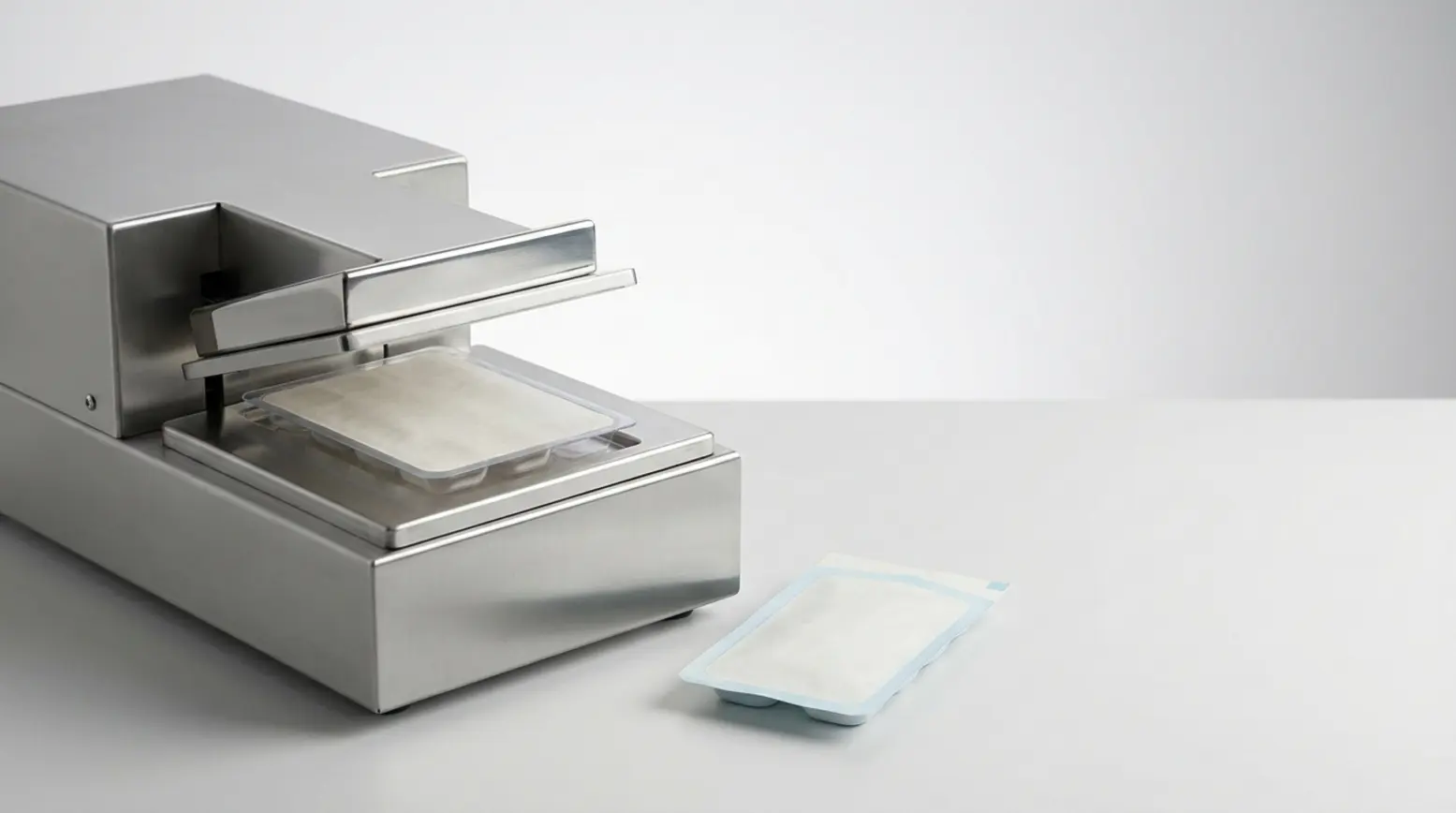
A manual shuttle machine is often a highly practical starting point for medical-grade paper lidding. It supports direct operator loading and controlled single-station sealing, making it ideal for early production stages or facilities where formats change frequently. A realistic example is the SB/PH1-1418 Manual Shuttle machine, though the tooling and settings must still be customized to the actual paper, coating, and tray being used.
When more automation makes sense
Rotary and inline systems become increasingly relevant when production output rises and pack flow needs to be highly repeatable. This transition is beneficial when feeding, automated inspection, and integration with other medical packaging equipment have a significant impact on total line performance. Even so, increased automation never removes the fundamental need for correct material pairing, proper flange design, and precise sealing control.
Buyer checklist for a medical-grade paper lidding machine specification
Before requesting a quotation, gather all technical details that define your pack and process. Doing so accelerates machine selection and lowers overall project risk, as discussions can be rooted in the actual construction. We understand both pack construction and machinery, allowing us to help specify equipment based on your real materials. This is why specifying and implementing the sealing process should always rely on representative samples and actual packaging requirements.
• Exact lidding specifications
• Coating type provided by the material supplier
• Tray or blister materials
• Seal flange design and width
• Pack dimensions
• Planned sterilization route
• Approved seal tests
• Representative paper matching intended supply conditions
• Production volume targets
• Feeding and inspection requirements
Having these details ready helps answer practical questions early in the project. They reveal whether the application requires simple manual operator loading, tighter process controls, or a high degree of automation. Furthermore, they support a stronger trial plan, ensuring that process settings are derived from representative testing rather than mere assumptions.
Next step after defining your requirements
Once your paper and tray combinations are clearly established, the next step is to review samples, seal testing expectations, and overarching production goals. If you are still comparing different machine classes, we can help you narrow down the best path forward. If the pack construction is already fully defined, we can transition to quotation discussions based on actual inputs and representative trials.
If you need assistance determining the right machine fit, share your paper and tray samples where possible and request a Quick Scan or quotation. This is an highly practical route for new medical tray lidding projects or existing processes suffering from inconsistent seals. We never promise seal settings prior to testing, as the optimal process must be rigorously proven using the actual materials.
FAQ about medical-grade paper lidding
Can any paper be used on a sealing machine?
No. Medical-grade paper typically requires a specifically designated sealable construction or coating, and it must be matched precisely to the tray or blister material. The machine, tooling, and process settings also have to complement that exact material pair.
What causes inconsistent paper seals?
Common causes include incorrect materials, poor storage conditions, moisture changes, dirty or uneven flanges, inadequate tooling support, or process settings drifting outside the approved range. The safest approach is to verify one factor at a time and meticulously document each change.
How should seal strength be checked?
Seal strength should be objectively measured rather than judged by hand feel alone. ASTM F88 is a recognized method for seal strength testing, working best when paired with an approved visual inspection protocol.
When should I choose manual shuttle, rotary, or inline equipment?
Manual shuttle machines are generally a great fit for lower, variable production volumes. Rotary or inline equipment becomes far more relevant when higher outputs, repeatable feeding, and robust line integration justify an investment in automation. Ultimately, the final choice always depends on real pack constructions and verified test results.