Skin packaging machine guide, choosing the right system for retail packs

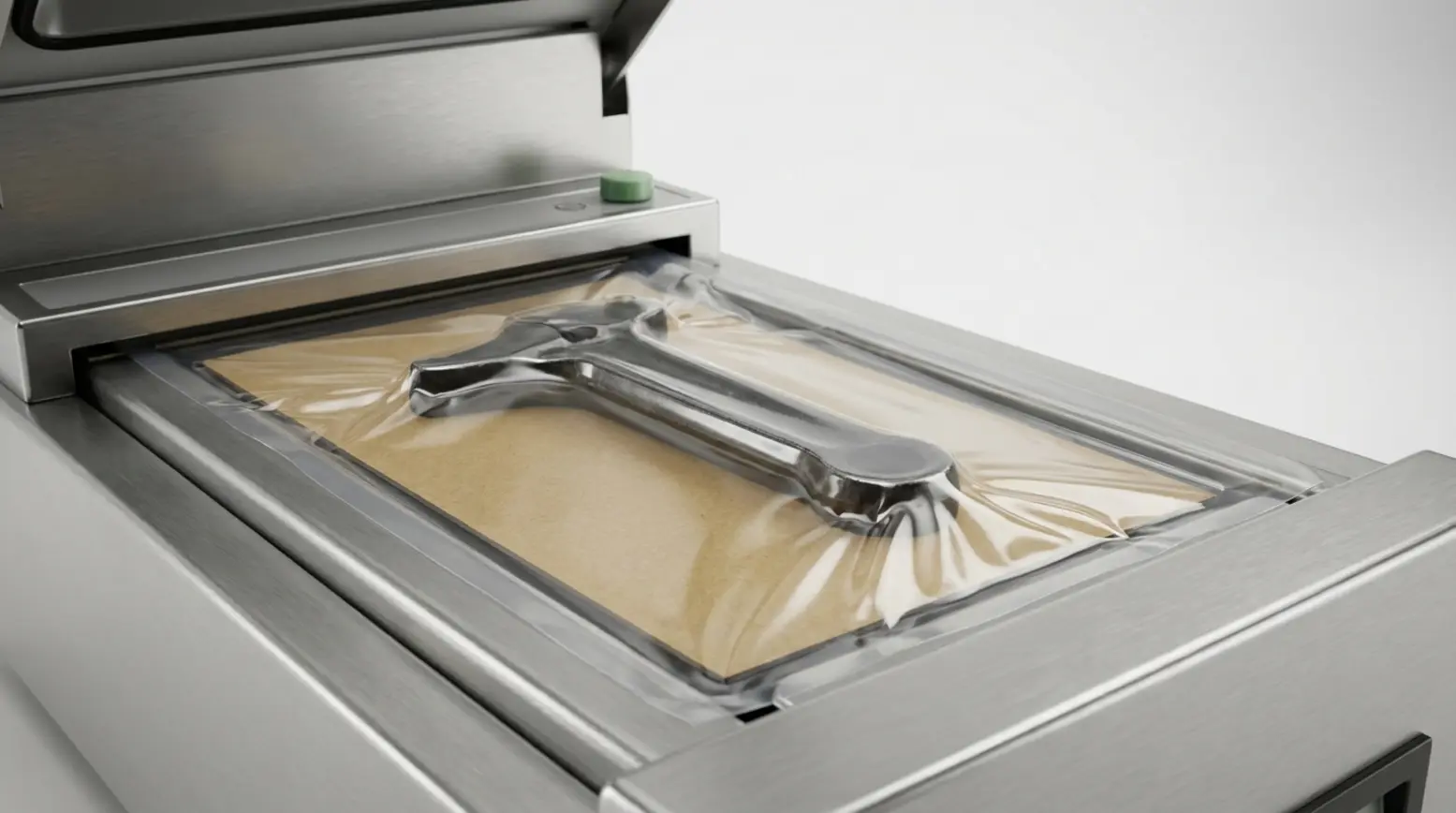
A skin packaging machine heats a plastic film to soften it, then uses a vacuum to pull the film over the product and onto a prepared board. This creates a clear package that keeps the item visible and secure. While it works well for many retail products, success depends on the product's shape, height, and spacing, as well as the board size and production volume. Therefore, the process should be carefully evaluated before selecting a machine.
• Skin packaging forms the film around the actual product during the packing process, meaning the product's shape directly affects the final result.
• The board is an integral part of the process; it supports the product and must be compatible with both the film and the bonding system.
• Tall products, sharp edges, tight spacing, and large boards can make the forming process more challenging.
• A skin packaging machine operates differently from blister sealing equipment, so its suitability should be confirmed early on.
• A practical next step is a Quick Scan based on your product dimensions, board format, and expected production volume.
What a skin packaging machine does
A skin packaging machine creates a retail pack by drawing heated film over the actual product and bonding it to a prepared board or support surface. The product remains highly visible, and the film contours to its shape, holding the item securely in place during display and handling. Because of this, the process is frequently used in retail skin packaging applications where product presentation is essential and a close, secure fit is beneficial.
This format differs from packaging that relies on a preformed plastic cavity. In skin board packaging, the film forms during the packing cycle itself. Consequently, the machine process, the product outline, the backing board, and the selected film must all work seamlessly together to ensure a stable result.
How a skin packaging machine forms the pack
Heat softens the film
The process begins with a flat sheet of film. The machine heats this film until it becomes flexible enough to mold around the product. If the film is too cool, it may not conform to the shape properly; if it is too soft, it becomes difficult to control. While this basic forming principle is common across many packaging machines, it is especially critical in skin packaging because the film must adapt perfectly to the product's exact contours.
Vacuum pulls the film over the product
After heating, a vacuum draws the film down over the product and onto the board. This is the driving force behind vacuum skin packaging, as well as many forms of industrial skin packaging. Because the film tightly follows the product's shape, factors like loading position, product height, and spacing are highly important. Achieving a good result depends on consistent placement and a machine setup tailored to the specific package.
The board supports the full process
The board is more than just a backing card. It supports the item during pack formation and must be fully compatible with the selected film and bonding system. In a product skin pack, the board helps dictate overall quality by influencing structural support, appearance, and the final seal. If the board and film are a poor match, the machine might still operate, but the finished package is unlikely to perform as intended.
Why product shape matters in skin packaging machine selection
Good fit for many retail products
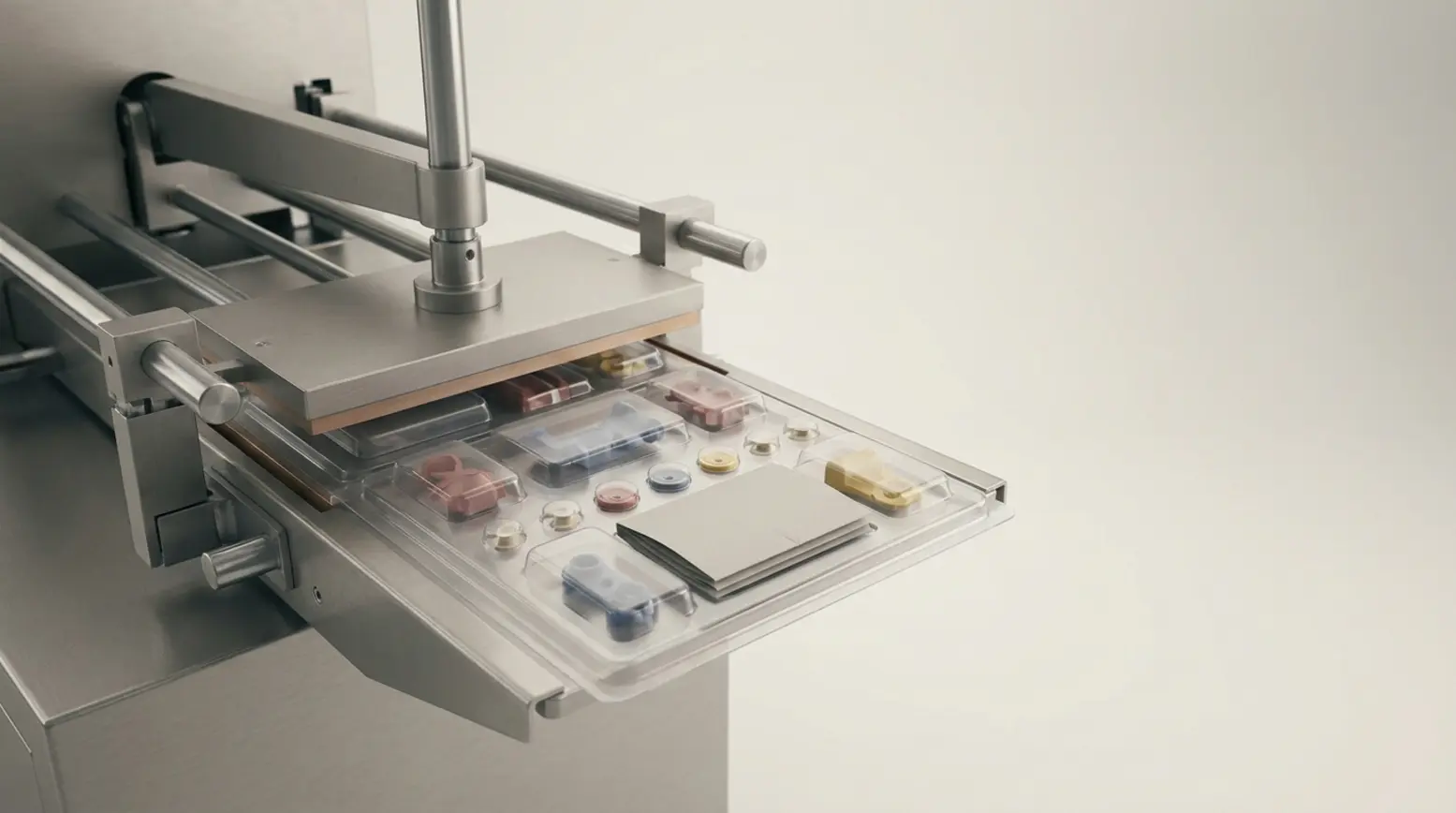
Skin packaging works exceptionally well for products that are heavy, uneven, or awkward to position. Common examples include hand tools, hardware parts, irregularly shaped accessories, and multi-component kits. Because the film holds these items tightly against the board, the retail pack stays neat and the product remains clearly visible. This is a primary reason buyers often turn to skin packing equipment when standard packaging methods prove difficult.
Sharp edges need real testing
Some products are naturally more demanding. Sharp points, rough corners, and hard edges can stress the film during the forming process. As a result, physical testing is vital. It is always better to test the actual product with the intended board and film rather than assuming the process will work based solely on a design drawing. This holds true whether you are using a tabletop skin packaging machine or a larger vacuum skin pack machine.
Height, spacing, and board size affect what works
The height of the product determines how far the film must stretch, while its outline affects how smoothly the film can conform to its shape. Tight spacing between products can make the vacuum draw more difficult, and larger board formats typically require a broader working area. Since these limitations are practical realities, they should be reviewed early in the planning stage. A machine might seem suitable at first glance, but its actual effectiveness depends on the physical product, the board layout, and the chosen production method.
Product variation also plays a critical role. If a single line runs multiple sizes, a change in product dimensions may require adjustments to the board layout, templates, or daily setup routines. Therefore, machine selection should account for long-term versatility rather than being based entirely on a single sample pack.
A skin packaging machine versus blister sealing
A blister pack uses a preformed pocket
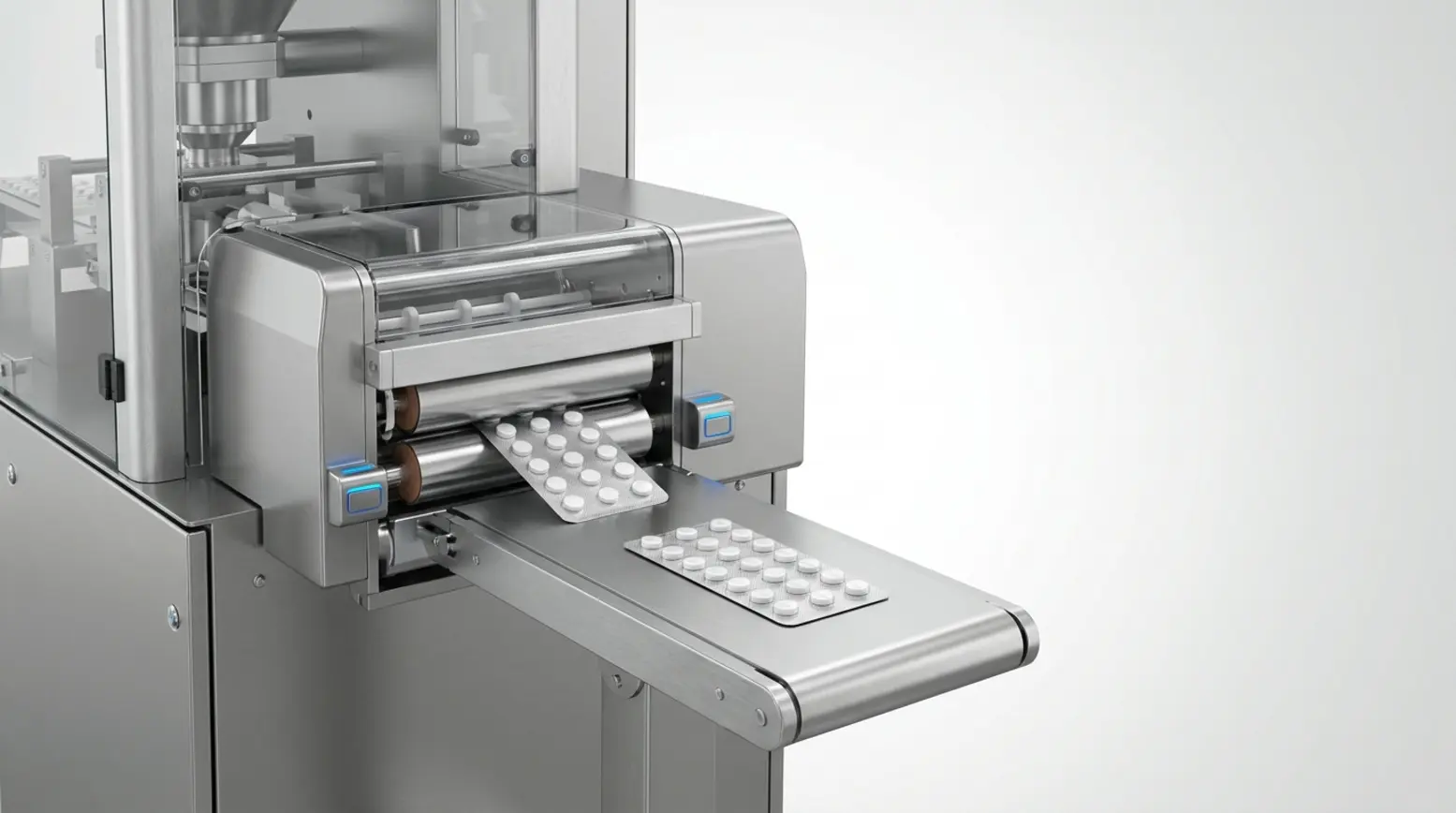
In blister packaging, the plastic cavity is formed before the product is inserted and sealed. Because the cavity already has a predefined shape, the product simply sits inside it during the sealing stage. As a result, the blister itself dictates much of the final package's form.
Skin packaging forms around the real product
In skin packaging, the film forms over the actual product during the packing process. The board supports the item while heated film is pulled tightly over it by a vacuum. Consequently, the product directly influences how the package is shaped. If you would like a broader view of related packaging styles, our overview can help you compare skin packaging with other retail formats.
Why this changes machine choice
This process difference is significant because the required equipment varies accordingly. A blister process relies on a preformed pocket and a separate sealing step, whereas a skin process depends on film heating, vacuum draw, product placement, and board behavior. Therefore, the right machine must be chosen based on the actual packaging method rather than on appearance alone.
| Skin packaging | Blister packaging |
|---|---|
| Heated film forms around the real product during packing. | A plastic cavity is formed before sealing. |
| The product shape directly affects film draw. | The cavity shape is set in advance. |
| The board is an active process part. | The blister carries more of the pack shape. |
| Often used where a close fit to the product is needed. | Often used where a defined pocket is preferred. |
When a skin packaging machine fits your production volume
Different machine levels are available
Skin packaging equipment is available for various production levels. Through our Starview partnership, we offer tabletop, semi-automatic, and fully automated systems for retail applications. The ideal starting point depends on your product, board size, expected volume, and changeover requirements. If you are comparing broader options in retail packaging machinery, it is helpful to define your preferred pack style and handling needs first.
Higher volume also changes workflow
Speed is only one aspect of scaling up. Higher volumes also change how products are loaded, how packed boards are unloaded, and how materials move through the production line. A setup that works perfectly at low volumes might become cumbersome when handling large boards or heavy products. Therefore, production planning should account for the entire workflow, rather than just the machine cycle.
Product changes can mean setup changes
While a single machine can typically handle some variation, significant size changes may require adjustments to the board layout, templates, or production setup. This is especially important when multiple stock-keeping units (SKUs) share the same line. In such cases, the machine review process should consider both current packaging designs and anticipated future changes.
Integrating a skin packaging machine into the line
Dedicated skin systems function quite differently from blister sealing machines, meaning their fit within your production line should be carefully verified rather than assumed. This evaluation includes the loading method, board handling, sealing flow, post-packing trimming, and operator access. We deeply understand both packaging and machinery, ensuring that the chosen equipment perfectly suits your specific pack. As a result, we support installation, process integration, and ongoing service to guarantee a highly functional production setup.
Product trials and thorough setup reviews help transform an initial idea into a reliable manufacturing process. This proactive strategy ensures that unusual products, oversized boards, and frequent format changes are assessed early on through our comprehensive machine selection and implementation approach.
Die cutting after skin packaging
After the packing cycle, some boards must be trimmed or separated into their final retail shapes. In these cases, die cutting can be seamlessly linked to the skin packaging process. This is particularly important when the final package requires clean edges or when multiple packs are processed simultaneously on a single board before separation. If die cutting is a necessary part of your project, it should be discussed early, as it significantly impacts material handling, workflow, and overall line setup.
Questions buyers often ask about a skin packaging machine
Is skin packaging always better than a blister card?
No, it is not. The right format depends entirely on the product, the display goals, the board, the film, and the specific machine setup. Skin packaging provides a tight, custom fit around the actual product, whereas a blister card relies on a preformed pocket. The best choice ultimately depends on the product's requirements during both production and retail display.
Can one setup handle many product sizes?
Some variation is certainly possible, but significant size changes often require adjustments to the board layout, templates, or physical setup. A product's height and shape also dictate how the film forms around it. Consequently, if you intend to run multiple sizes on a single line, this should be carefully reviewed early in the machine selection process.
Does skin packaging use less material?
It occasionally does, but this is not universally true. Overall material consumption depends heavily on package dimensions, board selection, and film type. The most reliable way to determine material usage is to review the specific package design.
How do we confirm if skin packaging is suitable?
Start by outlining your product dimensions, shape, weight, display needs, board size, changeover frequency, and expected production volume. Following that, conducting a sample review or physical trial can clearly demonstrate whether the package forms properly and whether the process is practical for daily operations. This step is especially crucial for tall, awkwardly shaped, or sharp products.
Is vacuum skin packaging the same as food vacuum skin pack systems?
No, these applications are quite different. This article focuses strictly on retail and industrial skin packaging that utilizes board-based presentations. Food systems generally follow entirely different material guidelines and packaging regulations, meaning the equipment should not be treated as interchangeable by default.
What to prepare before asking for machine advice
Before requesting guidance, it helps to gather a few basic details. Having this information ready makes the review process faster and more accurate, as the machine, the board, and the product all profoundly affect the final result.
• Product dimensions: Share the length, width, and height of the item.
• Product shape: Explain whether the item is uneven, tall, or difficult to position.
• Product weight: Note the weight, as this directly affects handling and board support.
• Expected volume: Outline your daily output or batch requirements in simple terms.
• Desired presentation: Describe how the final package should look and function.
• Board size: Include the dimensions of your planned backing card.
• Changeover frequency: Indicate how often product formats are likely to change.
Request a Quick Scan for your product
If you are comparing a skin packaging machine with blister sealing equipment, requesting a free Quick Scan is a practical next step. Simply share your product dimensions, shape, expected volume, and presentation goals, and we can evaluate whether the process is a suitable match. If you would like to discuss board formats, line integration, or specific handling needs, please contact us so we can assess the application together.