Die-cutting-blister-cards for blister card machines and tooling

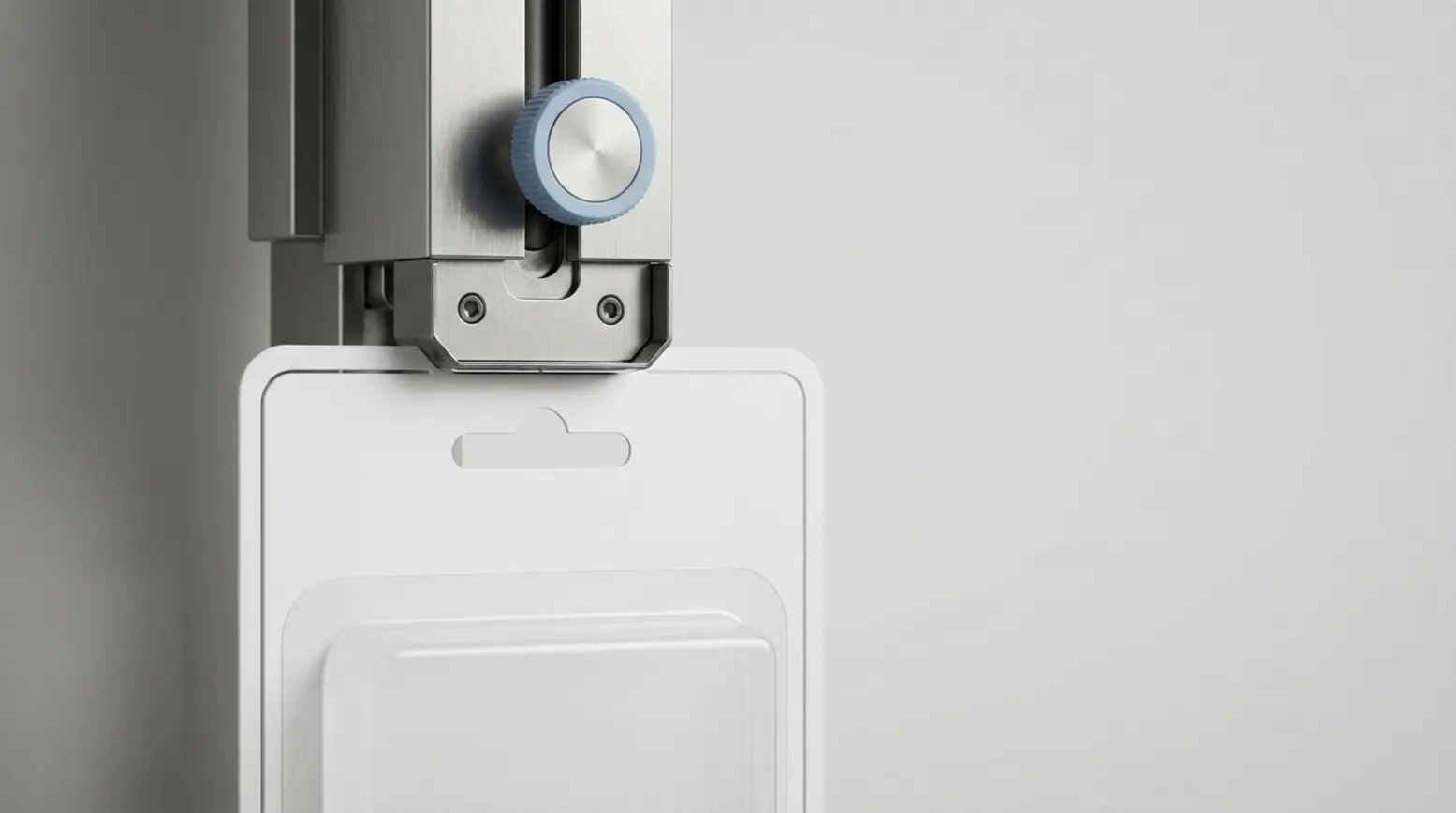
Die cutting determines the final shape of a blister card and its necessary cut features, such as a window, rounded corner, slot, or euro hole punch. In blister card production, this step affects much more than just appearance; it also influences sealing, registration, feeding, release, and line stability. If the cut shape does not perfectly match the blister flange and seal area, the pack may shift during production, leading to defects that appear later during sealing, transfer, inspection, or packing.
• Die cutting gives the blister card its final shape and key cut features.
• The card outline, blister flange, and seal area must align in a highly repeatable way.
• Rough edges, incomplete cuts, poor release, and drifting positions often point to wear or setup issues.
• A new format should be reviewed by considering tooling, machine setup, and feeding requirements together.
• Buyers should prepare drawings, material details, final dimensions, hanging features, and output needs before a technical review.
Why die cutting blister cards matters in blister card production
In simple terms, die cutting blister cards is the controlled cutting step that gives the card its final outline and required features. This can happen before sealing or at another point in the process, depending on how the line is configured. The result matters because the blister card's shape affects how the part is positioned, moved, and presented to the next station. When the shape remains stable, the process is significantly easier to control. If the shape varies too much, the machine may still run, but sealing and handling often become much less reliable.
What a blister card die can create
A blister card die produces the outer profile of the card alongside smaller cut features that support retail displays or production handling. This may include rounded corners, slots, windows, custom shelf shapes, and a euro hole punch. Each feature must sit in the exact correct location because the finished pack must look right while moving through the machine as planned. If the cut geometry shifts, the printed image might still appear correct, but the card may no longer feed, hang, or register in the intended way.
Die cutting is not the same as trimming plastic
Blister card cutting and trimming thermoformed plastic are entirely different operations. The paperboard card is cut with its own specific cutting tool packaging setup, while the plastic blister is trimmed using different tooling and equipment. This distinction is highly important because buyers often discuss both steps together during a new project. Maintaining a clear split helps define exactly what the blister card die must do, what the blister tooling must do, and which machine functions are actually required.
How die cutting blister cards affects sealing, registration, and pack fit
The card outline and the sealing fixture must precisely match the final pack. This matters because the printed card, blister flange, and seal perimeter must align in a repeatable way each time the machine cycles. If the cut card reaches the sealing station in a slightly different position from one part to the next, seal quality can fluctuate, even when the artwork and temperature settings remain exactly the same. We always review the cut card and sealing setup together, as our packaging expertise helps us assess how the entire process will behave during real production.
Explaining tolerance in simple terms
Tolerance is the small amount of allowable variation that still lets parts fit, locate, feed, and seal correctly. In practice, this means no two cards need to be perfectly identical, but they must remain within a tightly controlled range. If the variation becomes too large, the card may sit differently in the feeder or reach the seal station in an unexpected position. As a result, the exact same packaging tooling die might produce entirely different sealing results from one card to the next.
Why the seal perimeter and card outline must agree
If the blister card's shape changes, the seal area may no longer sit exactly where the machine expects it. This negatively affects registration, meaning the parts fail to line up the same way during each cycle. The die layout is intrinsically linked to the sealing fixture, so both should be specified together during format development. Even a minor outline change on a drawing can drastically affect pack fit, feeder behavior, and the final appearance.
Common defects in die cutting blister cards and what they often mean
Production teams usually notice a problem first through physical symptoms on the line. Common defects in die cutting blister cards include incomplete cuts, rough edges, poor release, and shifting positions. These signs frequently stem from tool wear, pressure changes, setup drift, material variation, or poor control over the cutting step itself. Even if the printed design remains completely unchanged, the finished card can behave differently because the true issue lies in the cut geometry and how the part moves through the process.
Incomplete cuts and rough edges
Incomplete cuts often leave small fibers attached to the card, while rough edges make parts significantly harder to stack, separate, or feed. These symptoms usually point to wear in the packaging die cutter, a mismatch between the material and cutting conditions, or a setup problem that gradually drifts over time. A steel rule die packaging setup can be suitable for many applications, yet it still requires proper maintenance and strict process control. If edge quality starts to degrade, the cutting step should be reviewed immediately, before the problem spreads to later stations.
Inconsistent release and changing registration
Sometimes, a cut card fails to separate cleanly from the sheet or web. In other cases, the part releases, but its position shifts enough to negatively affect the next step. This may appear later as changing registration at the sealing, inspection, printing, or scanning stations. Although the issue likely begins at the blister card cutting stage, the effect typically becomes visible only after transfer or feeding. Therefore, it is vital to trace the problem back to the original cut, rather than focusing solely on the station where the defect is first noticed.
Why defects cause downstream handling problems
Poorly cut edges or a drifting cut position can severely affect stacking, transfer, orientation, and feeding. Automatic systems are particularly sensitive because they rely entirely on repeatable dimensions and stable presentation. If the card enters a station at a slightly different angle during each cycle, rejects and manual corrections will inevitably increase. In lines that also utilize secondary packaging machines, one unstable part can disrupt multiple stations, turning a localized cutting issue into a line-wide problem.
Specifying die cutting blister cards for a new format
When a new blister format is introduced, die cutting blister cards should be carefully defined as part of the overarching machine and tooling discussion. This gives engineers, production teams, and procurement a clearer view of what the process truly requires. The card shape should never be treated solely as artwork because it directly affects the feeder, sealing fixture, orientation, and downstream handling. A practical format review helps reduce late-stage changes and supports a much more realistic machine assessment.
What information a buyer should provide
Always start with an approved drawing that clearly displays the final dimensions and all cut features. The machine team should also receive the material construction details, hanging feature locations, expected output, and any special requirements for windows, slots, or unusual shapes. If strict positioning is necessary, that must be made clear from the very beginning. For new projects, tooling and machine implementation should be reviewed together so the format can be tested against the actual process, rather than just the theoretical drawing.
Pre-cut cards or cutting within the production flow
Some projects use pre-cut cards that arrive ready for immediate sealing, while others require a dedicated card cutting machine integrated directly into the line. This decision affects the floor layout, operator handling procedures, position control, and exactly where defects might appear. It also changes how the feeder handles the card, especially when orientation is critical. A project team should make this decision early because the choice heavily influences machine flow, overall line control, and the way the sealing step is ultimately integrated.
A card outline change affects more than just artwork
A change in the card's outline impacts much more than just the graphics. It can completely alter how the feeder picks up the part, how the card sits in the sealing fixture, and how the finished pack moves to the subsequent station. A relocated euro hole punch, a new corner radius, or a slightly different outer profile can all negatively influence registration and handling. Because of this, any adjustment to the blister card's shape should be thoroughly checked against the full process path before final release.
Choosing equipment around die cutting blister cards and production volume
Machine selection heavily depends on production volume, format design, and exactly where cutting happens within the workflow. Some operations can succeed with a simple manual or single-station setup, while others require a highly automated solution offering better control over orientation and repeatability. In current packaging environments, Starview die-cutting equipment can range from basic roller die cutters utilizing steel rule dies to fully automated slitting and cutting systems for applicable jobs. Ultimately, the best choice depends on the pack design, the output target, and how the cut card will be handled both before and after sealing.
How machine choice depends on volume and process flow
Different blister packaging machines are designed to suit specific production needs. A lower-volume project may allow for more manual handling, whereas a higher-volume line invariably needs tighter control over card positioning and repeatability. This distinction matters because automatic feeding is highly unforgiving when card dimensions or orientation vary. Once the card and tooling requirements become clear, readers often compare their options through our retail packaging machinery page to better understand which machine category fits their specific process best.
Tooling, feeding, vision, printing, and scanning
A comprehensive machine project may include feeding, vision, printing, or scanning systems when the process requires these advanced functions. Each of these add-ons depends entirely on repeatable card presentation, meaning that die cutting packaging quality remains crucial even after the card has been shaped. A card might look perfectly acceptable to the naked eye, yet still create significant trouble if it reaches the next station in an unstable manner. We can properly assess standard or customized blister machine setups and integrate the right support functions based on your actual pack design and production needs.
Installation and integration in a wider production cell
When cutting serves as just one part of a larger line, installation and integration matter equally as much as the cutting tool itself. The physical handoff between stations must be stable, and the machine's controls must perfectly match the true production flow. This factor becomes increasingly important whenever a new format is added to existing equipment. Good planning helps avoid repetitive trials, drastically reduces avoidable adjustment work, and ultimately supports a much smoother line startup.
Questions to review before you release a new blister card format
Before formal release, it helps to review a short group of practical questions. These key points often decide whether a format runs smoothly or constantly causes repeated corrections on the line. A drawing can look wonderfully complete while still missing vital production details. This critical review keeps your attention squarely on function, not only appearance.
• An approved drawing is available and current.
• Material construction is known and confirmed for the process.
• Final dimensions and blister card shape are reviewed for feeding and sealing.
• The hanging feature is confirmed for both display purposes and machine handling.
• Expected production volume is clearly defined.
• The choice between pre-cut supply or inline cutting has been decided.
Does the hanging feature work in retail and in production?
While the hanging feature must reliably support retail display, it also needs to function smoothly during machine handling. If a euro hole punch sits too close to an edge or in the wrong overall position, the pack may hang poorly in stores or move erratically through production. The feature should therefore be carefully checked against card strength, part direction, and feeder behavior long before final approval.
Are card dimensions repeatable enough for automatic feeding?
Automatic feeding depends heavily on stable sizes and consistent orientation. If one card enters the system differently from the next, the machine may require manual adjustment or simply reject the parts. This can happen even when the printing remains completely unchanged because the real issue is the precise repeatability of the cut card. As overall speed and automation levels increase, this specific requirement becomes increasingly important.
Do the die layout and sealing fixture match the final pack?
The die layout and the sealing fixture should perfectly match the final pack and the way the card is presented to the machine. Even when that initial match is correct, wear and process control still require careful attention over time. Tooling alone will never fix registration problems if the parts drift, release poorly, or arrive inconsistently. Truly stable results come only from the full system working seamlessly together.
When to ask for a technical review
The best time to ask for a technical review is before tooling decisions are firmly fixed. Early input can quickly reveal whether the card shape, sealing area, feeding method, and automation level genuinely complement each other. This is especially useful when deciding between pre-cut cards and inline cutting, or when an existing line must adapt to handle a brand-new format. A practical, early review dramatically reduces surprises during implementation and ultimately supports a much better machine decision.
Free Quick Scan for a new format
We offer a complimentary Quick Scan for early-stage projects. Simply share the drawing, material construction, finished size, cut features, and expected output, and we will review the likely effects on your tooling, feeding, machine flow, and line setup. This technical review quickly helps clarify whether a standard or customized setup is more suitable, and whether extra functions such as vision, printing, or scanning should be integrated into the final solution.
Contact us with drawings and production requirements
If you already have packaging drawings or physical samples, please contact us to arrange a detailed technical discussion. We can expertly assess your machine setup, review installation and integration plans, and evaluate exactly how the cut card should interact with sealing and downstream handling. Bringing the real format details into the discussion makes the entire review significantly more useful right from the start.
FAQ
What does die cutting do in blister card production?
It creates the final card shape and any specific cut features needed for the pack. This typically includes the outer profile, windows, rounded corners, slots, and hang holes. Ultimately, the result dictates exactly how the card seals, feeds, and smoothly moves through the entire production line.
How is card cutting different from trimming plastic?
Card cutting specifically shapes the paperboard card, while plastic trimming shapes the thermoformed blister. Because these are entirely different operations, they generally require different tooling, highly specialized equipment, and distinct process controls. Keeping these concepts separate helps tremendously whenever a new machine project is being specified.
Why do card shape and sealing tooling need to match?
They must line up in a consistently repeatable way so that the blister flange, printed card, and seal area always meet in the correct position during every machine cycle. If the outline suddenly changes, the sealing area may no longer sit exactly where the machine expects it to be. Naturally, this mismatch can severely reduce process stability, registration accuracy, and overall seal quality.
What are common signs of die wear?
Typical signs include incomplete cuts, noticeably rough edges, poor release, and constantly changing registration. These frustrating symptoms can appear very slowly and might initially show up only at a later station down the line. Whenever they occur, they should immediately trigger a thorough review of the tooling condition, machine setup, and material behavior.
What should I prepare before asking for a machine review?
You should prepare approved drawings, material construction details, finished dimensions, hanging features, and your expected production volume. It also helps immensely to confirm whether the cards will arrive pre-cut or if a dedicated card cutting machine will be needed within the production flow. Providing all this information upfront makes the technical review much faster and considerably more accurate.