Blister machine cleanroom requirements for selection and setup

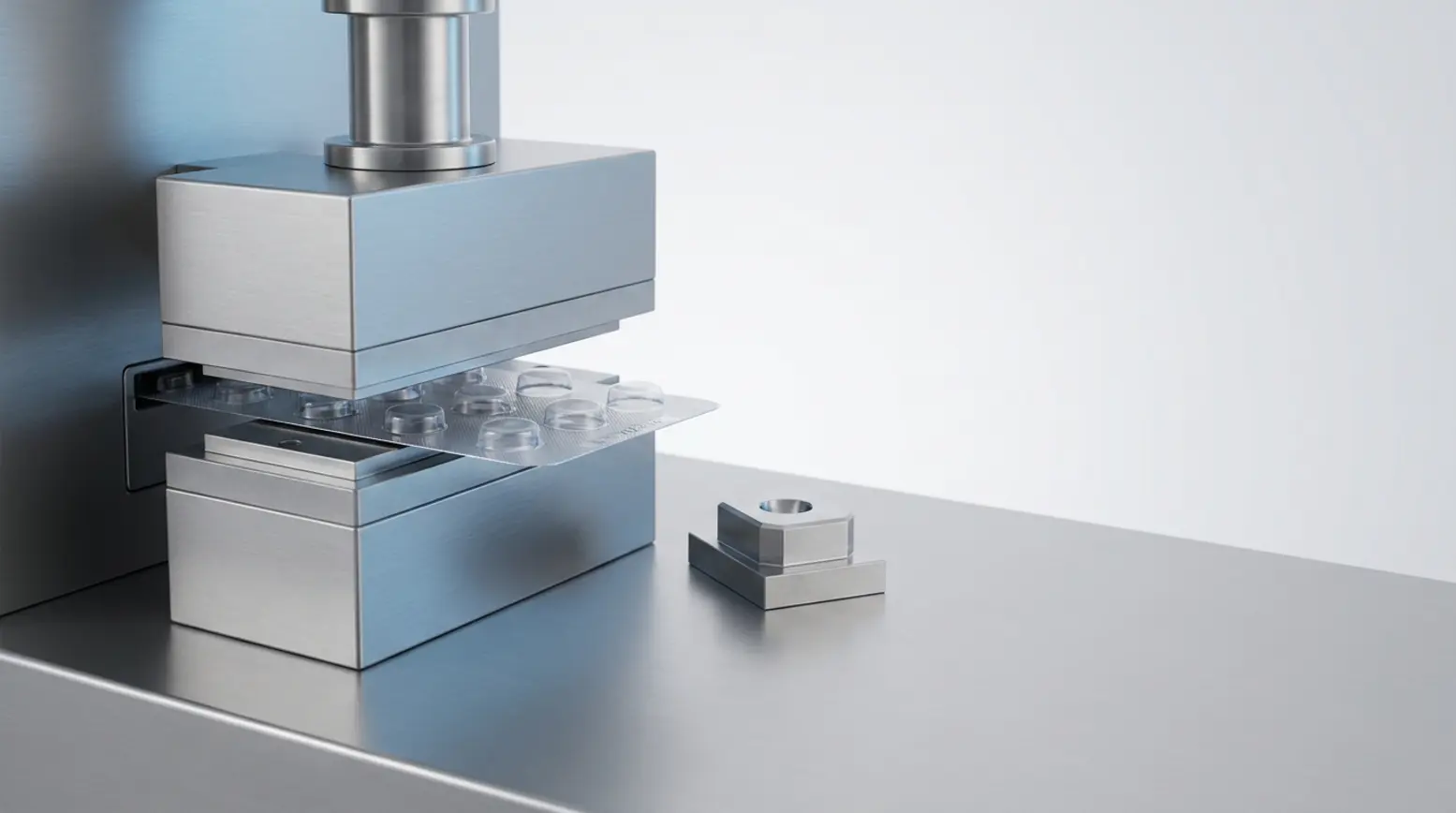
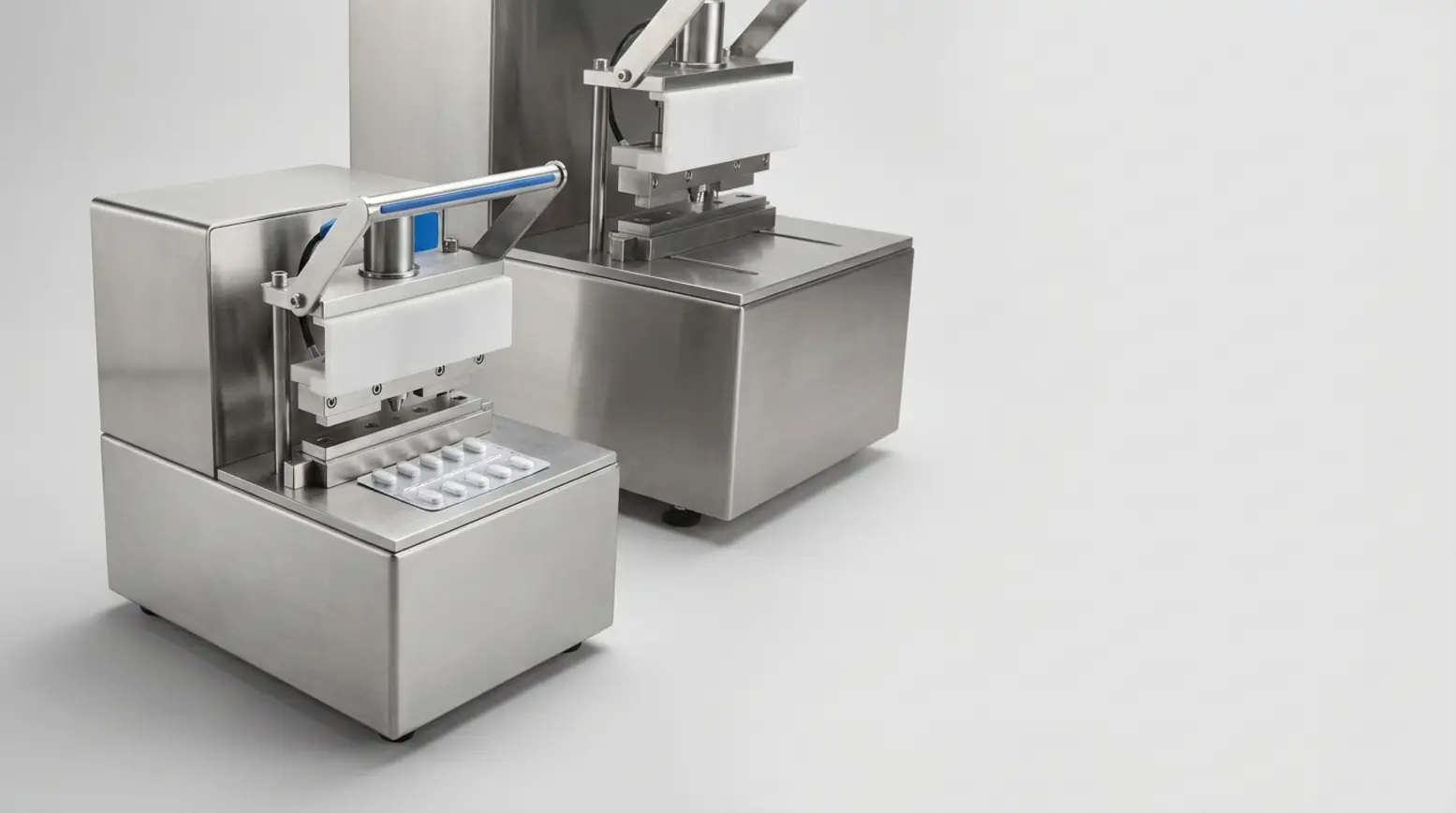
When a blister machine is intended for a controlled production area, its specification must be adapted early on. The main considerations include surface finishes, cleanability, moving parts, utilities, access space, maintenance methods, and installation planning. In practice, blister machine cleanroom requirements should begin with your site’s approved cleaning and environmental protocols, as these rules define what the equipment must support before fabrication even starts.
• Start with your site's approved rules for cleaning, access, utilities, and maintenance to ensure the machine fits real-world production conditions.
• Define surfaces, materials, and cleaning agents in writing, as vague terminology often leads to gaps in the machine specification.
• Review belts, bearings, wear points, lubrication, and airflow early on to mitigate potential particle risks before the build begins.
• Plan the footprint to allow full access space around the machine, accounting for cleaning reach, tooling removal, service doors, and electrical access.
• Treat installation as a controlled project phase that includes route checks, door dimension verification, lifting limits, assembly planning, and final utility connections.
How blister machine cleanroom requirements change machine selection
Selecting a machine for a controlled environment involves much more than evaluating speed, pack formats, and sealing methods. It also depends on cleaning procedures, approved materials, utility controls, and operator access during daily use. Because of this, blister machine cleanroom requirements should be part of supplier discussions from the very beginning. Teams comparing pharmaceutical packaging machines for controlled environment packaging must first ask a practical question: can the equipment be configured for real site conditions rather than just a standard factory layout?
While some projects work perfectly well with a standard machine, others require a highly specific setup due to stricter room regulations or limited maintenance access. We design and supply blister equipment across manual, shuttle, rotary, and inline formats utilizing both heat and cold seal technologies. This flexibility allows us to thoroughly assess what best fits your process and your room. This process focuses on precise machine fit and cleanroom design principles; it is not a broad certification claim. If your team requires additional background information before writing a specification, reviewing what a medicine packaging machine includes at the line level can be highly beneficial.
Start with approved site requirements
Before requesting a specific machine design, clearly define the rules that already apply at the site level. These protocols typically cover environmental controls, cleaning methods, material restrictions, utility expectations, access control, and maintenance rules. If these details remain unclear, the machine specification will inevitably be vague. Consequently, buyers might find themselves comparing suppliers based on incomplete information, leading to costly engineering changes later in the project.
Turn room needs into machine questions
Room requirements should translate directly into specific machine questions. Ask which surfaces must be easy to wipe down, what materials are acceptable, where cleaning access is essential, which components might generate particles, how utilities should perform, and how the equipment will integrate with the rest of the line. This straightforward approach turns general cleanroom packaging concepts into concrete buying criteria.
What blister machine cleanroom requirements mean for surfaces and cleaning
Effective cleaning generally relies on simple factors: material choice, surface finish, and machine geometry. Buyers should avoid using vague terminology like hygienic machine design as a standalone requirement, since a design accepted by one facility might be rejected by another. Instead, it is much better to clearly define pharmaceutical machine surfaces, approved cleaning agents, and access expectations in writing. Within your blister machine cleanroom requirements, providing this level of detail ensures both the customer and the supplier are working from the exact same plan.
It is also beneficial to separate product-contact parts from non-contact parts. In many projects, these two zones do not require the same materials or finishes because they serve entirely different functions. The correct specifications depend on the product itself, the packaging path, the intended cleaning method, and internal quality standards. Therefore, a cleanable packaging machine should be discussed precisely in terms of how the site will actually operate and maintain it.
Review surfaces and geometry
Look closely at gaps, ledges, fasteners, joints, and enclosed spaces. These intricate details directly impact how easy the machine is to clean and inspect. In some cases, they can trap residue or make wiping surfaces significantly harder. Because of this, effective cleanroom machine design is about much more than just utilizing stainless steel components or smooth panels; shape and accessibility are equally important.
Ask how the machine will actually be cleaned
Determine who will clean the machine, how frequently the cleaning will occur, and exactly which tools and agents will be used. Then, establish which areas require direct access during these routine procedures. A machine might look perfectly accessible on a technical drawing, but real operators still need adequate reach, clear visibility, and the ability to move safely around the equipment. This reality makes cleaning as much a daily operational topic as it is an engineering one.
Where blister machine cleanroom requirements affect particle and utility control
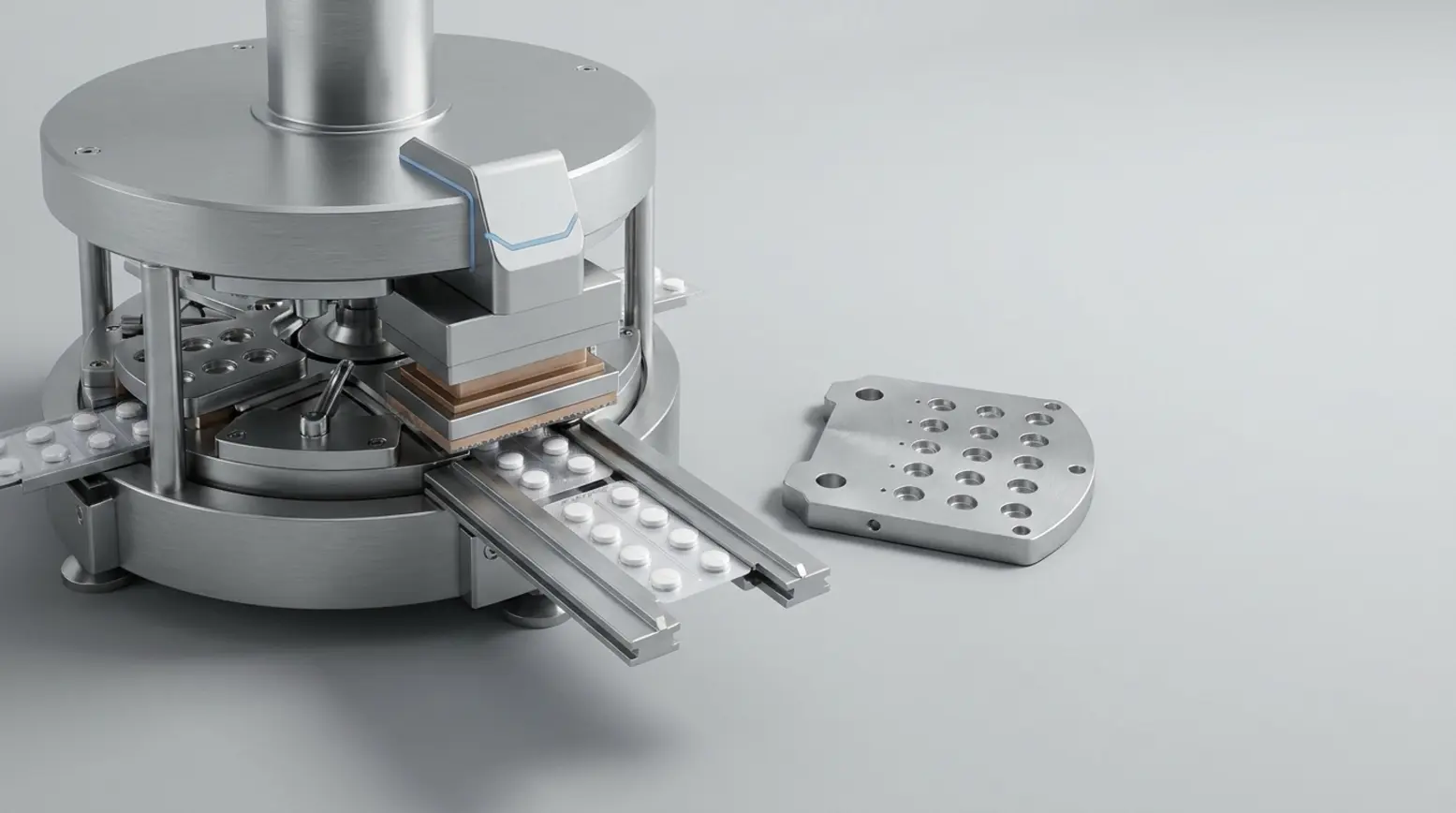
Moving parts deserve focused attention because they inevitably generate particles over time. Belts, bearings, wear points, open drives, and localized airflow near the packaging path all play critical roles in particle control. The primary goal is to identify potential sources early on and decide how the machine should be arranged, guarded, or maintained to suit the cleanroom environment. This is one of the most practical aspects of blister machine cleanroom requirements, as it directly impacts both the initial machine layout and long-term upkeep.
Utilities also demand clearly written requirements. Compressed air is a common example, as the site must define the required air quality along with the expected exhaust behavior. These stipulations stem from the process and risk assessment, providing a framework for the supplier to design around. Teams seeking better coordination during this phase often benefit immensely from working with a packaging equipment partner who can review these crucial details early and align them with key machine-build decisions.
Common particle sources to review
Start by examining components that move, wear, or rub together. Review belts, bearings, abrasion points, open mechanisms, drives, and airflow near operator stations and product travel zones. Depending on these details, some projects may require entirely different guarding, specialized enclosure choices, or custom service planning. By addressing these factors, particle control decisions seamlessly become part of the machine specification before fabrication even begins.
Utilities that need written requirements
Questions regarding cleanroom compressed air should be answered by the site first, as the correct specifications rely heavily on process risks and internal quality standards. It is also important to review exhaust direction, electrical access, vacuum points if utilized, and all other utility connections that might influence how the equipment fits into the line. While these might sound like minor planning details, they frequently dictate the final machine layout in a very direct way.
Why blister machine cleanroom requirements include maintenance and access space
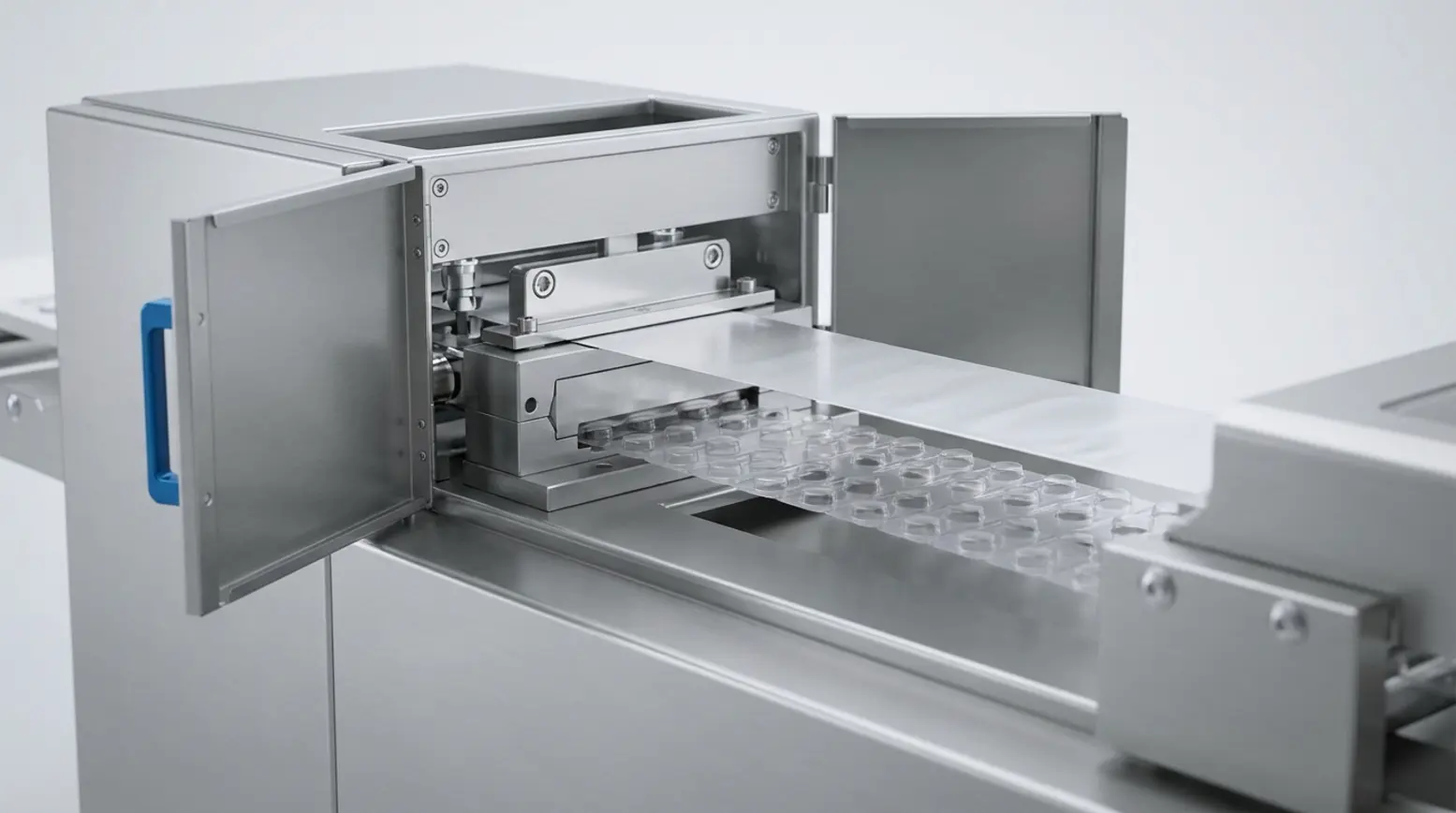
In a controlled area, a machine's footprint implies much more than just the dimensions of its base frame. Adequate space is also required for operator movement, cleaning reach, tooling changes, electrical access, service doors, spare part handling, and the safe removal of components. If these spatial needs are not mapped out early, the machine might perfectly fit a layout drawing yet prove incredibly difficult to operate post-installation. This is precisely why cleanroom maintenance access must be specified right from the start.
Maintainability must be agreed upon before fabrication begins, as hard-to-reach components are exponentially more difficult to repair after delivery. Lubrication points require careful review regarding their location, containment, servicing methods, and overall site fit. While some routine maintenance might be performed inside the cleanroom, other tasks may need to be executed outside of it. These critical choices directly impact removable cover designs, panel accessibility, tool paths, and how service personnel operate under established site rules.
Map the real footprint
Map out the machine from every angle, not just the front. Account for operator movement, service technician access, tool removal pathways, cleaning reach, and spare part handling. Additionally, check whether removing a specific component forces staff to cross into another classified zone or obstructs a neighboring machine. Conducting this review early often prevents severe layout problems down the line, particularly in controlled environment packaging lines where available space is at a premium.
Agree on maintenance methods before the machine build
Determine which tasks will take place inside the cleanroom and which can be shifted outside. Confirm how lubrication will be managed and how tools, spare parts, and service staff will enter the controlled area in accordance with site procedures. Although these ultimately remain site responsibilities, they heavily influence machine access and overall service design. Therefore, they firmly belong in the initial machine discussions.
Planning installation around blister machine cleanroom requirements
Installation within a controlled room should always be planned as a strictly defined project activity. Confirm the transport route, door dimensions, lifting or handling constraints, assembly steps, commissioning approach, final utility connection points, and post-installation cleaning procedures. While the customer retains responsibility for classification, qualification, and validation decisions through their site's quality system, we can expertly assess the machine requirements, define an appropriate standard or custom configuration, and fully support installation, integration, and follow-up after delivery.
Early coordination is vital because physical limitations are far easier to resolve prior to fabrication than they are after delivery. For this reason, we highly recommend discussing room layouts, utilities, access requirements, and cleanroom installation constraints with your project team as early as possible. You can learn more about our integral approach for aligning machine implementation, installation, and integration seamlessly across the entire project.
Questions to confirm before the machine build starts
Confirm whether the machine can arrive fully assembled or if portions of it must be constructed inside the cleanroom itself. Verify route limitations, lifting capacities, and handling constraints that could ultimately dictate the machine's size. Clearly define where the final utility connections will be established and determine exactly who is responsible for each step. All of these questions should be comprehensively answered before the final build is approved.
What to align with the machine supplier early
Align service access, cleaning protocols, tooling change procedures, electrical access points, and overall line integration early in the process. If a custom feature is necessary, explicitly define it while the machine is still in the specification phase, well before any assembly drawings are finalized. This proactive approach helps procurement teams compare suppliers on a much clearer basis and drastically reduces the likelihood of late-stage design changes.
Questions buyers should send to the machine supplier
A robust User Requirement Specification (URS) or Request for Quotation (RFQ) should clearly explain what the site expects the machine to do, exactly how it will be cleaned and maintained, and how it will physically fit within the room. The points below provide engineering, operations, and procurement teams with a highly practical starting framework.
Specification checklist
• Site cleaning requirements: Define the cleaning methods, frequency, agents, tools, drying steps, and access expectations.
• Materials and surface expectations: Clearly delineate product-contact and non-contact areas, along with accepted materials and finish requirements.
• Particle source review points: Thoroughly review belts, bearings, abrasion points, open mechanisms, and airflow patterns near the packaging path.
• Lubrication and maintenance limits: Define lubrication point locations, containment strategies, servicing methods, and their overall suitability for a controlled area.
• Compressed air quality requirements: State the site-defined requirements based on specific processes and risk assessments.
• Exhaust behavior: Specify exhaust direction and any localized control expectations.
• Access around all sides: Confirm the required space for operator movement, cleaning, servicing, electrical maintenance, and tooling access.
• Tooling change methods: Define removal pathways, lifting techniques, spatial requirements, and safe handling procedures.
• Installation routes and assembly plans: Confirm door dimensions, lifting limits, route constraints, and any assembly steps required inside the cleanroom.
• Utility connection points: Establish the final locations for air, power, exhaust, and all other necessary services.
• Maintenance tasks inside and outside the room: State clearly exactly where each routine maintenance task will take place.
• Responsibility split: Confirm that the site's quality system owns all classification, qualification, and validation decisions, while the machine supplier fully supports machine design and implementation based on those agreed-upon requirements.
Simple planning table
• Surfaces: Define the appropriate materials, finishes, and cleaning agents before fabrication starts.
• Moving parts: Identify potential wear points and carefully review how they might affect overall particle control.
• Lubrication: Define specific locations, containment methods, and maintenance procedures.
• Compressed air: Define quality requirements, designated use points, and exhaust behavior.
• Access space: Map out all sides of the machine to ensure unimpeded operation, cleaning, servicing, and tool removal.
• Installation route: Confirm transport pathways, lifting methods, and sequential assembly steps.
• Maintenance methods: Decide precisely which tasks will remain inside the cleanroom and which will be relocated outside.
A simple example illustrates why this preparation is so important. Imagine a team selecting a blister machine for a controlled production room; they proactively define surface finishes, cleaning agents, compressed air quality, tooling removal space, and service access long before the final machine is built. Because these critical points are agreed upon early, the supplier can develop the equipment relying on facts rather than assumptions. As a result, the subsequent installation and handover processes are significantly easier to manage.
Common questions about blister machines in controlled production areas
Do all blister machines need the same cleanroom features?
No. The appropriate features depend entirely on the specific product, packaging design, seal type, output volume, cleaning methods, and individual site rules. While one project might perfectly suit a standard machine, another could demand a highly customized setup for utilizing cleanroom packaging equipment.
Can one machine design fit both product-contact and non-contact requirements?
Sometimes, yes, but the requirements for each should still be defined separately. Product-contact and non-contact areas often require distinctly different materials, finishes, or access rules simply because they perform completely different functions within the process.
Should compressed air requirements be defined by the supplier or the site?
The site should always define these requirements, as they are intrinsically tied to process protocols and specific risk assessments. The supplier must then design the machine around those explicitly written requirements.
Why is maintenance access so important in a controlled area?
Hard-to-reach parts inherently create production delays, complicate cleaning protocols, and introduce significant service risks. Proper access directly affects equipment uptime, the ease of routine work, and how smoothly personnel can bring tools and spare parts into the area while adhering to site procedures.
When should buyers raise cleanroom-related machine requirements?
They should be raised as early as possible, and absolutely before the machine build starts. Crucial details, such as spatial access, utility routing, component locations, and maintenance methods, are vastly easier to resolve during the specification phase than after the machine is fully constructed.
If your team is in the process of defining user requirements, layout limits, utility connection points, or service access needs for a controlled area, it is imperative to bring those points into the machine discussion early. We can thoroughly assess your project, help determine the most suitable machine setup, and provide robust support for installation and integration tailored to your real production environment. When you are ready to dive into the practical details, please contact us so we can ensure the final configuration perfectly fits your room, your process, and your daily operations.