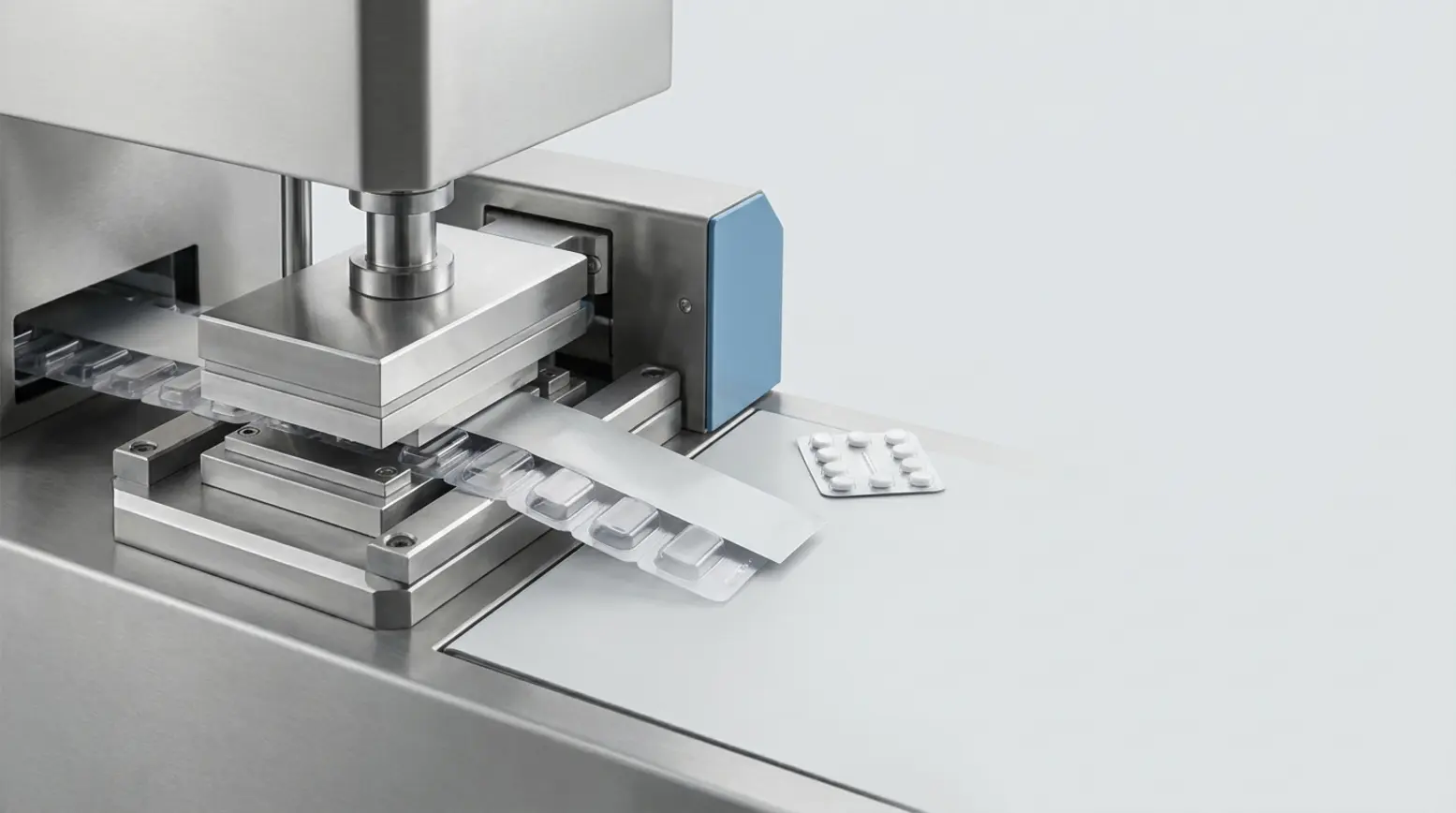
Unit dose blister packaging machines for single dose formats

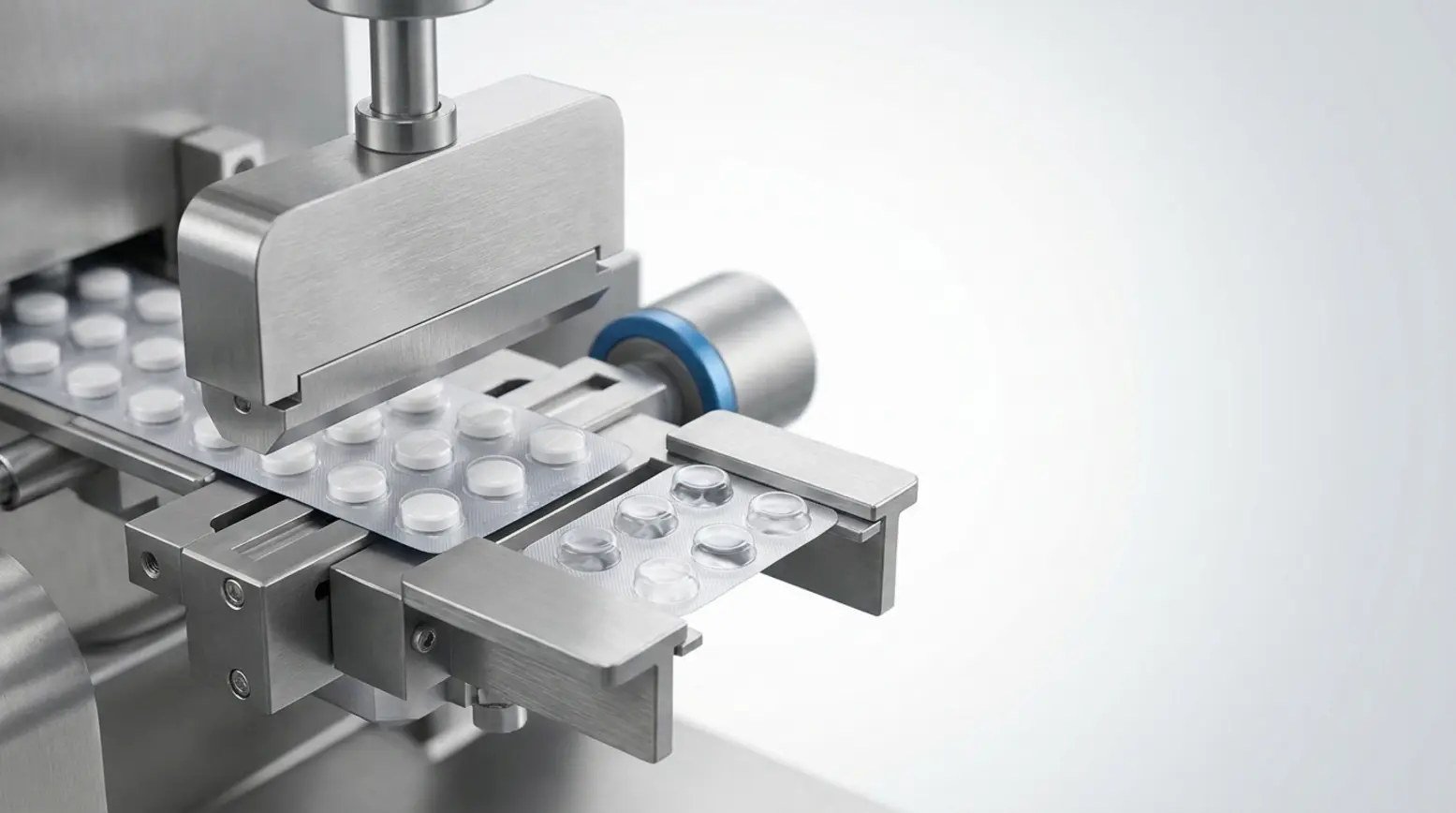
Choosing a unit dose blister machine starts with the pack rather than top speed. The right setup must match the exact dose, cavity layout, sealing area, printing needs, traceability rules, and changeover patterns. By defining these points first, you can choose between manual, rotary, or inline production with significantly less risk.
• Define the exact dose and pack layout before comparing machine output.
• Use a unit dose blister packaging machine that fits your actual product mix, as weekly changeovers significantly affect output.
• Plan printing, scanning, and vision requirements early if each dose requires clear data or barcoded unit dose packaging.
• Match manual, rotary, or inline automation to your volume, variability, and handling needs.
• Plan for rejected and unreadable units in advance so that unit dose traceability works seamlessly in daily production.
What a unit dose blister packaging machine needs to handle
A unit dose blister packaging machine should accommodate the actual dose, the specific pack layout, and the real-world production process. A unit dose pack holds one quantity for a single administration or use. In practice, this can mean one tablet, capsule, vial, or similar item secured in its own sealed space. For general industry context, the FDA describes a unit dose container as a non-reusable container holding a quantity intended for a single dose. This article uses that concept as context only; it does not replace your approved specifications or regulatory reviews.
The first question is simple: what must the pack hold, and what should it look like? Start with the cavity count, pitch, card or lidding size, seal boundary, and overall dimensions. These details shape the tooling, feeding, sealing, and inspection processes. Because even a minor layout adjustment can affect the machine setup, gathering pack data early helps avoid poor equipment choices. For wider context on handling and identification, you can review medicine packaging machines to see how packaging logic influences the final line.
Unit dose packaging covers several applications, including unit dose blister formats, single-dose blister packaging, and certain forms of hospital unit dose packaging. In hospitals and pharmacies, unit dose pharmacy packaging often supports product identification and safer handling. Ultimately, the exact content on the pack depends on the approved product specifications and market needs.
What counts as unit dose packaging
Unit dose packaging is a broad term for a package containing one quantity for a single administration. In a unit dose blister, each dose sits in its own cavity or sealed area. This format is common when a product requires individual protection, easier handling, or clearer identification during dispensing and use.
Start with the pack definition
We advise buyers to collect precise pack data early, as machine selection becomes much clearer afterward. Include the dose size, shape, cavity layout, lidding size, seal area, and space for readable information. This allows you to evaluate a unit dose packaging machine based on true fit rather than a headline speed that may not reflect daily operations.
How pack layout defines the right unit dose blister packaging machine
Pack layout drives machine selection because it affects positioning, tooling, and handling. One project may require a simple pattern with a few cavities, while another might need numerous small cavities with tight spacing. This is why not every unit dose blister packaging machine uses the same concept, even when the products initially look similar. The exact cavity count, pitch, and seal boundary determine how stable the process must be.
A high volume of small units increases the need for repeatable placement. If a product's position shifts too much, the sealing can become misaligned, and printed data may land in the wrong place. This matters even more in a unit dose blister machine when packs require consistent inspection zones or clear, machine-readable codes. Therefore, buyers should define the dose size, part geometry, number of formats, artwork versions, and target output before asking for a final recommendation.
A simple example helps illustrate this. A low-volume pharmacy project with multiple weekly format changes might run well on a compact machine with simple tooling. Conversely, a growing hospital unit dose packaging line may need better repeatability because each cavity must support barcoded unit dose packaging. Meanwhile, a large-scale pharmaceutical dose packaging project often requires a highly stable line since feeding, printing, scanning, and inspection all depend on fixed positioning.
Why repeatable positioning matters
Repeatable positioning means the product, blister, and lidding align exactly the same way during every cycle. This is critical when doses are small, sealing areas are narrow, and print or code checks must inspect fixed locations. The machine must support this consistency because pack quality and readability directly depend on it.
Questions to define before machine selection
Define the exact dose, number of cavities, part shape, and number of pack formats. Additionally, determine how often the artwork changes, the required output over a normal week, and where manual labor might slow the process. These answers are far more useful than a single top speed listed in a brochure, as they reflect the actual workload of the line.
Identification and traceability on a unit dose blister packaging machine
Identification needs vary by market, product, and customer requirements. Some projects require only basic readable text, while others need a product name, strength, lot number, expiry date, or a specific code on each dose or larger packaging level. In hospital unit dose packaging and dispensing workflows, barcodes frequently support identification and traceability. While GS1 standards provide useful industry context, the exact data structure and use case ultimately belong to the customer’s specifications.
A unit dose blister packaging machine should be designed around those specific needs. Some lines require a blister printing system to update data dynamically during production. Others need a blister scanning system to verify printed codes or text, or vision inspection to check print quality, seal position, and other visible features. While we can help assess the technical setup for these functions, the customer remains responsible for labeling requirements, acceptance criteria, and validation, as these are integral to the approved process.
This is also where unit dose traceability must be planned carefully. Decide what data belongs on each cavity and what information remains at the bundle, pouch, or carton level. Additionally, determine how your system will handle an unreadable code or a rejected unit. If this logic is unclear, the machine might still run, but the surrounding process will inevitably suffer.
What each dose may need to show
Each dose does not always require the same information. Buyers should decide whether every cavity must show the product's identity, strength, lot number, expiry date, or a machine-readable code. In certain barcoded unit dose packaging projects, the larger packaging level might hold part of the traceability data; thus, this decision should be finalized before the machine's design is locked in.
Printing, scanning, and vision in the setup
A blister printing system is highly useful when variable data must be added during production. Likewise, a blister scanning system adds value when defined codes or printed content need to be verified during the run. Vision systems can inspect physical features, but they require clear pass and fail rules approved by the customer in advance.
Keep responsibilities clear
We can help specify the technical line setup for printing, scanning, and inspection. However, we do not define your labeling rules, acceptance limits, or validation plans. Those responsibilities remain with the customer, as they are part of the approved manufacturing process.
When to choose a manual or rotary unit dose blister packaging machine
The machine type should match your volume, variability, and handling needs. A unit dose blister packaging machine built for low-volume work often looks very different from one designed for repeated, medium-volume production. For low-volume or highly flexible tasks, manual tabletop and manual shuttle machines often make sense because they are easier to operate during frequent format changes. If you are comparing wider machine options, we offer pharmaceutical packaging machines for unit-dose production tailored for low, medium, and high-volume requirements.
Semi-automatic rotary and automatic rotary machines are a logical next step as volumes grow. They are beneficial when you need higher output and more stable handling but still require a setup adaptable to different formats. This path frequently suits single-dose pack machine projects that have moved beyond basic manual labor but do not yet require a fully automated inline system.
A practical comparison can be helpful. A unit dose pharmacy packaging project handling many small batches may prefer manual handling due to simple and direct changeovers. Conversely, a growing healthcare supplier might choose rotary production as output rises and the format range stabilizes. In this way, the machine choice follows the natural production pattern rather than forcing the product into a rigid, fixed setup.
Manual tabletop and manual shuttle
These machines often fit lower-volume work, trials, and products with frequent format changes. They are also ideal when operators need direct control over product placement and sealing. If your line will run many small batches, a simpler setup can yield better weekly output since less time is lost during changeovers.
Semi-automatic rotary and automatic rotary
Rotary systems accommodate growing volumes and highly repetitive work. They are useful when the product and pack format are stable enough to benefit from faster station movement and a more regular process flow. If manual placement starts to slow down production, it may be time to explore packaging automation and decide where additional technology will help the most.
When an automatic inline unit dose blister packaging machine makes sense
An automatic inline machine is a better fit when you require a continuous, high-volume flow alongside integrated automation. This typically occurs when numerous small parts are involved and manual placement becomes the primary bottleneck. In such cases, the line may require feeding, printing, scanning, and inspection seamlessly integrated around the sealing process, meaning the unit dose blister packaging machine effectively becomes part of a broader production system.
Automatic feeding proves useful when operators can no longer place parts quickly or consistently enough. The feeder must match the actual product, as shape, size, surface behavior, and orientation all dictate how the parts move. A generic feeder is often too broad for a demanding unit dose packaging machine project. Therefore, evaluating sample parts is extremely helpful during selection and testing.
A high-volume pharmaceutical dose packaging setup is a prime example. If each cycle includes many small cavities, variable print, code checks, and visual inspection, manual loading will inevitably limit the line. Inline automation solves this problem when properly matched to actual part behavior and realistic output goals.
When automatic feeding becomes useful
If output looks strong on paper but operators struggle to keep pace, manual handling is likely the constraint. This frequently happens with many small units, high cavity counts, or packs that require exact orientation. Inline automation helps tremendously when the feeding and handling designs are based on real-world production conditions.
Feeding must match real product geometry
We always analyze the actual product because its shape directly drives the feeder design. A round tablet, a fragile ampoule, and a uniquely shaped component each require a distinctly different approach. This is exactly why sample parts, test quantities, and pack drawings are so valuable during the machine selection process.
Changeover and effective output with a unit dose blister packaging machine
A unit dose blister packaging machine might look fast when running one simple format, but its true performance depends on how often you change products, strengths, artwork, or code content. A single format change can involve tooling, machine recipes, feeders, printers, scanners, and inspection settings. Because of this complexity, the effective output is usually far more critical than the peak operating speed.
Always compare real weekly production across your actual product mix. Factor in setup time, cleaning, line checks, rejection handling, and the restart time following a changeover. This approach provides a much clearer view of how a unit dose packaging machine will perform in daily operations. It also helps procurement and operations teams compare their investment options in a highly practical way.
For example, a slower machine capable of quick changes might produce more saleable packs over a week than a faster machine burdened with complex changeovers. This scenario is common in unit dose blister projects featuring numerous SKUs or frequent artwork updates. The buying logic should therefore prioritize usable output over mere rated cycles.
What may change during a format change
Tooling may need to be swapped when the cavity size or layout shifts. Recipes might change when sealing conditions or timing differ between products. If the line incorporates feeding, printing, scanning, or vision inspection, those settings will also require adjustment, thorough testing, and approval before production can resume.
Compare effective production, not headline speed
Ask how much time is actually spent making saleable packs across a normal mix of products. Be sure to include setup, cleaning, checks, and format changes in this calculation. Doing so yields a true picture of the output for a unit dose blister line and allows you to compare different systems fairly.
Questions to ask before specifying the production setup
Before selecting a standard machine or a custom line, create a clear checklist. Define the dose, pack layout, cavity count, artwork versions, and the exact identification needed on each dose. Next, determine whether the line requires variable data printing, scanning, vision inspection, or automatic feeding. If your project includes unit dose traceability, clearly define which packaging level carries which specific data.
It is wise to ask how unreadable or rejected units will be identified and handled within the approved process. That question matters immensely because traceability is about far more than just printing a code; you also need a clear procedure for exceptions, rework decisions, and precise record-keeping. Once these details are established, we can assess whether the best path forward is a standard machine or a more tailored line, which might involve integrating the packaging machine with feeding, printing, scanning, or inspection modules.
A short buyer's checklist can help teams align early on. Ask what the exact dose is, how many cavities are required, what data must appear on each dose, and whether barcoded unit dose packaging is necessary. You should also determine how many format changes occur each week and the expected output over the actual product mix. Answering these questions often reveals the right machine path much faster than reviewing a long list of features.
Traceability and rejection handling
Tracking involves much more than simply adding a printed code. You need to know exactly what data belongs on each dose, what stays at the bundle or carton level, and how the overall process handles an unreadable or rejected unit. Ultimately, your approved process should define what happens next and how that outcome is properly recorded.
Standard machine or customized setup
Some unit dose blister projects fit perfectly into a standard setup. Others demand custom feeding, specialized tooling, or additional inspection because the product, data, or handling patterns are significantly more demanding. Our role is to help assess that choice based on your actual format and the true scope of your production.
Next step: define formats and request a Quick Scan
If you are comparing machine options, bring your sample doses, pack drawings, output goals, and any printing or scanning requirements. This information gives us the solid foundation needed to review the machine type, automation level, changeover impact, and integration scope. When you are ready, you can request a free Quick Scan for machine selection, and we can prepare a tailored quotation once the dose formats and automation scope are clear.
FAQ
What is a unit dose blister pack?
A unit dose blister pack is a package that holds one quantity intended for a single use or administration. It is widely used for tablets, capsules, vials, or similar products requiring individual protection and clear identification. In hospital and pharmacy workflows, this format additionally supports accurate tracking and safer handling.
How do I choose between manual, rotary, and inline production?
Start by evaluating your volume, variability, and handling needs. Manual systems are generally best for low-volume production with frequent changeovers. Rotary systems accommodate growing volumes that involve more repetitive work. Finally, inline systems are the optimal choice for high-volume, continuous flow demanding integrated automation.
When do I need a blister printing system?
You need a blister printing system when variable information must be applied during production. This typically includes a lot number, expiry date, product strength, or other approved data. The exact content always depends on your specific product specifications and market requirements.
When does a blister scanning system add value?
A blister scanning system adds value when defined codes or printed data must be continuously verified during production. This is especially useful in projects requiring barcode-based identification or other machine-readable content. To ensure success, this scanning requirement should be factored into the line's design from the very beginning.
What makes changeover slow on a unit dose line?
A changeover becomes slow when multiple components of the setup must be adjusted simultaneously. This can include tooling, machine recipes, feeders, printers, scanners, and inspection settings. Because of these interconnected factors, the effective output across your real product mix is usually a much better performance metric than top speed alone.