Theft resistant blister packaging: what the machine can and cannot do

The short answer is this: theft-resistant blister packaging can make fast product removal harder, but the machine does not create the full security result by itself. While the equipment can seal, feed, tag, check, and handle packs when these steps are part of the line, the final outcome depends heavily on pack design, access points, materials, opening behavior, and any store controls implemented after production. Consequently, buyers achieve better results when they define the real risk first, and then match the pack and the machinery to that specific need.
• Theft-resistant blister packaging slows down quick opening, but it does not make theft impossible.
• Pack construction has a profound effect on opening difficulty, visible tamper signs, and consumer openability.
• The machine performs key production steps, such as sealing, feeding, tagging, and verification, whenever required.
• Store alarms, retail procedures, and other anti-theft retail packaging measures sit entirely outside the packaging machine's scope.
• Defining a clear machine scope helps avoid unnecessary complexity, excess costs, and features that fail to solve the actual problem.
What theft-resistant blister packaging means in practice
Theft-resistant blister packaging means making quick, unauthorized opening or product removal much more difficult in the store. This serves as the practical goal for many retail packs. While it certainly supports secure retail packaging, it does not offer an absolute guarantee. A pack may slow a thief down because the sealed area is larger or the opening path is less direct; however, it can still be compromised given enough time or the right tools.
This distinction matters because some teams expect the sealing machine to deliver retail packaging security entirely on its own, which it simply cannot do. The machine only executes chosen process steps, while the true security outcome relies on the complete system. That system encompasses the physical structure, materials, sealing patterns, access points, and any store-level controls. For instance, a secure blister pack featuring a wider flange may take longer to peel or cut open, making quick removal significantly harder. Even so, the pack is still not entirely theft-proof.
Theft-resistant blister packaging is not the same as tamper evidence
Tamper evidence means providing visible or physical proof that a pack has been opened or altered. A tamper-evident pack helps buyers or users clearly see if something occurred prior to purchase or use. This differs significantly from theft resistance, as a pack can show obvious signs of opening yet still be breached very quickly. Conversely, a package can effectively resist quick opening while leaving only limited signs of tampering afterward.
For example, a tamper-evident blister on a card may tear the printed cardboard when opened. That delivers a clear tamper-evident blister packaging result, but the product itself might still be removed in seconds. In another scenario, a pack may be considerably harder to cut open due to its shape or seal path, yet the forced entry might not leave a strong sign of tampering. Therefore, theft resistance and tamper-evident blister performance must be written as separate requirements in the project brief. This approach helps engineering, operations, and procurement teams define the correct scope from the very start.
How pack construction affects theft-resistant blister packaging
Sealed area and access points
The way a pack is constructed profoundly affects how it opens. Larger sealed areas can alter the amount of force required to start and continue the opening process. Conversely, exposed corners, weak edges, easy cut points, and small gaps can completely undermine the benefits of a robust seal by providing a clear starting point for a thief. As a result, a strong seal alone does not automatically guarantee better theft-resistant packaging.
This is exactly why buyers should review the entire package rather than relying solely on seal strength data. A pack might test exceptionally well in a laboratory setting but still allow rapid access during real-world store handling. Ultimately, the best design depends on the specific shape, the materials chosen, and the likely opening path a person would attempt in the retail environment.
Fully sealed clamshell versus carded blister
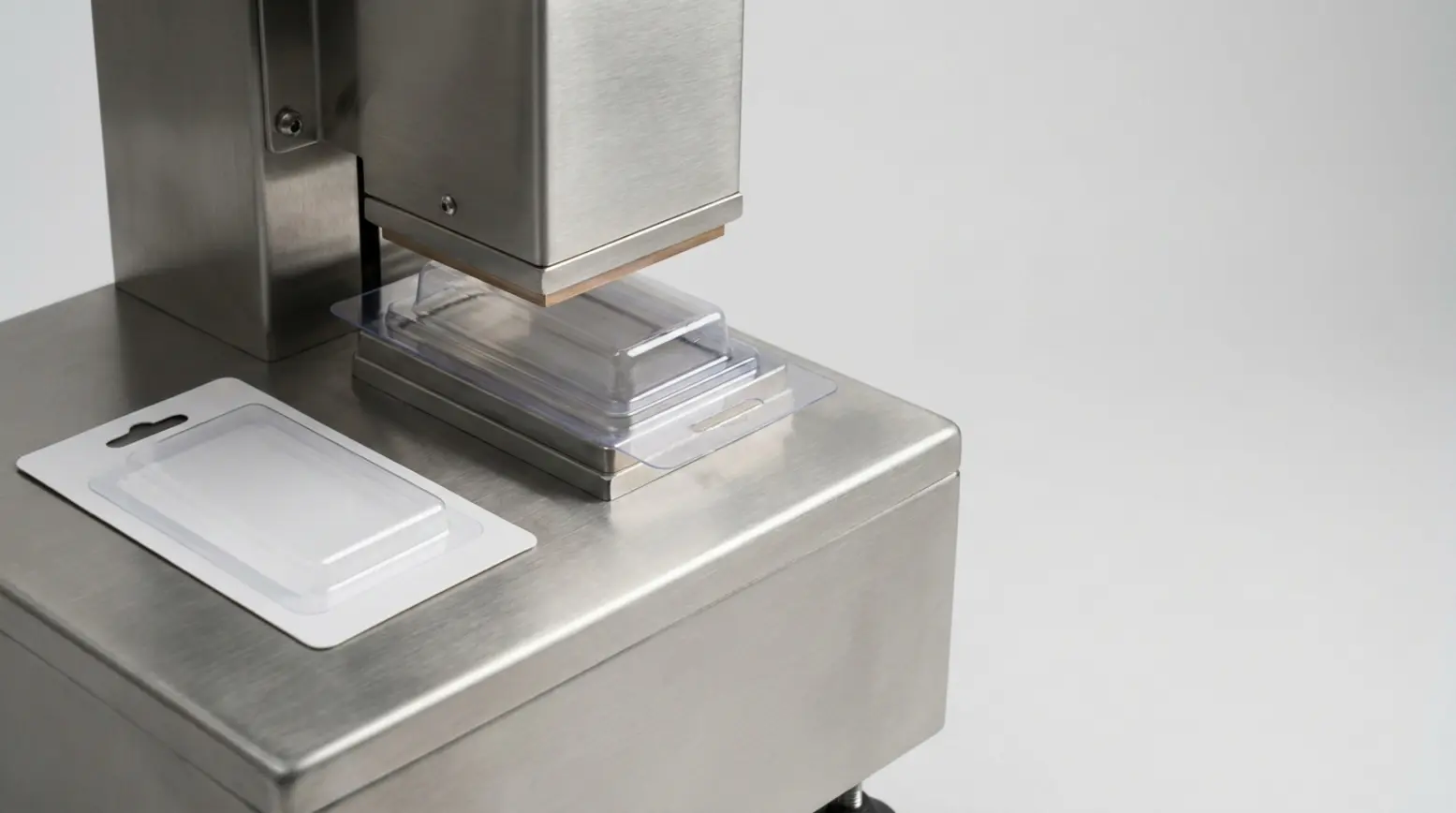
Fully sealed clamshells and carded blisters are fundamentally different in their construction. A clamshell typically utilizes a plastic-to-plastic perimeter seal, whereas a carded blister features a plastic blister sealed directly to a card. These formats create distinct opening challenges because both their materials and seal interfaces differ. That is why sealed clamshell security and card-based security must be evaluated based on the actual physical pack, rather than relying on format labels alone.
If you need some background on clamshell containers, it helps to review flange and closure basics before setting a specific target. You can also compare broader packaging styles when your initial format choice fails to meet handling or shelf requirements. A theft-resistant clamshell might be the perfect answer for one project, while a carded format could work far better for another. Thorough testing truly matters, as no single format is universally superior for secure retail packaging.
Consumer openability is part of the decision
Consumer openability matters because excessively difficult packaging can lead to user frustration, complaints, or the dangerous use of tools at home. Therefore, a difficult opening process is not in itself proof of good retail packaging security. The overarching goal is a balanced result that supports the store's security needs while still allowing for a reasonable opening experience after purchase.
This represents a very practical design trade-off. If a package becomes harder to open in the store, it will likely also become harder for the legitimate buyer at home. Because of this dynamic, real opening behavior must be tested on the final construction, utilizing the exact materials and seal layouts intended for production. In this way, the team can holistically evaluate both secure blister pack performance and the end-user experience.
What the machine can do for theft-resistant blister packaging
The machine can perform highly specific production tasks for theft-resistant blister packaging. These tasks typically include pack handling, executing the sealing method, managing tooling, feeding components, applying security tags, verifying the results, and handling the finished packs. This is exactly where proper equipment selection matters most. The machine physically performs the work defined by your established process, but it does not determine the actual security target on its own.
The right setup depends heavily on production volume, pack style, materials, and which precise steps need to occur directly on the line. Our retail packaging machines cover manual, shuttle, rotary, and inline systems in both heat-seal and cold-seal formats. Because we deeply understand both packaging materials and machinery, we can help precisely match your pack construction to the optimal machine choice. This prevents any frustrating mismatch between the package design and the chosen production method. For instance, if a project requires security tagging packaging, integrated barcode checks, and automated reject handling, the line will naturally need extra controls and sophisticated pack tracking. However, if the requirement is simply a reliable, repeatable seal pattern, the machine's scope can remain much simpler.
What this packaging cannot do without separate store systems
Store-level controls firmly sit outside the scope of the packaging machinery. Security tags, electronic alarms, locked display cases, and internal store procedures are entirely separate from the physical seal itself. While a well-designed pack can definitely support these measures, the machine alone cannot replace them. This is a critical point for buyers to recognize, as retail security challenges are almost always broader than what the packaging line can solve.
If the primary concern revolves around exit detection or shelf control, those issues belong strictly to store systems and retail operations. If the concern instead focuses on opening difficulty, visible tampering evidence, or in-line verification, that naturally falls under pack design and production scope. Keeping these functional areas distinctly separate helps teams write much better specifications and avoids asking the manufacturing equipment to solve problems that fundamentally sit outside of production.
When to specify tagging, marking, and verification in the line
Tagging is a separate step
Applying a security tag or label is always a separate component or process step; it is absolutely not the same thing as the package seal. Depending on your specific line setup, tags may be applied before, during, or even after the main packaging operations. The optimal decision depends largely on product flow, required speed, handling stability, and the overall level of control needed during the production run.
When integration makes sense
Integration makes perfect sense when you want these functions firmly embedded inside your production line and controlled as a unified system. We readily support integrated security tagging, laser marking, barcode verification, and advanced vision functions on customized packaging systems. Nevertheless, these specific features should only be included in the machine specification when they are truly essential to the line's requirements, because every added function directly impacts the equipment scope and future support needs.
That is precisely why early machine integration planning matters so much. Installation, control architecture, line fit, testing protocols, and ongoing support all become significantly more complex when automated checking or marking is added. A good example is a retail pack that requires highly robust in-store opening resistance alongside integrated barcode verification. In that specific scenario, both the pack structure and the verification step belong in the machine's scope, whereas the retail store's alarm system absolutely does not.
What integration changes
Extra functions invariably add complexity. Tooling formats may need to change entirely. Component feeding might become substantially harder because tags, cards, or paper inserts must be placed with pinpoint accuracy. Furthermore, verification systems often require automated reject handling, advanced tracking logic, and highly stable pack presentation for any cameras or code readers. In addition to all of this, the overall line flow can shift whenever these auxiliary steps affect the core cycle time.
For operations teams, this requires far more than simply choosing hardware. It involves carefully evaluating how packs move down the line, how perfectly the tags are placed, how failed packs get swiftly removed, and how the entire system will be technically supported post-delivery. Therefore, extra features should only be incorporated when they directly solve a clearly defined problem. If the underlying risk remains unclear, the production line can easily become more complex and costly without actually improving the final security result.
How to specify theft-resistant blister packaging without making the machine too complex
Start the process by clearly documenting the real threat or suspected tamper scenario. Ask yourself exactly what you are trying to stop, slow down, or visibly reveal. Is the primary concern rapid product removal in the store, visible signs of tampering, the need for a tamper-evident package, security tag application, barcode verification, or some combination of these? Taking this initial step helps efficiently define what belongs in the pack's design, what securely fits into the machine's scope, and what must remain outside the production line.
Next, carefully review how the packs will actually be manufactured. Will production be manual, semi-automatic, or fully automatic? Which specific packaging format is being used, and just how stable is the pack during high-speed handling and sealing? Providing clear answers to these questions drastically reduces the risk of over-engineering the equipment. Consequently, the line can stay laser-focused on the tasks that truly matter, whether that happens to be sealing, checking, handling, or implementing security tagging packaging.
Questions to ask before choosing equipment
Which pack format is being used?
The chosen format establishes the necessary starting point for any project because it heavily influences material selection, opening behavior, the required seal area, and overall pack handling. If the desired format remains undecided, be sure to review the actual on-shelf risks and end-user needs before selecting the machinery.
Which seal method is required?
Heat sealing and cold sealing perform very different jobs depending on the specific materials and overall pack construction. The chosen method must perfectly align with the pack style, the daily output target, and the strict consistency needed during mass production.
Is tag application part of the line or a separate process?
If security tagging is mandatory, firmly decide where it logically belongs. A separate, off-line step might be completely sufficient in certain cases. In other scenarios, full mechanical integration can provide far better quality control. The right answer generally depends on line speed, part handling limitations, and strict verification requirements.
Is verification needed, and at what stage?
In-line verification can seamlessly include barcode reading, sophisticated vision inspection, or automated marking confirmation. The key is to strictly define what must be checked, exactly when it needs to be checked, and what automated actions should occur whenever a pack inevitably fails the test.
What production volume and handling method are expected?
Production volume inherently dictates the optimal machine platform, required labor input, and the ideal level of automation. Component handling matters just as much, because paper cards, plastic blisters, printed inserts, and security tags all require highly stable movement throughout the line. Whenever more steps become fully automated, initial setup, proper installation, and reliable ongoing support become increasingly vital.
If your overall requirement remains a bit broad, a free Quick Scan can help gracefully turn your fundamental security questions into a highly practical machine scope. Alternatively, if you already have a well-defined project in mind, please contact us to share the intended pack format, specific opening concerns, tagging needs, verification requirements, and your expected production volume.
FAQ
Is theft resistance the same as tamper evidence? No, it is not. Theft resistance specifically makes rapid product removal much harder, whereas tamper evidence visually proves that a pack was opened or fundamentally altered. A package might perform one of these critical jobs incredibly well while doing the other quite poorly.
Does a stronger seal always mean better retail packaging security? No. Seal strength is only one small part of the final result. Accessible edge points, overall pack shape, material choices, and the expected opening path equally affect true theft-resistant packaging performance.
Is a clamshell always more secure than a carded blister? No. A plastic-to-plastic perimeter seal and a blister-to-card seal naturally behave quite differently, but neither format is universally better. Real-world testing on the chosen construction remains the single best way to accurately judge sealed clamshell security or carded blister performance.
Should a security tag be part of the machine specification? This is necessary only if the tag application must happen directly inside the production line. If tagging is handled as an entirely separate process, it should never be treated as a core sealing machine function.
When should verification be integrated into the packaging line? You should add automated verification when you definitively need in-line quality checks, such as barcode reading, sophisticated vision inspection, or marking confirmation. If your need is still somewhat broad, start by utilizing a Quick Scan. However, if the machine requirement is already firmly defined, contact us with your specific pack details and broader line goals.