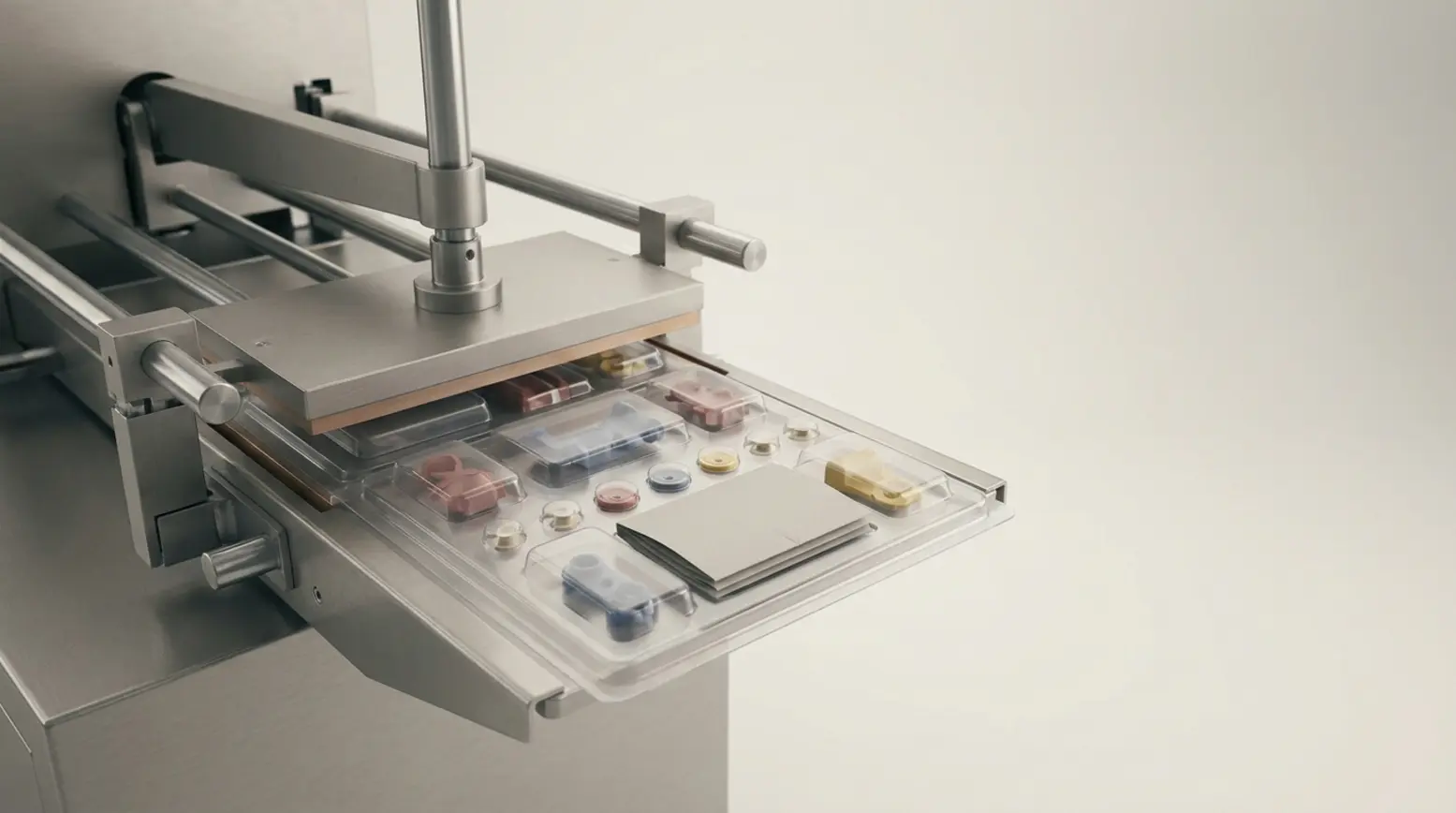
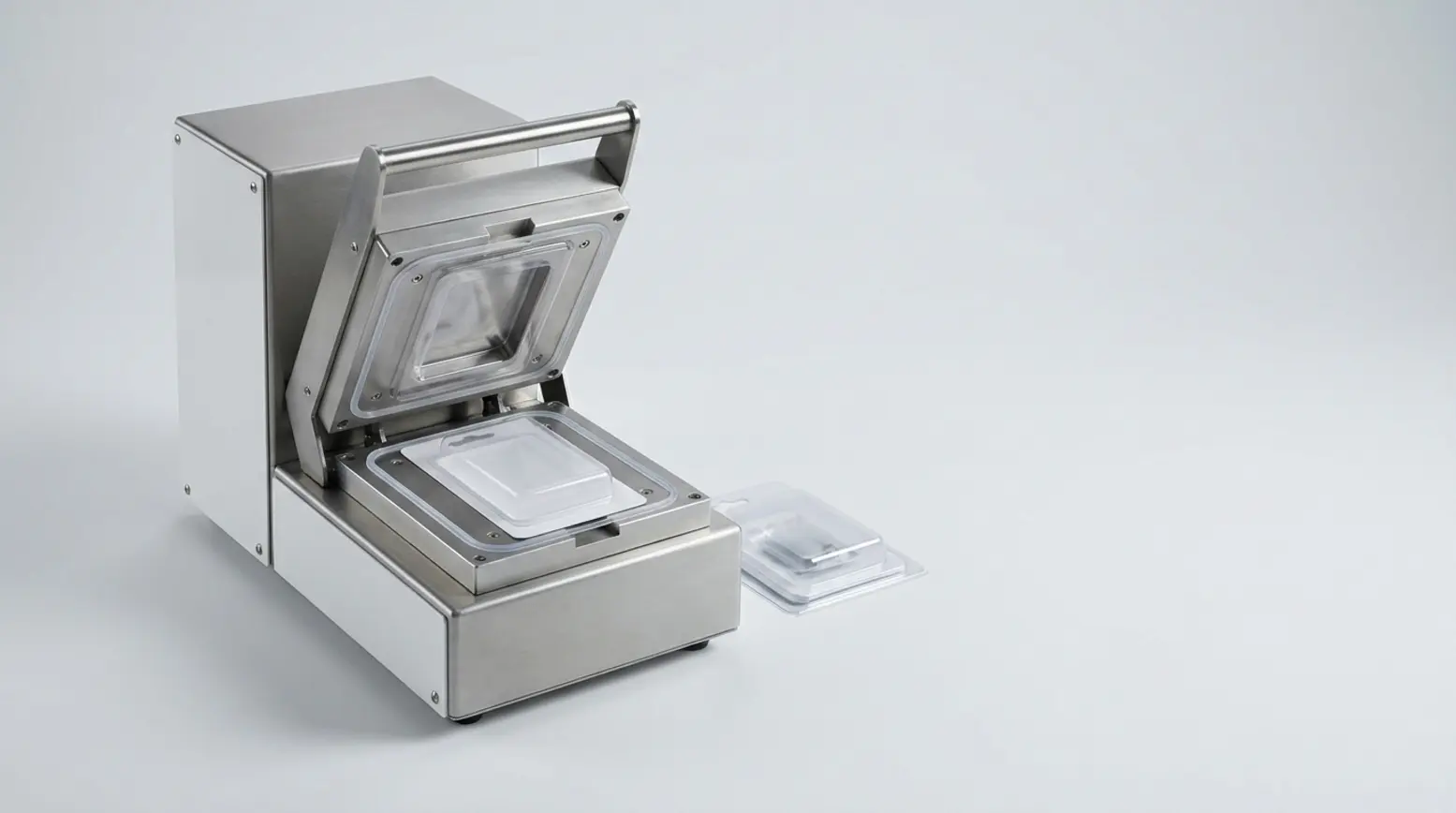
Fold over card pharma packaging: machine requirements for folding and sealing


Fold-over card pharma packaging demands more from a machine because the card must fold, align with itself, hold the blister securely in place, and seal evenly during a single, controlled process. The primary risk lies in the fold. If the fold line shifts slightly, the blister's position and the seal area can also move, resulting in a less stable seal. Before production begins, teams should measure the open card, fold line, blister location, seal boundary, and overall thickness. They should also test board behavior and tooling support using physical samples, as the finished pack may appear simple while the underlying machine process is surprisingly demanding.
• The fold represents the primary mechanical challenge, as it directly impacts card registration, blister positioning, and seal contact.
• The open card is more critical than the closed pack when determining tooling space, support points, and machine setup.
• Buyers should provide drawings and physical samples before tooling is finalized, ensuring the machine review is based on real pack data.
• A manual shuttle sealer is often beneficial for low-to-medium volumes, as direct operator control simplifies setup and first-piece inspections.
• Higher automation becomes a realistic option once the card can be fed, folded, and sealed with highly repeatable behavior.
What fold-over card pharma packaging means in practice
Define the format in plain words
A fold-over blister card consists of a single card that wraps around a blister or seals onto another section of itself. This style of packaging starts as a flat, open card. During the sealing phase, the machine must fold the card into the correct position while keeping the blister exactly where it belongs. Consequently, this format requires much tighter control than a simple flat card pack.
Why the pack looks simple, but the process is not
A finished pharmaceutical fold-over pack might look easy to produce, but the machine performs a complex task. It must handle the blister, the card, the crease, and the seal area simultaneously. Additionally, the card must perfectly align with itself after folding. If you need broader context before diving into specifics, our guide to blister packaging machines explains the primary equipment categories and helps you compare them against your specific format needs.
Where pharma and medical applications use this format
This format frequently appears in pharmaceutical packs, medical blister lidding, and various medical device card packaging applications. Teams typically choose it because it offers ample space for printed information, provides clear product presentation, or enables a specific opening method. While exact pack designs vary, the blister card's fold remains the central technical focus in every iteration.
Why fold-over card pharma packaging changes the sealing job
Flat card sealing versus a folded construction
In a standard flat card job, the machine primarily aligns two separate pieces and seals them together. In fold-over card pharma packaging, however, a single card must fold over and close in the exact right position. As a result, the machine must control movement before, during, and after the fold. Even a minor shift can change where the top panel lands, ultimately compromising the overall seal quality.
Why the open card matters more than the closed pack
Many buyers initially focus on the final pack size because it represents the finished product they hold in their hands. However, for tooling and machine setup, the open card's dimensions are far more critical. The open layout dictates the physical space the machine must accommodate, where the support points are positioned, and how the card moves along its folding path. Therefore, a folding blister card often requires a significantly larger working area than the closed pack implies.
How fold position affects blister registration and seal area
Blister registration ensures the blister remains in its intended position relative to the folded card. This step is where trouble frequently begins. A blister might look perfectly centered on the flat card, but if the fold line is slightly off, one panel can close too high or too low. Consequently, the seal boundary becomes dangerously narrow on one side and excessively wide on the other, making full, even contact difficult to achieve.
What to measure before tooling for fold-over card pharma packaging
Open card size
Always measure the full open card's length and width, as the tooling must support the card entirely before it folds. The closed pack size alone simply does not provide enough information. During our format reviews, the open dimensions are among the first details we request, as they help define the necessary machine space, tool layout, and loading positions.
Blister position
Measure the blister's location from the stable outer edges of the open card. Do not rely on the center point of the closed pack. The tool must hold the blister in its precise planned location throughout the entire sealing cycle, meaning all reference points must be clear and highly repeatable.
Fold line and crease location
Measure the fold line from fixed card edges and evaluate the crease on physical samples. While a drawing illustrates the intended fold line, the actual card may behave entirely differently when bent. If the crease is weak, uneven, or overly stiff, the fold can shift during production and create severe instability in the final pack's position.
Seal boundary
Clearly define the seal area before any tooling begins. Because heat sealing relies on the correct combination of temperature, pressure, and dwell time, the machine must apply these exact conditions to the correct targeted area. In a cold-seal fold-over card, pressure remains the primary mechanism, but the materials must be compatible and still require rigorous testing. If the seal area sits too close to the blister's edge or the fold line, your reliable processing window shrinks considerably.
Total layer thickness
Total thickness is crucial because a folded card creates a variable layer stack across the pack. Naturally, some areas will end up thicker than others. This variation directly affects underlying support, pressure distribution, and the final seal's appearance. Therefore, the tooling must be designed around the actual physical stack rather than a rough estimate.
Why physical samples and drawings are needed before tooling is finalized
While mechanical drawings are essential, they do not reveal everything. Physical samples demonstrate exactly how the board folds, where spring-back occurs, how the blister seats itself, and where the true seal boundary lands after folding. When we support customers in specifying and integrating the sealing process, these physical samples allow us to accurately review tooling requirements and eliminate avoidable setup risks long before production begins.
How board and tooling affect fold-over card pharma packaging stability
Why board grade, thickness, and crease quality must be tested
Board behavior can alter the dynamics of the entire job. A stiff board may resist the crease entirely, while a poorly formed crease can cause uneven folding. Furthermore, a thicker board can change how sealing pressure distributes across the targeted area. Because of this, fold-over card pharma packaging should always be tested as a complete pack-and-machine combination, rather than just an abstract material choice on paper.
What spring back and distortion do to sealing
Spring-back occurs when the card attempts to reopen after being folded. Distortion happens when the card warps away from its intended geometric shape. Both issues drastically reduce seal contact. For example, if a folded panel lifts even slightly, contact pressure will drop in that specific area, resulting in a patchy or weak seal. This phenomenon is a primary reason why fold-over blister machines require careful sample testing early in the project lifecycle.
How folded card tooling supports the card and blister during sealing
Folded card tooling must do much more than simply hold a basic shape. It needs to support the various card layers, lock the blister securely in place, and minimize movement around the crease while the actual sealing takes place. High-quality tooling maintains proper positioning and significantly improves repeatability from one pack to the next. This foundational support becomes especially critical when a pack features tight seal boundaries or sensitive print registration requirements.
Machine options for fold-over card pharma packaging by volume
Why a Manual Shuttle machine gives direct control
For many folded formats, direct manual loading is incredibly useful because the operator can place the card carefully and verify its orientation before initiating the seal. This hands-on approach is invaluable when the fold line, blister position, or print layout demands close visual attention. Our range of pharmaceutical packaging machines covers equipment classes for varying production volumes, and a manual shuttle sealer frequently serves as a practical starting point for low-volume runs or highly sensitive formats.
When a single station setup helps first piece inspection
A hand-operated, single-station setup simplifies first-piece inspections because the operator can observe the format up close during the initial setup. This visibility is tremendously helpful when checking a fold-over blister card's registration, seal positioning, and overall board behavior. An excellent example is a Manual Shuttle heat seal machine, though the ultimate equipment choice will always depend on your specific materials, dimensions, and required sealing method.
When rotary or automatic equipment becomes realistic
Rotary or fully automatic systems become a realistic option once the card can be fed, folded, and indexed with highly repeatable behavior. High-speed equipment inherently depends on unwavering consistency. If the board's behavior varies too much, the fold shifts unpredictably, or spring-back remains too high, moving to higher automation may first require additional format redesign or specialized tooling development. This is exactly why machine selection should always follow real-world format testing rather than being based solely on expected production volumes.
How heat seal and cold seal fit different pack constructions
Heat sealing is standard when packaging materials require a combination of heat, pressure, and dwell time to form a secure bond. Conversely, cold sealing can be a viable option when the pack utilizes a compatible pressure-based construction and heat must be strictly avoided. While cold sealing helps in certain applications, it does not eliminate all processing risks. The best approach ultimately depends on the specific blister material, card construction, applied coatings, and the desired opening requirements.
First pack checks for fold-over card pharma packaging
Check card registration after folding
Inspect the pack carefully after the card is folded into its final form. The panels should align exactly as planned, as poor registration negatively impacts both the pack's appearance and its final seal position. This straightforward check quickly reveals whether the crease and the tooling are functioning together correctly.
Check fold location and blister position
Confirm that the physical fold lands precisely where the mechanical drawing dictates. Next, verify the blister's alignment against the completely folded card, rather than just checking it against the flat layout. Because even a minor fold error can push the blister outside its intended seal boundary, this verification step is crucial during early machine setup.
Check full and even sealing around the defined area
Look for complete and unbroken seal contact around the entirety of the planned area. Patchy gloss, localized gaps, or uneven contact typically point to underlying support problems, pressure variations, or unwanted board movement. These warning signs are easy to spot and often explain the root cause of later sealing complaints.
Check board damage, deformation, and movement at the fold
Inspect the card closely for cracking, unintended bending, or visible stress marks around the crease. Even if a stubborn board manages to seal, its resistance to the fold means repeatability will likely plummet during a long production run. It is far better to identify this issue during the first-pack stage than after a full volume run has already started.
Check peel or opening behavior when the pack specification requires it
Certain formats require a specifically defined opening feel or peel result. If this functionality is part of the pack's specification, test it thoroughly on a real, folded pack. The way the card folds and seats itself around the blister can drastically change how the final pack opens, meaning flat sample checks are simply never enough.
Check print and code orientation after folding
Always confirm the orientation of prints and tracking codes after the card is fully folded. A panel that looks perfectly correct while lying flat can easily end up reversed, upside down, or misplaced in its final 3D form. This final visual check helps avoid expensive material waste, tedious rework, and late-stage production delays.
FAQ about fold over cards and machine setup
What is a fold-over blister card in pharma packaging? It is a single card that folds over to encapsulate a blister, or seals onto another section of the same piece of board. While the finished pack looks simple, the packaging machine must simultaneously control the folding action, card positioning, blister location, and seal area.
Why can a small fold error cause sealing problems? A minor fold error changes exactly where the card's panels meet after closing. This misalignment can shift the seal area relative to the blister, causing contact pressure to become uneven and potentially causing the seal to miss portions of its planned boundary entirely.
When is a manual shuttle sealer a good choice? It is typically an excellent choice for low-to-medium production volumes, early format development, and complex packs that require careful loading or specific orientation. The direct operator control greatly assists with machine setup, process observation, and first-piece inspections.
Can a fold-over blister machine run both heat seal and cold seal? Some machines can indeed be configured for different sealing methods, but the pack's design and chosen material system ultimately dictate what is possible. Heat sealing utilizes heat, pressure, and dwell time. Cold sealing requires a pressure-compatible construction and still demands rigorous testing on real physical samples.
What should a buyer send before tooling is manufactured? Buyers should provide the open card drawing, precise blister dimensions, intended fold line locations, exact seal boundaries, total layer thickness, and physical material samples. Providing these items gives the machine and tooling engineers a much stronger foundation for a comprehensive review.
What is a common early warning sign during setup? Uneven panel alignment after folding is a very common early warning sign. It typically indicates that the card's folding behavior, the underlying tooling support, or the initial card registration requires further adjustment before high-volume production begins.
Next step for format review or quotation
If you are currently comparing different machine classes, we can review your format early in the process and help you fully understand what a folded design demands from the machine, tooling, and sealing cycle. If your ideal machine class is already clear, we can discuss the next specification steps and prepare a detailed quotation based on your actual pack parameters. You can contact us for a free Quick Scan or quotation discussion and submit your card drawings, blister dimensions, and physical samples so our technical review begins with solid, actionable information.