Clinical trial blister packaging machine selection for small batch trials

The right clinical trial blister packaging machine for small batches is usually one that is easy to change, simple to replicate, and appropriately sized for short runs. In most clinical trial packaging projects, flexibility matters far more than speed because formats, labels, and pack details frequently change. A simple machine is often the best starting point, provided it can reproduce the same pack at a later date using the correct tooling, settings, and records. This is particularly important in trial supply packaging, as a study may return months later and still require the exact same result.
• Flexibility typically matters more than maximum output in small-batch blister packaging.
• The ideal first machine should support repeatability, straightforward setup, and easy format changes.
• Manual tabletop and shuttle systems often suit early trial work much better than larger automated lines.
• Teams should carefully document tooling, settings, materials, artwork, and release checks so a study can be seamlessly resumed later.
• A free Quick Scan can help compare your current needs against a realistic growth path.
Why clinical trial blister packaging machine priorities differ for small batches
Small-batch work follows an entirely different logic than stable commercial production. A clinical trial blister packaging machine often needs to handle frequent changeovers, short runs, and several pack versions, meaning the primary concern is rarely output per hour. Instead, a better question is whether the equipment can change formats quickly and reliably return to the same approved setup later. This capability is essential for clinical blister packs, blinded studies, and comparator packaging because outward appearances, labels, card layouts, and handling requirements can change drastically from one job to the next.
Packaging for investigational products still requires highly controlled procedures under the customer’s own quality system. While we do not provide regulatory advice, general WHO guidance for investigational products highlights GMP principles and careful line clearance to reduce the risk of mix-ups. This is especially relevant when different products, artworks, or pack formats run on the same equipment, as strict cleaning and setup controls ensure safer repeat work.
How a clinical trial blister packaging machine should adapt to changing formats
Start with the format mix, not just today’s volume
Many teams begin by evaluating pack quantity, but volume alone does not determine the right machine class. It is equally helpful to ask how many formats the equipment must handle, how often studies might return, and whether a blinded or comparator version will alter labels, outer appearances, card structures, or handling steps. A clinical trial blister packaging machine should align with these real-world work patterns, as repeat jobs are incredibly common in trial supply packaging. Furthermore, pilot-scale packaging equipment must support a controlled restart just as effectively as the initial production run.
If you prefer a broader perspective before comparing equipment levels, our guide to blister packaging machine types explains the primary options in simple terms and will help frame your next decision.
Define the full pack envelope early
Before selecting equipment, be sure to define the largest realistic pack footprint and the maximum seal area within the expected product family. You should also consider whether heat sealing is required now and if cold sealing might be useful later. Taking this approach helps you avoid choosing a machine that only accommodates the initial trial and restricts future formats. It is equally smart to define artwork, print data, scanning needs, medical lidding, and trial wallet packaging requirements early on, as these details directly impact handling, placement, and tooling design.
Choosing the right clinical trial blister packaging machine class
The ideal machine class depends heavily on flexibility, the frequency of format changes, and how stable the process may become over time. We design and supply pharmaceutical packaging equipment across the entire spectrum, allowing teams to start with a highly practical machine and scale up later if needed. For those currently comparing pharmaceutical packaging machines for small batches, the table below highlights the primary differences.
| Machine class | Best use | Key strength | Growth path note |
|---|---|---|---|
| Manual tabletop | Low production with direct operator handling | Simple setup and lower complexity | Excellent starting point for early trial work |
| Manual shuttle | Larger, unusual, or wallet style formats | Flexible placement and tooling access | Useful when format variety is high |
| Semi-automatic rotary | Growing volume with a more stable process | Higher consistency with more automation | Often the next step after manual systems |
| Automatic rotary | Higher output with repeat formats | Efficient production flow | Fits later growth when changeovers are more controlled |
| Automatic inline | Continuous commercial production | Integrated high-volume handling | Usually a later stage, rather than a starting point for trials |
Manual tabletop machines
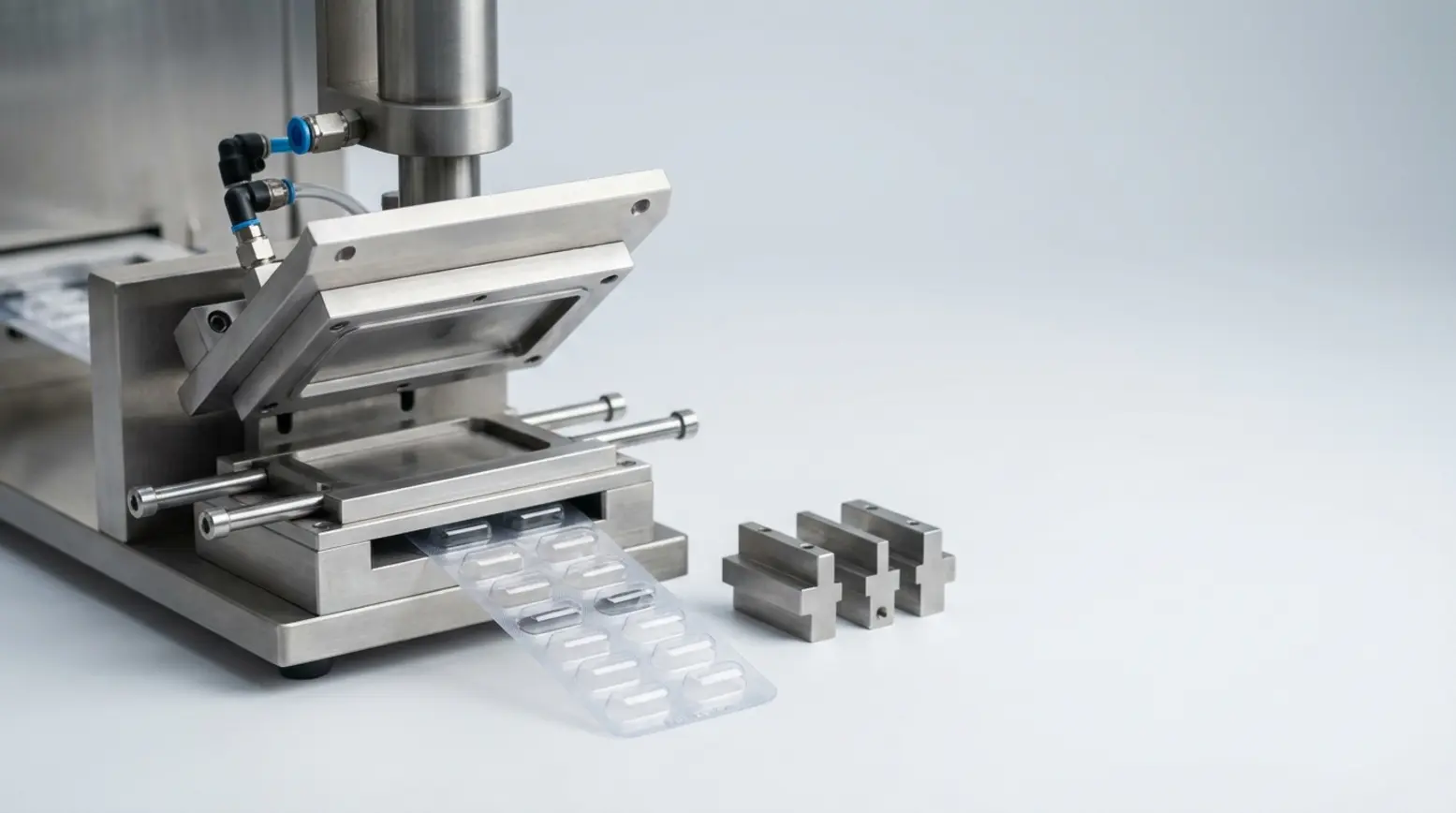
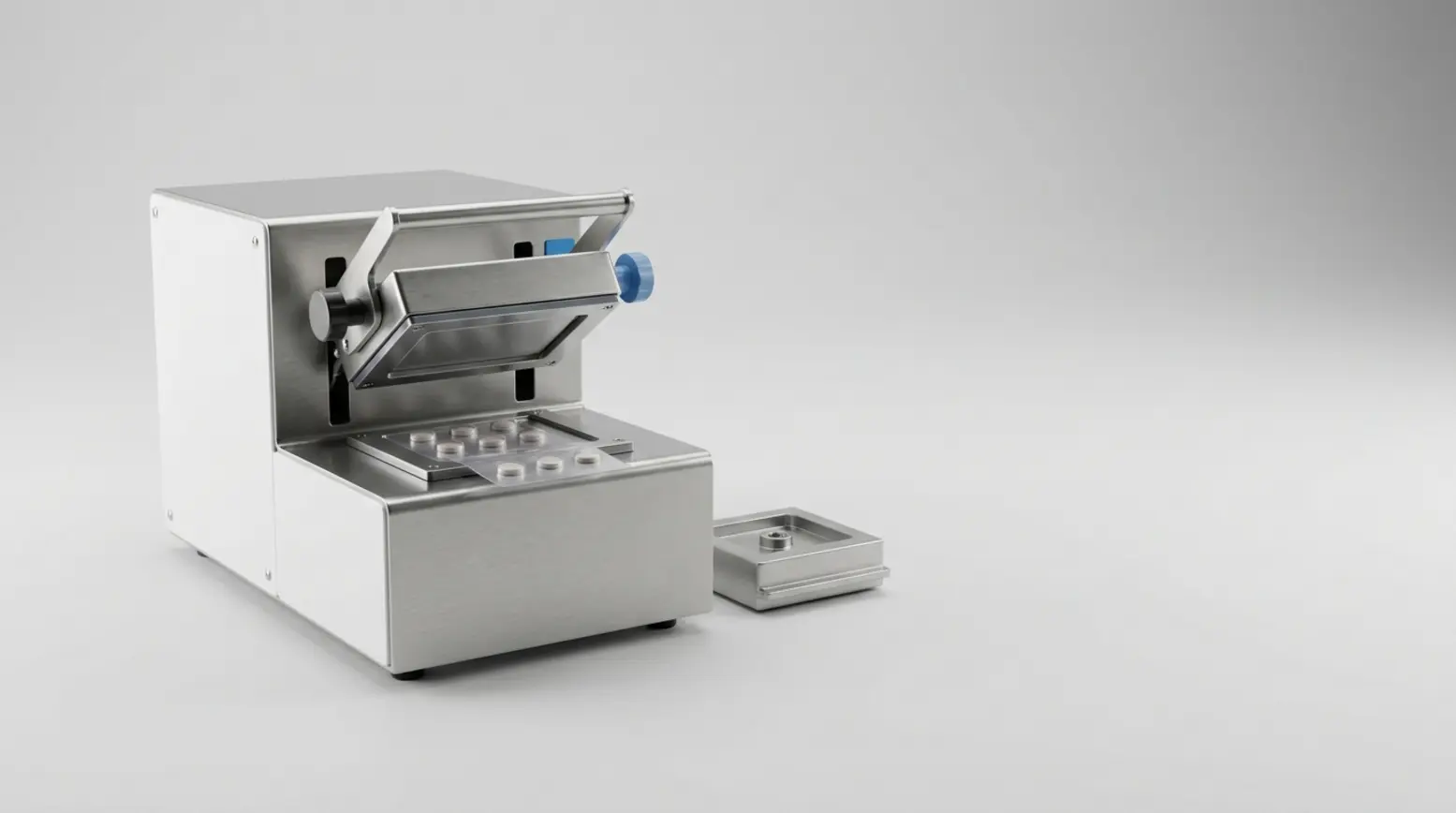
A tabletop blister machine setup is often an excellent choice for pharmaceutical applications when production volumes are low and direct operator handling is acceptable. It provides a compact starting point and keeps the process straightforward, allowing teams to confirm seal performance and pack handling before introducing further automation. A low-volume blister machine in this category can still serve as a serious production tool, provided that setup and documentation are well controlled. For an illustration of this space-saving approach, you can review a compact manual tabletop example. Ultimately, the best final choice will still depend on the required seal type, pack size, tooling, and specific site needs.
Manual shuttle machines
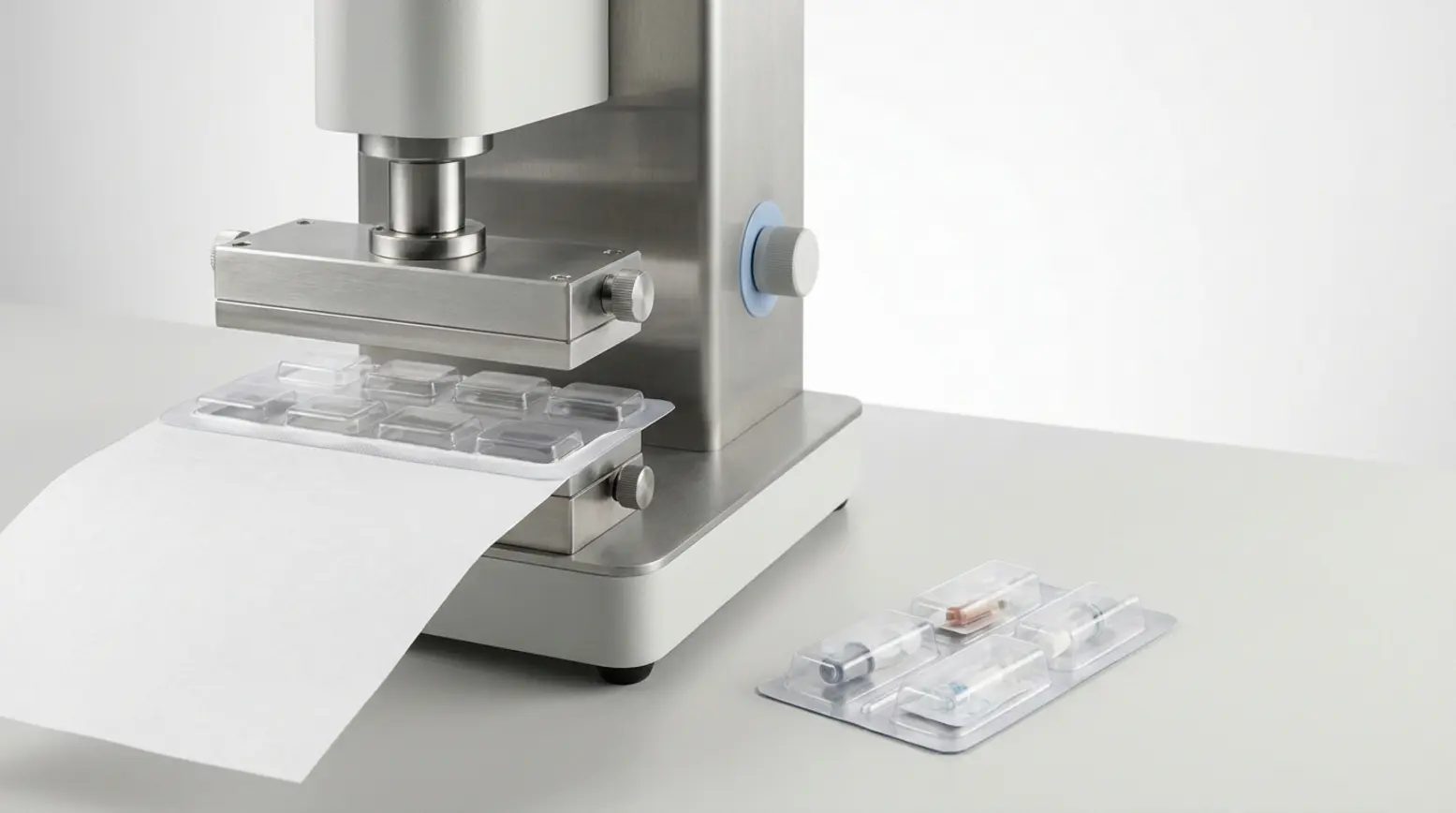
Manual shuttle machines are highly useful when a pack requires flexible placement or when formats are larger, non-standard, or otherwise complex to handle. They are often perfectly suited for medical lidding, prototype blister sealer applications, and trial wallet packaging. In practical terms, they provide much more room for unusual layouts and unique card structures. This is exactly why many teams rely on them for pilot-scale packaging equipment needs, low-volume samples, and early clinical work where changeovers are frequent and hands-on control is vital.
Semi-automatic and automatic rotary machines
These machine classes make perfect sense as production volumes grow and the packaging process becomes more stable. A flexible pharmaceutical packaging machine in a rotary format can significantly reduce manual handling while improving overall consistency; however, this transition works best when the product family and pack formats are predictable enough to support it. For many buyers investing in small-run packaging equipment, rotary systems represent a natural second phase rather than the immediate first step.
Automatic inline
Automatic inline systems become relevant when later commercial production demands continuous, high-volume handling alongside stronger line integration. Small-batch teams typically do not need to start at this level, as the added complexity, extensive training requirements, and significant setup efforts can easily outweigh the benefits during the early stages.
What makes a clinical trial blister packaging machine repeatable across separate runs
Repeatability is crucial because a study may return after a lengthy pause and still require the exact same approved pack. A clinical trial blister packaging machine is incredibly valuable for trial work when it can reproduce the critical seal and pack setup in a strictly controlled manner. While the machine itself is important, meticulous records matter just as much, as the customer’s own quality system ultimately governs all documentation and release decisions.
Tooling identification and retrieval
The correct tooling set should be incredibly easy to identify, store, and retrieve at a later date. If tooling is accidentally mixed up, a returning study can lose valuable time and face unnecessary risks. Maintaining clear tooling control consistently supports repeatable setups across entirely separate runs.
Approved settings and machine recipes
Always save approved settings, machine recipes, and operating values securely within the customer’s document system. This vital step helps the team set up the exact same job again under the correct process conditions, drastically reducing any avoidable variations between runs.
Material and artwork control
Teams should thoroughly record the exact card, blister, lidding, and related material details used to create the approved pack. Additionally, they must log the specific artwork version, print content, batch codes, and scanning requirements. If blinding procedures alter the pack's outward appearance or handling steps, these changes must be documented clearly, as such details can directly impact the pack build and final release checks.
Release criteria
Always record the specific inspection criteria used to officially release the pack. This precise documentation helps the team review the exact same checkpoints when the job eventually returns, ensuring that process control remains deeply linked to the customer’s own quality standards.
What to record to ensure a seamless setup later:
• Tooling ID: clearly identify the exact tool set utilized for the approved pack.
• Settings: save all approved machine settings or recipes for future production runs.
• Materials: thoroughly record all card, blister, lidding, and related material specifications.
• Print and scan data: save the artwork version, specific print content, batch codes, and any scanning requirements.
• Inspection criteria: officially record the quality checks used to release the finalized pack.
When a bigger clinical trial blister packaging machine adds unnecessary complexity
Investing in too much automation too early can drastically increase costs, setup times, floor space usage, and ongoing training requirements. Oversized systems can also make changeovers significantly harder, presenting a real problem when formats need to change frequently. Therefore, the best first machine is typically one that comfortably fits your current workload while seamlessly supporting a logical next step. This phased approach is almost always more useful than simply purchasing the largest available system on day one.
It is also important to remember that moving to a new machine class may require entirely new tooling, additional process engineering, and further customer requalification. A validated trial process does not automatically transfer from one machine class to another. For this reason, establishing a realistic starting point is generally much safer and far more efficient than buying a massive line for an output capacity you do not yet need.
Planning the upgrade path beyond the small-batch stage
Questions to ask before buying
Before making a purchase, ask yourself whether future pack versions might require cold sealing in addition to traditional heat sealing. You should also consider whether advanced feeding, vision inspection, inline printing, or automated scanning options might become necessary down the road. At the same time, carefully review available utilities, floor space, and any required interfaces with your existing line, as the initial trial setup should never obstruct future expansion. Strategic, early thinking regarding machine selection and process integration is highly beneficial here, ensuring that the chosen equipment meets today’s study requirements while leaving ample room for future growth.
What to define before selecting your machine:
• Format range: determine the largest pack size, maximum seal area, and any likely future variants.
• Seal method: confirm if you need heat sealing now, and whether cold sealing could be required later.
• Pack details: outline requirements for labels, artwork, batch codes, scanning, wallet-style layouts, or medical lidding.
• Site needs: assess available utilities, total floor space, and necessary interfaces with other equipment.
• Growth plan: anticipate the likely progression from manual equipment to rotary or inline systems over time.
How growth can progress
A tabletop or shuttle setup can easily be followed by semi-automatic or fully automatic rotary production once volumes grow and formats become more stabilized. Meanwhile, automatic inline systems become relevant only when commercial production demands continuous, high-volume handling. Because growth can comfortably happen in incremental steps, there is absolutely no need to start with maximum automation if your current workload simply does not support it.
FAQ
What is the main difference between a small-batch machine and a commercial high-volume machine?
A small-batch machine is typically chosen for its flexibility, rapid format changes, and reliable repeatability across separate, distinct runs. Conversely, a commercial high-volume machine focuses primarily on steady output and long, uninterrupted production runs. In clinical trial work, the ability to handle frequent changes almost always matters more than top speed.
When is a tabletop blister machine setup a good choice for pharmaceuticals?
It is an excellent choice when production volumes are low and direct operator handling is perfectly acceptable. It also works incredibly well when a team needs a straightforward starting point for trial supply packaging and wants to avoid any unnecessary complexity right from the beginning.
When does a shuttle machine make more sense than a tabletop option?
A shuttle machine often makes much more sense when you require highly flexible placement, larger formats, unusual pack shapes, medical lidding, or specialized wallet-style configurations. Furthermore, it is incredibly useful when hands-on access is deemed important during both setup and pack handling.
Can a single machine cover both trial work and future commercial production?
While a single machine can sometimes support part of that progression, this should never be assumed from the start. Moving up to an entirely new machine class will frequently require new tooling, additional process validation, and further customer qualification steps, as a trial process simply does not transfer automatically.
What should teams record so a study can return later using the exact same pack setup?
Teams must meticulously record the tooling ID, all approved settings or machine recipes, precise material details, artwork versions, print data, scanning needs, and the specific release inspection criteria. Ultimately, these critical records should reside securely within the customer’s own controlled document system.
Free Quick Scan for the right starting point
If you are currently weighing tabletop, shuttle, rotary, or inline options, we can help you accurately compare the real-world needs of your project. Simply share your current formats, expected product changes, seal type requirements, and likely future volume trajectory. Because a formal quotation makes the most sense only after the machine class and format range are absolutely clear, we encourage you to start with our free Quick Scan so we can help you choose the most practical path forward.