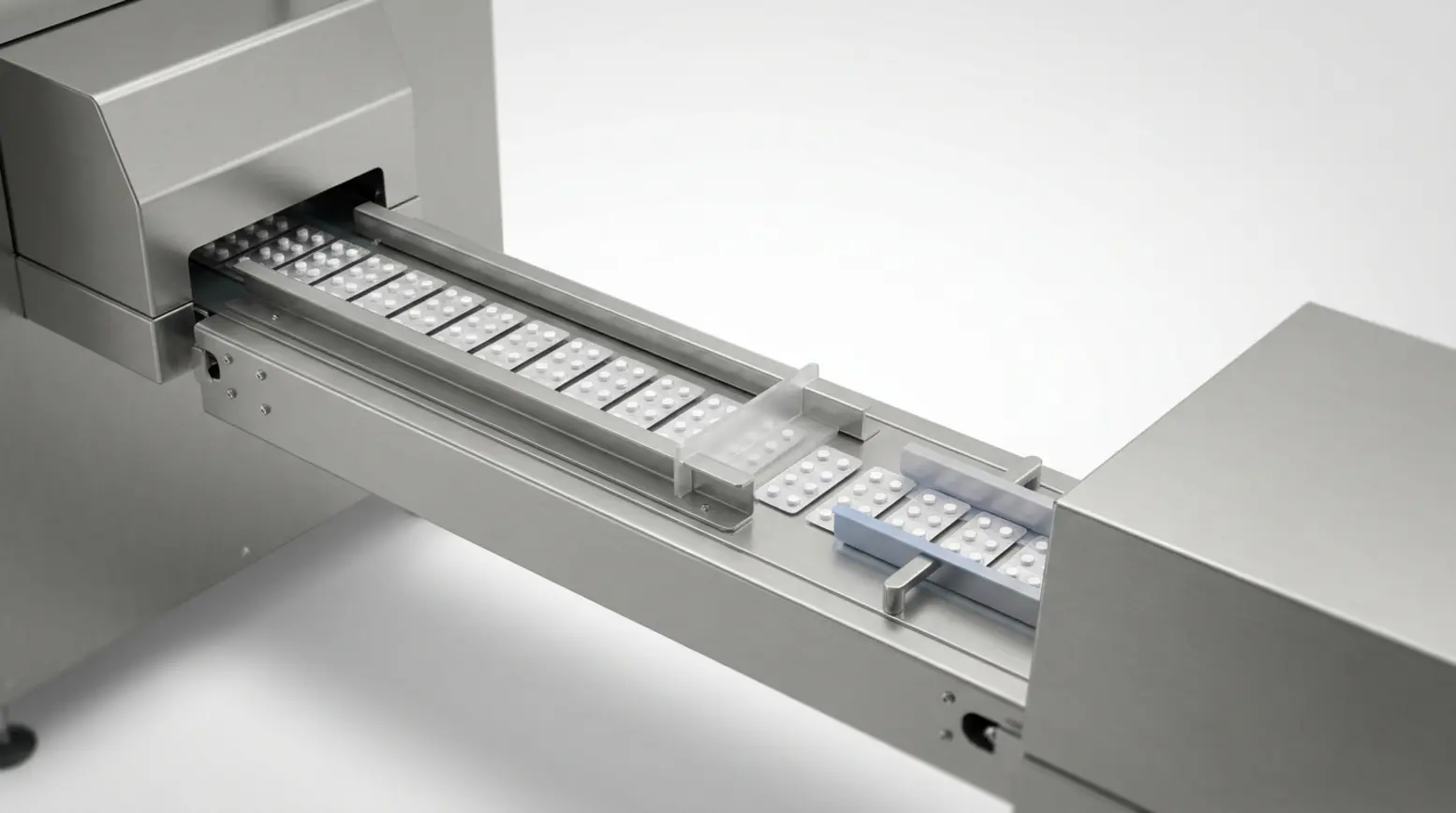
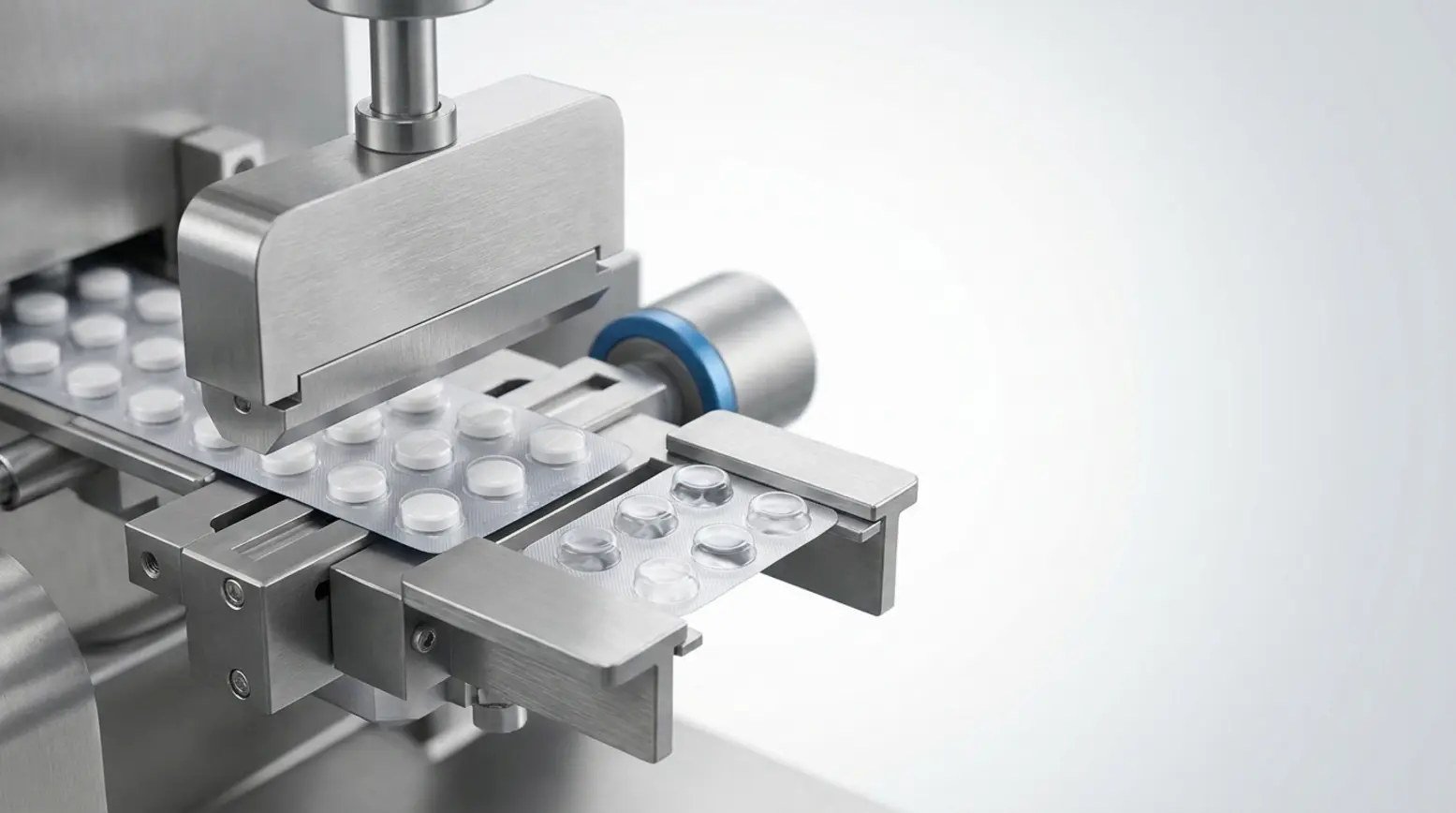
Blister machine changeover in pharma, comparing real packs per shift

When teams compare blister packaging equipment, the main question is simple: how many good packs do you get per shift after planned stops are factored in? That is where blister machine changeovers in pharma become important. This metric covers the full duration from the end of one approved run to the release of the next. It includes closeout procedures, pharma line clearance, tooling work, packaging machine setup, quality checks, and final release. While changeovers might not represent the largest time loss on every line, they can significantly limit usable capacity when running multiple products, varied formats, or short campaigns.
• A full changeover means more than just a tooling swap; it also includes clearance, setup cycles, inspections, and release.
• "Real packs per shift" is a better point of comparison than brochure speed when your production schedule involves frequent SKU changes.
• Machine design impacts changeover work, as certain parts remain fixed while others are format-dependent.
• Increased automation can improve repeatability, but it might also introduce additional feeders, recipes, scanners, printers, and verification steps.
• A realistic product list helps buyers compare different machine classes based on usable output rather than just rated speed.
What a pharmaceutical blister machine changeover really includes
In practical terms, a complete blister machine changeover starts the moment the current job ends and finishes only when the next job is fully approved for production. This is why teams must look beyond theoretical line speed. If the transitional work between approved runs takes too long, packaging line downtime directly reduces the number of saleable packs produced per shift.
Start by closing the previous job correctly
A changeover begins with the closeout of the previous run. The team stops the line and processes any remaining product and packaging components according to site procedures. This can involve cards, formed blisters, lidding, labels, leaflets, and other printed materials. These items must be removed from the defined work area so the next job can start in a highly controlled environment. This step is crucial because a clean handover reduces the risk of mix-ups and supports a reliable SKU changeover process on the packaging line.
Documented pharma line clearance
Pharma line clearance involves verifying that the production line and its surrounding area are entirely free from the previous job's materials. In simple terms, the team must confirm that all old products, components, paperwork, and printed items have been removed. WHO guidance recommends using a formal procedure, a standardized checklist, and a recorded completion log for line clearance. Consequently, the next job should never enter the line until this clearance is fully completed and documented according to site protocols.
Setup work before the next run
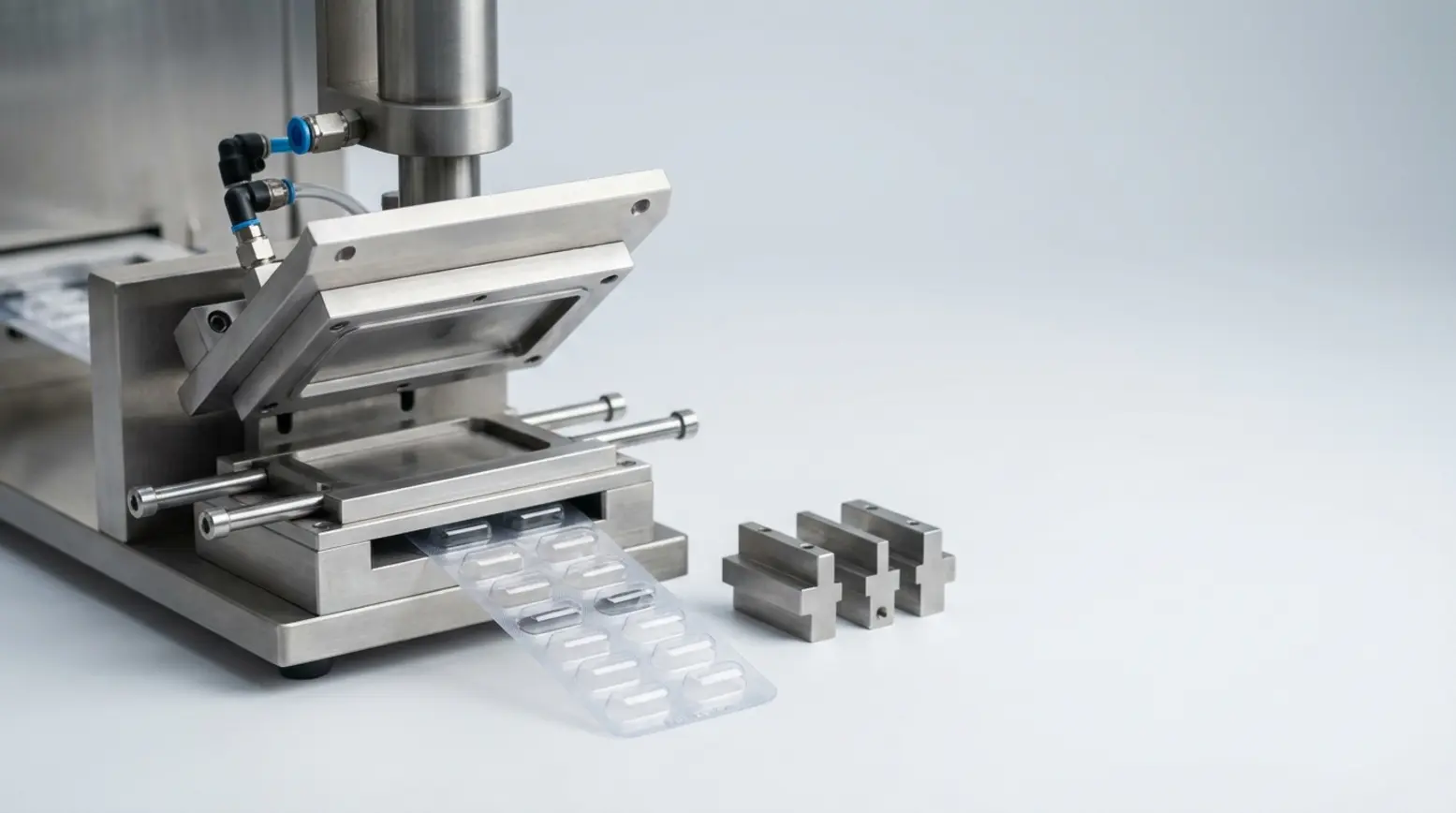
Even after clearance, the packaging machine requires proper setup before production can begin. Format-dependent parts may need to be removed and carefully cleaned where necessary. The team then installs the correct tooling, guides, nests, and other change parts for the new product. This is where a blister tooling change or a broader pharmaceutical format adjustment can consume time, especially if cavity sizes, card dimensions, or pack layouts vary. If the machine uses stored settings, the correct recipe must be loaded or selected. Approved materials are then loaded, and their identities are rigorously verified. Furthermore, feeders, printers, scanners, and vision systems might require updates if they are integrated and format-specific. Finally, the team runs setup cycles or trial packs to check seal quality, print clarity, coding, and pack positioning before officially releasing the line for the next run.
Why blister machine changeovers in pharma depend on machine design
A pharmaceutical blister machine changeover is fundamentally shaped by machine design, as certain components typically remain in place while others must be swapped out to accommodate the new format. This is a primary reason why two machines with similar rated speeds can perform vastly differently across a mixed production schedule.
What stays fixed and what changes
The machine base, core controls, and safety systems usually stay fixed. Conversely, format-dependent parts are much more likely to change. These may include tooling, guides, nests, specific feeders, transfer components, and software settings linked to a particular product or pack layout. Therefore, a blister tooling change is rarely a single action. It is typically a sequence of tasks that involves disassembly, cleaning, installation, physical adjustment, and final verification. Naturally, the more steps involved, the greater the impact on any efforts to reduce changeover times.
Design details that support repeatable setup
Smart design choices can make machine setup much more repeatable. Consistent locating points help operators place parts exactly in the correct position every time. Clear tooling labels enable teams to select the right change parts quickly, minimizing confusion. Furthermore, well-designed change parts can significantly reduce unnecessary manual adjustments, while stored software settings foster consistency whenever they are available. While we do not attach fixed time claims to these features, since actual results depend heavily on the product mix, materials, procedures, and specific line layout, they undoubtedly make a format change on a packaging machine easier to execute in a controlled manner.
How pharmaceutical blister machine changeovers differ by machine type
The class of the machine directly dictates how changeover work is structured. Therefore, buyers should compare equipment based on usable output and avoid assuming that the largest, fastest system will yield the best results for every production schedule.
Manual tabletop and shuttle machines
Manual tabletop and shuttle machines typically feature fewer automated stations. Consequently, there are often fewer connected functions to adjust during a format change. However, because these machines rely more heavily on manual operator handling, setup results can vary depending on the specific task, the format, and the site's processes. While they are often well-suited for lower output requirements or simpler pack formats, this does not guarantee they will always deliver shorter blister machine changeover times. The real efficiency depends entirely on the specific work required for each SKU.
Rotary and inline machines
Rotary and inline systems are designed to support higher outputs and more advanced automation. They frequently incorporate more feeders, transfer points, digital recipes, printers, scanners, and vision functions. Because of this complexity, a single pharmaceutical format change might touch many more areas of the line. This does not make these high-speed machines less suitable; it simply means the setup structure is much broader. For readers seeking more context before comparing equipment, a review of blister packaging machine types can help outline the primary machine classes. Teams comparing pharmaceutical packaging machines should then evaluate each class based on actual output after all planned setup work and quality checks are factored in.
Compare categories by real output
The most useful metric is the number of packs produced per shift after all planned stops, setups, and release activities are accounted for. If a production line runs long campaigns with a single stable format, the optimal machine choice might lean in one direction. However, if the line handles numerous short campaigns, the ideal choice may look completely different because setup work occurs much more frequently. This is exactly why quick changeover packaging capabilities should be assessed against your actual production schedule rather than relying on headline speed alone.
Pharmaceutical blister machine changeovers and the hidden work in automation
While automation certainly supports better process control and repeatability, it can also fundamentally change the structure of a full changeover. A blister machine changeover in pharma should therefore be reviewed at the individual module level, rather than just looking at the machine as a whole.
Automation can help, but it can add setup points
Automation can successfully eliminate manual tasks in many cases, but it can also introduce additional setup points that must be managed carefully. Components like feeders, printers, scanners, vision systems, and digital recipe handling may each require individual checks or software updates during a product change. This is why the conversation around automation should remain balanced. Implementing Packaging automation will undoubtedly improve process control, but it does not remove the essential need to ask what changes, what stays fixed, and what must be strictly verified before final release.
Ask what is format specific
During the machine selection phase, always ask which specific modules are format-dependent. Inquire about which settings are digitally stored, how they are accurately restored, and how they are checked before the line is released. For example, a printer may remain physically on the line, but its print data will still need to change. Similarly, a scanner may stay fixed in place, yet its accepted data parameters or positional viewing window might require a fresh setup. These nuanced details often explain why two packaging lines with similar rated speeds yield noticeably different real-world outputs over a mixed production schedule.
How to compare pharmaceutical blister machine changeovers based on real packs per shift
To evaluate your options effectively, build the review entirely around your actual workflow. Blister machine changeovers in pharma should be measured against your precise product mix, because that variety is exactly what drives setup complexity, mandatory checks, and inevitable downtime.
Build a real product matrix
Start by compiling a list of your actual SKUs. Be sure to include pack sizes, materials, cavity changes, card size variations, print or coding differences, expected changeover frequencies, and any short campaign patterns. Additionally, outline the typical line clearance needs for each distinct product family. This structured approach helps buyers accurately compare different machine classes based on their usable capacity. When we assist customers with line selection and project planning, we always begin with the real product mix because it ultimately dictates tooling choices, setup details, and integration requirements. You can read more about specifying and integrating the line when a new project must seamlessly fit with existing equipment or interface with upstream and downstream modules.
Questions buyers should ask suppliers
Always ask suppliers which specific components must change for each format and which parts remain fixed. Inquire about the extent of disassembly required for every tooling change. You should also ask how digital recipes are selected and verified, and exactly what happens to feeders, printers, scanners, and vision systems during a changeover. Furthermore, ask what specific setup cycles and quality checks are required before the line can be officially released. Answering these questions provides a much stronger basis for comparing a format change packaging machine, as they reveal the actual labor required behind the manufacturer's rated speed.
Buyer checklist
• Formats: cavity sizes, card sizes, and pack layouts.
• Materials: forming film, lidding, cards, labels, leaflets, and printed items.
• Tooling: which parts change and which parts remain fixed.
• Recipes: how machine settings are stored, restored, and verified.
• Modules: feeders, printers, scanners, and vision system functions.
• Quality checks: seal integrity, print clarity, coding, and pack positioning.
• Procedures: line clearance protocols, setup cycles, and formal release steps.
• Schedule: expected changeover frequency, campaign lengths, and target packs per shift.
Use a Quick Scan before final machine selection
Before requesting a final quote, carefully compare machine classes and available options against your actual production schedule. Come prepared with a detailed product matrix and expected changeover frequencies, rather than just a target output number. In this way, buyers can accurately evaluate usable capacity after all planned setup work is factored in. If you would like a project-specific review, you can contact us for a Quick Scan based entirely on your unique formats, setup needs, and schedule. We can help narrow down the ideal machine configuration before the quotation stage, ensuring your comparison starts from a much more realistic production picture.
Common questions about pharmaceutical blister machine changeovers
Is the fastest machine always the best choice?
No. The fastest machine on paper may actually deliver a lower real-world output if your production schedule involves frequent product changes, varied formats, or numerous short campaigns. A far better measure is how many viable packs per shift you can produce after accounting for planned changeovers, line clearance, setup cycles, and final release steps.
Does more automation always mean less downtime?
Not necessarily. While automation can successfully reduce manual labor in many instances, it can also introduce complex digital recipes, scanners, printers, automated feeders, and mandatory verification checks. Because of this, buyers should always ask which specific functions are format-dependent and how they are safely restored and verified during a changeover.
What is part of a full blister machine changeover?
A full changeover starts the moment the previous run ends and any remaining products and components are processed according to site procedures. It includes the complete removal of old materials from the production area, documented pharma line clearance, tooling removal and targeted cleaning, installation of new format parts, recipe selection, loading of newly approved materials, setup cycles, rigorous quality checks, and final release for the next run.
What is the best way to compare machine types?
Compare them based on real packs per shift across your actual SKU mix. Be sure to include planned stops, required setup work, quality checks, and release procedures. This approach provides a much more useful picture than rated speed alone, especially when a packaging line must handle frequent changeovers.
Simple comparison table
The table below provides a practical overview. It is intended as a guide only, since every packaging line features its own specific tooling, standard operating procedures, and product mix.
| Machine type | What often changes | What often stays fixed | What may add setup work |
|---|---|---|---|
| Manual tabletop | Tooling, guides, materials, pack settings | Base frame, controls, safety basics | Operator handling and manual adjustments |
| Shuttle machine | Tooling, nests, guides, materials | Base machine and main safety systems | Manual loading steps and verification |
| Rotary machine | Tooling, feeders, recipes, print and scan settings | Base machine, controls, core safety systems | More stations and additional transfer points |
| Inline machine | Tooling, recipes, feeders, printers, scanners, vision settings | Base machine, controls, safety architecture | Integrated modules and release checks |
The most practical next step is to accurately map the real work that occurs between approved runs and compare various machine classes based on their usable output. This approach keeps the purchasing decision grounded in production reality, ensuring that machine speed, setup effort, and quality control requirements remain highly visible throughout the entire selection process.